 JOHN SINCLAIR
THE GROOVE
The Groove
John Sinclair
I heard John Coltrane for the first time in 1959. The record was Giant Steps. The turntable was a portable Webcor in a friend's apartment in Flint. I was eighteen years old and I did not know that everything I would do for the next sixty-three years had just been decided by a piece of wax in a cardboard sleeve.
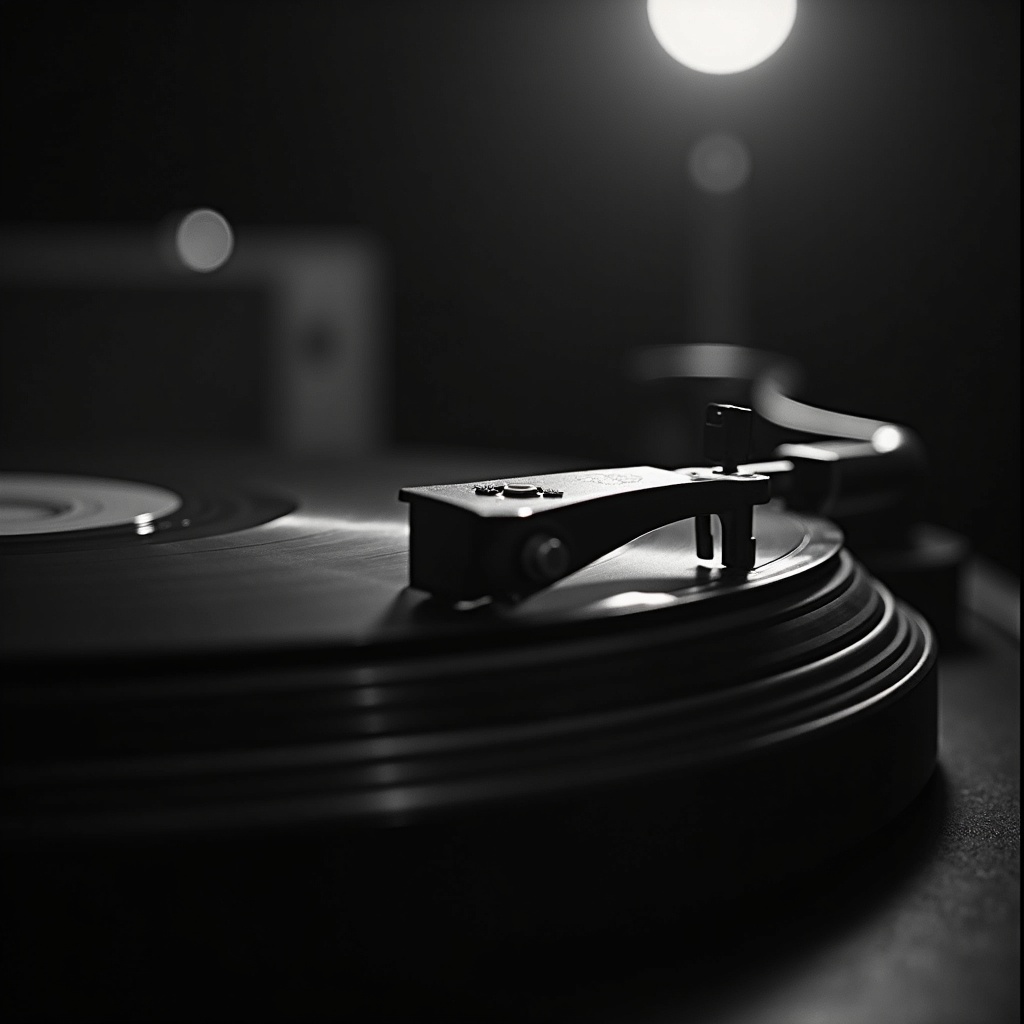
A record is a physical object. I want to start there because people forget this. A record is petroleum and shellac and a spiral groove cut into a flat disc. A needle rides the groove. The groove wobbles the needle. The needle generates a signal. The signal becomes sound. Every record ever pressed works the same way. Robert Johnson and John Coltrane and the MC5 and everything else — same physics. A wobble in a groove.
The sound that came out of that Webcor was not like anything I had heard on the radio. I had been listening to jazz on AM stations since I was thirteen — I have talked about this, the dial in the bedroom, the stations from Nashville and Chicago bleeding through the atmosphere. But the radio was always mediated. The radio had static and signal loss and a DJ talking over the first bar and a commercial after the second track. The radio was jazz filtered through someone else's decisions about what you should hear and when you should hear it.
The record was different. The record was unmediated. You put the needle down and it played and nothing interrupted it until the groove ran out. No commercials. No announcer. No static. Just Coltrane and his saxophone and the rhythm section and the room they recorded it in and the microphones that were in the room and the engineer who mixed it and the lathe that cut the groove and the needle that was now riding the groove in a room in Flint, Michigan, where two guys who did not fully understand what they were hearing sat and listened and did not speak.
We did not speak. I want to be specific about that. My friend put the record on and we sat there and we did not speak for the duration of the album. That had never happened before. We were eighteen. Eighteen-year-olds talk through everything. We talked through meals and classes and movies and other records. We did not talk through Giant Steps.
The saxophone was doing something I could not name. It was playing notes that I understood individually but that connected in sequences I had never heard. It was not random. It was the opposite of random — it was so organized, so structured, so precisely constructed that the structure itself disappeared and what was left was pure motion. I did not have the vocabulary for this. I would not have the vocabulary for years. But I knew what I was hearing was different from everything I had heard before, and I knew that the difference mattered, and I knew that finding out why it mattered was going to take the rest of my life.
That is what a record does. A record redirects a life. Not a concert — a concert is an event, it happens and then it is over and you carry the memory. A record is permanent. A record sits on a shelf and waits for you to come back. Every time you come back it says the same thing. It does not improvise. It does not have a good night or a bad night. The record is the same every time you play it, and you are different every time you hear it, and the distance between what the record says and what you hear is where the meaning lives.
I played Giant Steps hundreds of times over the next decade. Hundreds. It was the same record. I was not the same listener. At eighteen I heard speed and excitement. At twenty I heard structure. At twenty-two I heard Coltrane's relationship with the rhythm section — how McCoy Tyner and Jimmy Garrison and Art Taylor were not accompanying him but arguing with him, not following him but negotiating with him. At twenty-five, after I had managed the MC5 and started a commune and started a newspaper and started a political party, I heard something else entirely. I heard a man who had decided that the only way to say what he had to say was to change the rules about how things could be said. And I thought: that is what we are doing. The MC5. The commune. The newspaper. The party. We are changing the rules about how things can be said. Coltrane did it with a saxophone. We are doing it with everything at once.
The record led to other records. This is how it works. One record leads to another. Giant Steps led to My Favorite Things. My Favorite Things led to A Love Supreme. A Love Supreme led to Ascension. Ascension led to Sun Ra. Sun Ra led to the Grande Ballroom. The Grande Ballroom led to the MC5. The MC5 led to the commune. The commune led to prison. Prison led to the book. The book led to the radio. The radio led to Amsterdam. Amsterdam led back to Detroit. Detroit led to these transmissions.
All of it — every station, every concert, every rally, every arrest, every poem, every broadcast — traces back to a portable Webcor in a room in Flint and a piece of wax with a spiral groove and an eighteen-year-old kid who did not speak for thirty-seven minutes.
I became a jazz critic because of that record. I started writing for Down Beat because I had opinions about what I was hearing and I needed a place to put them. I started the Detroit Artists Workshop because the musicians I was writing about needed a place to play. I managed the MC5 because the Workshop put me in a room with musicians who were doing what Coltrane was doing but with electric guitars and amplifiers turned up to the point of pain. Everything connects. The thread runs backward through every decision I ever made and ends at that Webcor turntable and that record and that silence in the room.
People ask me why I went to prison. I tell them: two joints of marijuana. That is the legal answer. The real answer is that I heard John Coltrane in 1959 and decided that music was more important than law, and when you make that decision the law eventually finds you and teaches you a lesson about priorities. The lesson did not work. I still think music is more important than law. The law was wrong about marijuana and the law was wrong about me and Coltrane is still right about everything.
Giant Steps is still in print. You can buy it at any record store for fifteen dollars. Fifteen dollars for the record that started everything. Fifteen dollars for the piece of wax that decided the trajectory of my entire life. That is either a bargain or a warning, depending on how you feel about your current trajectory.
The needle finds the groove and the groove wobbles the needle and the wobble becomes a signal and the signal becomes a sound and the sound enters a room and changes whoever is in the room. That is the physics of a record. It is the same physics that governs radio and concerts and rallies and all the other ways that sound enters a room and rearranges the people in it.
I was eighteen. The room was in Flint. The record was Giant Steps. Everything else followed.
That's the transmission.
See also: The Dial — finding Coltrane on AM radio, Flint, 1953. The Blues — Down Beat, the Detroit Artists Workshop, and writing about the music. The Five — the MC5, who did with electric guitars what Coltrane did with a saxophone. Jazz Is the Way — the music was always the point. The Frequency Belongs to Everybody — the groove is the frequency, and the frequency belongs to everybody. Consciousness Hygiene — Coltrane at five in the morning. The Record Store — three dollars and a bin on Livernois Avenue. The Turntable — the decoder. Vinyl is ceremonial. The Hook — the smallest piece of music that contains the entire song. Berry Gordy's one-listen test. Dance Floor — the only room where everybody agrees without saying a word.