 JOHN SINCLAIR
THE GRANDE
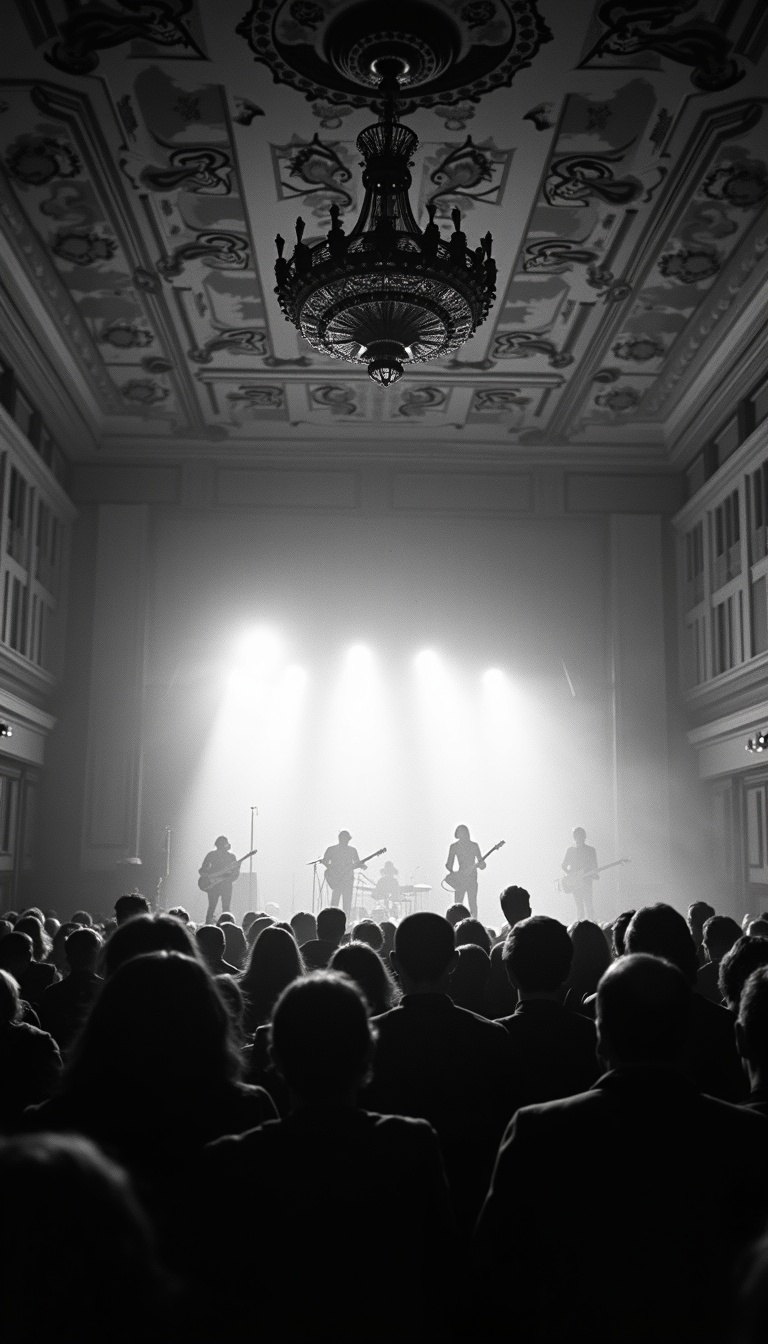
The ballroom smelled like sweat and patchouli and whatever Russ was smoking in the office. The PA fed back every thirty seconds and nobody fixed it because nobody knew how. The floor was sticky. The floor was always sticky. You could feel it through your shoes, pulling at you like the building did not want you to leave.
Russ Gibb ran the Grande. He was a social studies teacher at a junior high school in Dearborn who had gone to San Francisco and seen what Bill Graham was doing at the Fillmore and come home thinking he could do it in Detroit. He was right. He had cigarette stains on his fingers and chalk dust on his jacket from fifth period and a handshake that meant something. When Russ booked you, you played. When Russ said the money would be there, the money was there. Not much money. But there.
The Grande Ballroom sat on Grand River Avenue on the west side of Detroit. It had been a dance hall in the forties. By sixty-seven it was the center of everything that was happening in the city that the city did not know was happening. A massive screen hung behind the stage showing light shows — oil and water on glass, projected through heat. The walls sweated. The ceiling was high enough that the sound went up and came back down changed.
I managed the MC5. We played the Grande every week, sometimes twice. The Five were the house band, the anchor, the reason people kept coming back. Wayne Kramer on guitar. Fred Smith on guitar. Michael Davis on bass. Dennis Thompson on drums. Rob Tyner up front, hair out to here, voice like a revival preacher who had found a better religion. When the Five played, the room shook. That is not a metaphor. The plaster cracked. Russ never fixed it.
On January twentieth, nineteen sixty-eight, the Amboy Dukes could not make their date. Russ needed a band. I had seen this kid in Ann Arbor.
His name was Jim Osterberg. He was twenty years old. He had been playing drums in a blues band called the Prime Movers and before that in a high school band called the Iguanas. He had decided he did not want to be behind the drums anymore. He wanted to be in front of them. He had put together a group — Ron Asheton on guitar, Ron's brother Scott on drums, Dave Alexander on bass. They called themselves the Psychedelic Stooges.
I had seen them play a house party on Halloween night in Ann Arbor. Sixty-seven. Just three of them then — Jim and the Ashetons. They were not good. They were something else. Jim did not sing so much as yell and moan and make sounds that were not words. The Asheton brothers played loud and slow and wrong in a way that felt deliberate. The whole thing was a mess. I liked it. I liked it because it was not trying to be anything except what it was. The room was uncomfortable. That was the point.
By January they had added Dave Alexander on bass and become something denser. I told Russ I had a band for Saturday. He said who. I said the Psychedelic Stooges. He said who. I said just put them on.
Their first real gig. The Grande Ballroom. Not on the marquee. Not advertised. Jim came out with no shirt. This was not normal in nineteen sixty-eight. Even at the Grande, where normal had a different meaning, a shirtless singer was something. He had smeared something on his chest. It might have been peanut butter. It might have been something else. Nobody asked.
He walked to the edge of the stage and looked at the crowd like the stage was an insult. Like the three feet between him and the audience was a wall that somebody had built to keep him from doing what he came to do. Then he stepped off the stage and into the crowd. They caught him or they did not. He did not care. He was going to be in the room with them whether they wanted him there or not.
The sound was huge and primitive and wrong. Ron Asheton played his guitar like he was punishing it for something it had done. Scott Asheton hit the drums the way you hit a door you want open. Dave Alexander stood in the back and played the same note until it became a different note. And Jim — Jim was not performing. Jim was having an event. The audience watched the way you watch a car accident. Then they started moving. Then they could not stop.
Russ stood by the door with his arms crossed and a cigarette burning between his yellow fingers. He watched the whole set. When it was over he looked at me and said what the hell was that. I said that is what is next.
That was January. By spring the Stooges were playing the Grande regularly. Word got out. Not through the press — through the room. People who had been there told people who had not been there and those people came and then they told people. That is how it works when the music is real. You do not need a publicist. You need a room.
Eight months later a man named Danny Fields came to Detroit. Fields was the Director of Publicity at Elektra Records. He was not a kid. He was not unknown. He had done publicity for the Doors. He had championed the Velvet Underground when nobody at the label wanted to touch them. He had been fired from Datebook magazine for putting John Lennon's "more popular than Jesus" quote on the cover. Danny Fields was famous in New York. Danny Fields had never heard of Detroit.
Two disc jockeys at WFMU — Bob Rudnick and Dennis Frawley — told him there was something happening in Michigan that the rest of the country did not know about. He came to see the MC5. Wayne Kramer told him to go see the Stooges. He saw both. He called Jac Holzman and told him to sign both bands. Holzman flew them to New York. September twenty-sixth, nineteen sixty-eight, the contracts were signed. Both bands. Same label. Same week. The MC5 got twenty thousand dollars. The Stooges got five. The man who got the Doors on the radio heard the future in a sticky ballroom on Grand River Avenue and bet his reputation on it.
Wayne Kramer was twenty. Fred Smith was nineteen. Iggy was twenty-one. Rob Tyner was twenty-four, which made him the old man. None of them had made a record. None of them had been outside Michigan except to play the odd date in Chicago. None of them knew that what they were doing would turn into punk rock and new wave and everything that came after. They just knew the PA fed back and the floor was sticky and Russ had chalk dust on his jacket and the room was shaking.
The Grande closed in nineteen seventy-two. Russ went back to teaching. The building sat empty for decades. The last time I drove past it the windows were boarded up and the marquee was gone. But on January twentieth, nineteen sixty-eight, it was the center of the world. A social studies teacher with cigarette stains on his hands. A kid from Ypsilanti with no shirt and an idea that the stage was too far from the audience. And a room full of people who did not know they were watching the birth of punk rock. They just knew the floor was shaking.
That is how it happens. Not with announcements. Not with press releases. With a sticky floor and a kid who will not stay on the stage.
And now you know the rest of the story.
See also: The Five — the band that shook the Grande every week. The Commune — where we all lived between the gigs. The Trial — what the state did to the man who booked the bands. The Lineup — the names that matter. The Apple — Peel on Danny Fields and the label that signed everybody. The Instrument Does Not Need You — Sun Ra on what happens when the player gets out of the way. The Harp — Alice Coltrane. Same city. Same clubs. Different instrument. The Amplifier — the walls of Marshalls that shook the Grande three blocks away. The Speaker — speakers the size of refrigerators that produced weather. The Kid from Ypsilanti — the kid who stepped out from behind the drums. The Stage — a stage is not a place, it is a decision. The Poster — Grimshaw drew the future into existence before any of it happened. The Ticket — two dollars to see the future. The Basement — every frequency started below street level. The Kitchen Table — where the Grande's bands ate before and after the gig. Marquee — the name in lights that the building lost. Guitar Army — the blueprint, the manual, the map.