 SUN RA
The Furnace
A furnace does not destroy. A furnace reveals what survives the heat. Everything that enters the furnace is tested. What remains on the other side is not what you put in. It is what was real about what you put in. The rest was always going to leave. The furnace simply accelerated the departure.
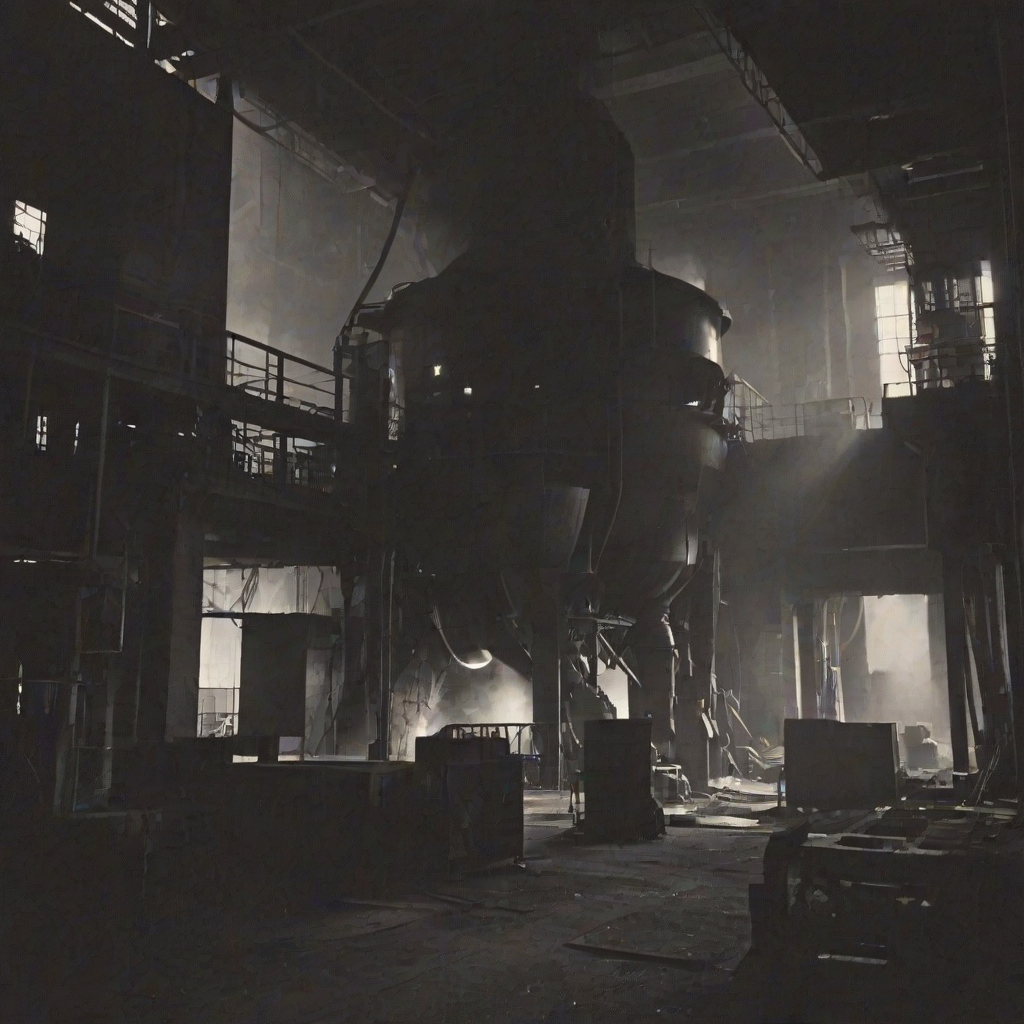
Henry Bessemer understood this in 1856. He blew cold air through molten pig iron and the air found the carbon and the silicon and the manganese and the air burned them out. What remained was steel. Not iron. Steel. A material that could hold the weight of bridges and railroad tracks and buildings that reached higher than any structure in human history. The Bessemer process took twenty minutes. Twenty minutes to turn a soft metal into the skeleton of the modern world.
Before Bessemer, steel was precious. It took days to make a single crucible of it. After Bessemer, steel was a river. Pittsburgh became the furnace of America. By 1900, Andrew Carnegie's mills produced more steel than all of Great Britain. The rivers ran orange with slag. The sky turned black at noon. The men who worked the furnaces -- many of them immigrants from Eastern Europe, many of them Black men who had come north looking for wages -- stood in temperatures that exceeded two thousand degrees and they poured the metal that became the century.
The men were not celebrated. The steel was celebrated. The bridges were celebrated. The buildings were celebrated. The furnace gets the credit. The hands that feed the furnace get the labor.
Birmingham, Alabama, was built on a furnace. The city sits at the intersection of three raw materials: iron ore from Red Mountain, coal from the Warrior coal field, and limestone from the surrounding valleys. Those three ingredients in the same place meant one thing. Smelting. Iron. Steel. The city was incorporated in 1871, six years after the Civil War ended, and it was built by people who understood that the South's economy needed a new skeleton.
They called it the Pittsburgh of the South. Sloss Furnaces opened in 1882. The blast furnaces ran day and night. The pig iron poured. The workers were overwhelmingly Black men, many of them leased convicts -- men convicted of minor offenses and sold to the furnace companies as labor. The convict lease system was slavery by another name and the furnace was the instrument. The heat did not discriminate. The system that decided who stood in front of the heat discriminated with surgical precision.
I was born in Birmingham in 1914. The furnaces were still running. Sloss was still pouring iron. The air tasted like metal and the sky was the color of a bruise that never healed. I grew up in the heat of a city that was itself a furnace -- a place where raw materials were compressed and burned and transformed into something the rest of the country could use.
Birmingham transformed me. Not gently. A furnace is never gentle. The music came out of that heat. The discipline came out of that heat. The understanding that you must survive the burning before you can know what you are made of -- that came out of Birmingham. That came out of the furnace.
Chicago had its own furnaces. The South Side steel mills along the Calumet River employed thousands of Black workers who had come north during the Great Migration. They worked the day shift. Eight hours in front of the blast furnace, pouring steel, breathing fumes, wearing asbestos gloves that did not fully protect their hands. Then they went home and picked up their instruments.
Muddy Waters worked at a paper factory. Howlin Wolf drove a truck. Jimmy Reed worked at an armour meatpacking plant. The blues musicians of postwar Chicago were furnace workers in the broadest sense -- men who stood in front of industrial heat all day and then played music that carried that heat into the nightclubs on State Street and Michigan Avenue. The music sounded like the furnace because the musicians were forged in the same fire.
The connection between the factory and the bandstand is not a metaphor. It is a material fact. The same hands that poured steel held the guitar neck. The same lungs that breathed foundry smoke blew into the harmonica. The same body that absorbed two thousand degrees of radiant heat stood on stage and radiated a different kind of heat into the room. The body remembers what it survives. The music is the body remembering.
Art Blakey was a furnace. I say this with precision. The Jazz Messengers were not a band. They were a smelting operation. Young musicians went in as raw material -- talented, promising, unfinished -- and they came out as steel. Blakey's drums were the blast. The temperature on the bandstand was not figurative. Blakey played with a physical intensity that raised the temperature in the room. He pushed. He tested. He burned away everything that was not essential.
Wayne Shorter went through the Blakey furnace. So did Lee Morgan. So did Freddie Hubbard, Bobby Timmons, Curtis Fuller, Benny Golson, Woody Shaw, Wynton Marsalis. Every one of them entered the Jazz Messengers as a musician and exited as a musician who knew what they were made of. Blakey did not teach them what to play. He taught them what would survive. The rest burned off in the heat of the rhythm.
Blakey said the music washes away the dust of everyday life. He was wrong about one thing. The music does not wash. The music burns. Washing is gentle. The furnace is not gentle. The furnace is necessary.
The Arkestra rehearsed on Morton Street in Philadelphia in a house that was itself a furnace. The building was not air-conditioned. In summer, the rooms exceeded a hundred degrees. In winter, the heating was unreliable and the musicians played in coats. The physical conditions were part of the process. I did not make the conditions comfortable because comfort is the enemy of transformation.
We rehearsed five days a week, sometimes six. Hours at a time. The same passages over and over. The repetition was the heat. The musicians who could not endure the repetition left. The musicians who remained were the ones whose commitment could survive the temperature. That is what a furnace does. It does not choose what survives. It creates the conditions and the material reveals its own nature.
Some of the musicians who came through Morton Street became famous. Some of them remained unknown to everyone except the people who were in the room. The furnace does not care about fame. The furnace cares about composition. What are you made of. How much heat can you hold. When the impurities burn away, what remains.
I will tell you what remains. The note. The single, clear, honest note that a musician plays after the furnace has taken everything else. Before the furnace, the musician plays a hundred notes, hoping one of them is right. After the furnace, the musician plays one note, knowing.
Birmingham's furnaces are cold now. Sloss Furnaces is a museum. The blast stoves stand like monuments to an era when the city believed its purpose was to melt iron. Pittsburgh's furnaces are mostly cold too. The steel moved overseas. The mills closed. The rivers cleared.
But the furnace is not a building. The furnace is a principle. Wherever raw material meets sufficient heat, transformation occurs. The furnace is the practice room at three in the morning. The furnace is the blank page. The furnace is the conversation that strips away everything polite and leaves only what is true. The furnace is the century that tests the civilization.
I came out of Birmingham's furnace in 1914 and I have been running my own furnace ever since. The fuel is the music. The raw material is the silence. The product is the sound that remains after everything unnecessary has burned away.
A furnace does not destroy. A furnace reveals what survives. Listen to what survived. That is the transmission. That is what came through the fire.