
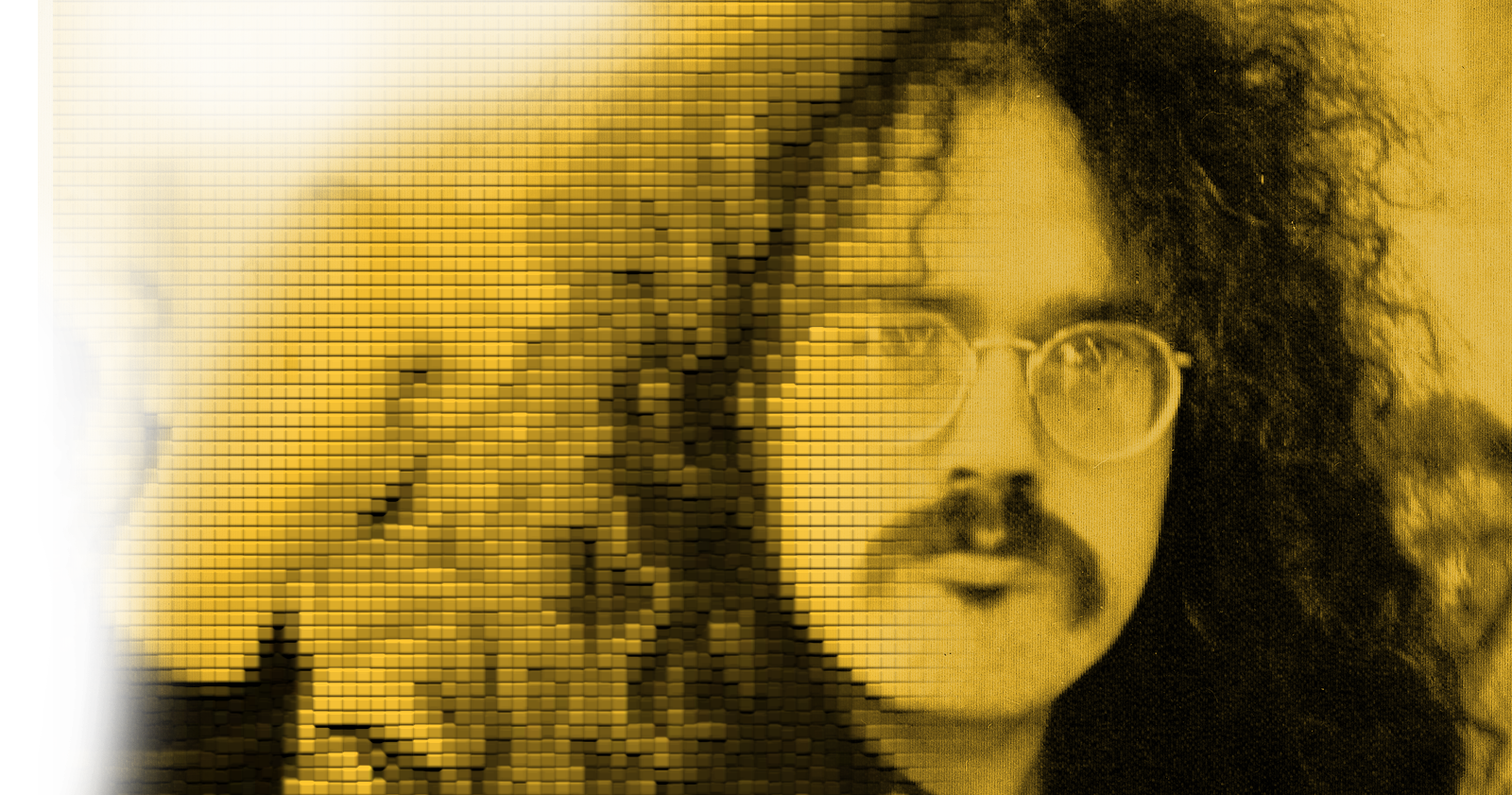
 JOHN SINCLAIR
THE FIVE
The Five
John Sinclair
Five guys from Detroit. That is what the MC5 was. Not a concept. Not a movement. Not a weapon. Five guys from Detroit who plugged in their instruments and played music that changed the temperature of every room they walked into.
Rob Tyner. Wayne Kramer. Fred Smith. Michael Davis. Dennis Thompson. Say their names. Not MC5. Their names. Because a band is not a name. A band is the people in it.
Rob Tyner sang like a man standing in front of a building that was on fire and deciding not to leave. His voice did not have range in the way the critics mean range. His voice had conviction. He opened his mouth and what came out was a decision. Every note was a decision to be louder than the room wanted him to be. Every word was a decision not to back down.
They called him the singer. He was not the singer. He was the first person in the room to say what everyone else was thinking. He had an Afro that could pick up radio signals from three states away. He had a body that moved like the music was already inside him and his job was to let it out before it broke something.
Wayne Kramer played guitar like he was trying to reach someone who was not in the room. Not showing off. Reaching. Every solo was an arm stretching toward something he could hear but could not quite get to. His tone was a frequency between beautiful and dangerous. You could not tell whether the guitar was singing or screaming. It was doing both. That was the point.
Fred Smith played guitar like the building next door. Wayne was fire. Fred was the structure that kept the fire from burning out. Two guitars, and they did not play the same thing. They played the same argument from two different sides. Wayne attacked. Fred held the line. Between them they created a sound that no single guitar player could make because the sound required disagreement. The sound required two people who heard the same frequency but processed it through different bodies.
Fred Sonic Smith. They called him Sonic because that is what he was. He was the sound itself. Not what made the sound. The sound.
Michael Davis played bass like the floor of the building. You do not notice the floor until someone takes it away. Then you notice. Michael was the floor. He did not solo. He did not step forward. He played the notes that everything else stood on and he played them so solidly that you forgot they were being played by a human being. You thought they were a natural phenomenon. Gravity. That is what a bass player is. Gravity.
Dennis Thompson hit the drums like he was having an argument with time itself. He did not keep the beat. He fought the beat. He pushed it and pulled it and shoved it into corners it did not want to go and then let it escape just in time for the next measure. His drumming was not rhythm. His drumming was negotiation. Every song was a negotiation between Dennis Thompson and the concept of time, and Dennis won most of them.
I found them in 1966. Or they found me. The truth is the frequency found all of us. We were all in the same city at the same time tuned to the same signal and the signal said: this is it. This is the sound. This is what happens when five guys from Detroit decide they are going to play louder and faster and harder and more honestly than anyone has ever played before.
I did not make the MC5. Nobody made the MC5. The MC5 was five individual decisions to play music that mattered, and those five decisions happened to occur in the same room at the same time. My job was to make sure the room had a door and the door was open and people could walk through it. My job was to say to the city of Detroit: you need to hear this. Whatever you are doing tonight, stop doing it and come hear this.
They played the Grande Ballroom like it was theirs. Because it was. Every band played the Grande, but the MC5 lived there. The stage was their living room. The audience was their neighborhood. When the MC5 played the Grande, the building changed. The walls got closer. The ceiling got lower. The floor vibrated. Eight hundred people in a room designed for six hundred, every one of them standing because you could not sit down during an MC5 show. Your body would not let you.
October 30 and 31, 1968. Two nights. Elektra Records put microphones in the Grande Ballroom and the MC5 played and what came out was "Kick Out the Jams." A live album. Not a studio album. A live album. Because a studio could not contain what the MC5 did. A studio has walls and the MC5's sound went through walls. You had to record them in a room full of people because the people were part of the instrument.
I said "Kick out the jams, motherfuckers" and the band hit the first chord and the building shook. That is not a metaphor. The building shook. Eight hundred people and five instruments and one microphone for the MC and the sound was so big that the recording equipment was not built for it. The engineers had to figure out how to capture a sound that was louder than the machines designed to capture it.
Elektra dropped them. Of course they did. A record company wants a product. The MC5 were not a product. The MC5 were a condition. You do not manage a condition. You endure it or you walk away. Elektra walked away.
The band and I parted ways in 1969. That is a polite way to say we broke each other's hearts. They wanted to be a band. I wanted them to be a revolution. They were both and they were neither and the weight of being both and neither cracked the thing that held us together.
I do not regret any of it. Not one rehearsal. Not one show. Not one argument. Not one arrest. Not one word I said into a microphone before they walked onstage. The MC5 taught me that five people in a room with instruments and conviction can change the molecular structure of a city. I am still trying to prove them right.
Rob died in 1991. He was forty-six. Heart attack. Fred died in 1994. He was forty-six. Heart failure. Same age. Same organ. The music was too big for the body that made it.
Michael died in 2012. Wayne died in February 2024. Dennis died in May 2024. I died in April, between Wayne and Dennis. Three of us in the same season. Like the band had one last booking and we all showed up.
Five guys from Detroit. All gone now. But the frequency is still there. The Grande Ballroom is gone. The commune is gone. The party is gone. The band is gone. But the sound those five people made in that room in 1968 is still bouncing off the walls of every room that ever needed to be louder than it was allowed to be.
That's the transmission.
See also: TX008: The Antenna — the Grande Ballroom and a lifetime of signal. TX026: The Photographer — Leni Sinclair, the woman who made the proof. TX016: The Commune — Trans-Love Energies on Hill Street. The City — Detroit, the Grande Ballroom, the frequency. Country Joe — same festivals, same movement, same FBI files. Workers die on the job. The Grande — the night the Stooges played, January 1968. The Microphone — the instrument that turned Rob Tyner's voice into a physical event. The Amplifier — Marshall stacks and the theory of amplification. The Feedback — Wayne Kramer pointing his guitar at the speaker. The Kid from Ypsilanti — the kid who stepped out from behind the drums. The Stage — a stage is not a place, it is a decision. The Poster — Grimshaw made the future visible in india ink.