
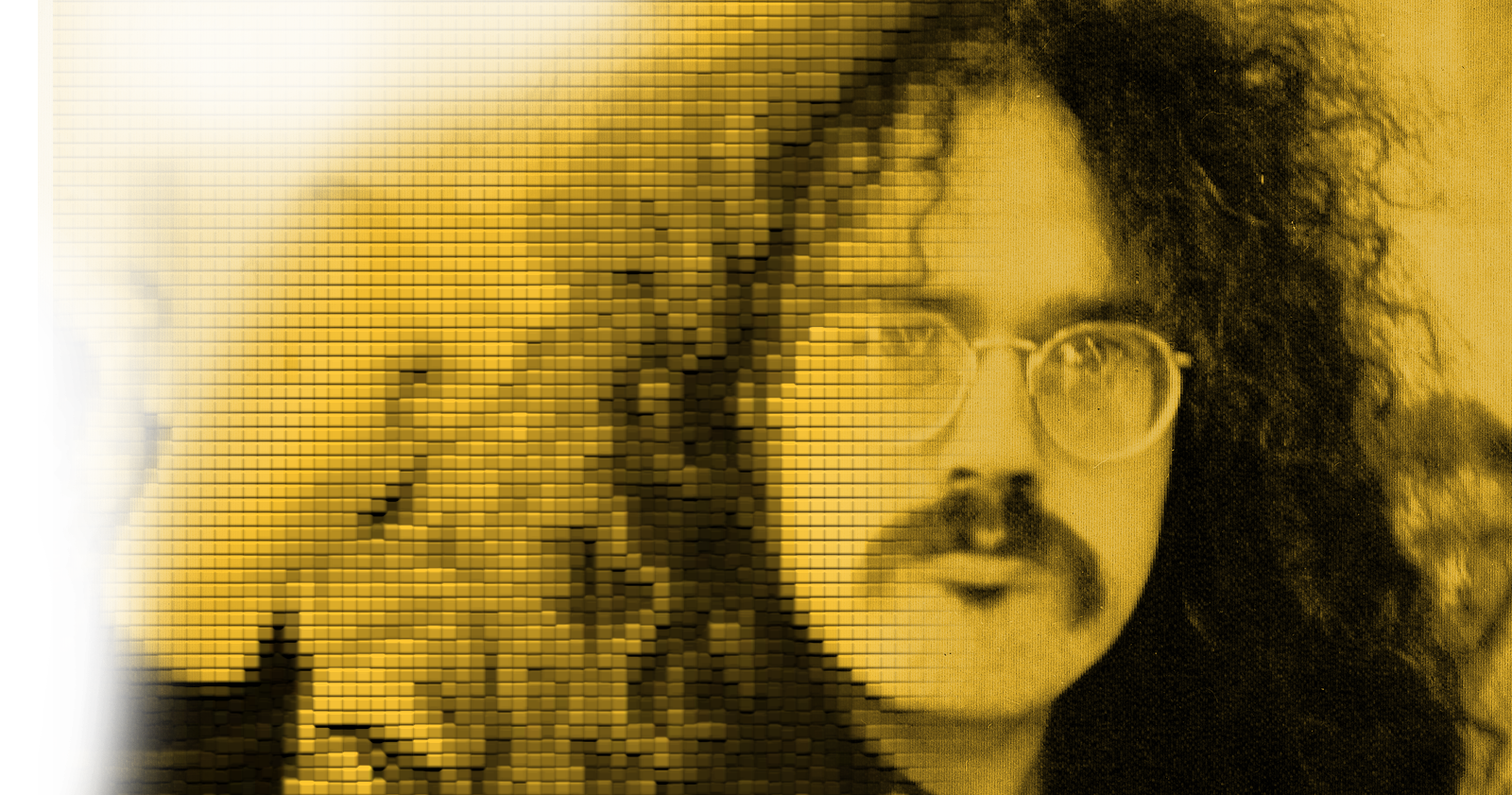
 JOHN SINCLAIR
THE EXILE
I moved to Amsterdam in 2003. I was sixty-two years old. I had spent twelve years in New Orleans doing radio at WWOZ. I had spent the decades before that in Michigan, organizing and getting arrested and going to prison and getting out and organizing some more. And then I moved to Amsterdam because Amsterdam was the last city in the Western world where a man could smoke a joint in a coffee shop and not go to prison for it.
That is not the whole reason. But it is a real reason.
The other reason was the radio. Radio Free Amsterdam. I could not get the radio I wanted in America. I could not play what I wanted to play the way I wanted to play it. Community radio in America was getting smaller. The FCC was getting stricter. The corporate stations were getting bigger. Clear Channel was buying everything and turning every station in America into the same station.
In Amsterdam, I could play three hours of whatever I wanted. Blues, jazz, free improvisation, spoken word, rock and roll. No playlist from corporate. No demographic targeting. No consultant telling me that my audience wanted something smoother, something safer, something that would not scare the advertisers. I did not have advertisers. I had listeners. There is a difference.
Amsterdam understood something that America had forgotten. Amsterdam understood that freedom is not an abstraction. Freedom is a coffee shop where you can sit and smoke and talk and listen to music and nobody bothers you. Freedom is a radio station where the DJ plays what he thinks you need to hear, not what the algorithm says you already like. Freedom is a city that trusts its citizens to make their own decisions about their own bodies and their own minds.
I am not naive about Amsterdam. It was not paradise. It had its problems. The coffee shop system was imperfect — legal to sell, illegal to grow, a contradiction that created its own underground economy. The city was gentrifying, like every city. The tolerance that made it famous was being tested by the same forces that test tolerance everywhere.
But for five years, I could walk down the street and into a coffee shop and smoke marijuana and then walk to the studio and play John Coltrane for three hours and nobody called the police and nobody called the FCC and nobody told me I was a danger to society.
Radio Free Amsterdam ran from 2003 to 2008. Three hours a week. Blues and roots. That was the format. Blues and roots means everything. It means Robert Johnson and Muddy Waters and Howlin' Wolf. It means Coltrane and Sun Ra and Cecil Taylor. It means the MC5 and the Stooges and the New York Dolls. It means poetry. It means the spoken word. It means anything that comes from the root, from the source, from the place where the music begins before somebody puts a label on it.
The show was internet radio. That was new in 2003. The idea that you could sit in a studio in Amsterdam and somebody in Detroit could hear you, somebody in New Orleans could hear you, somebody in Tokyo could hear you — that was the promise of the internet before the algorithm ruined it. The internet was supposed to be the ultimate radio station. No walls. No borders. No FCC. Just the signal, going everywhere.
I was in exile. I did not use that word at the time but that is what it was. I was an American citizen who left America because America's drug laws made it impossible for me to live the life I believed in without the constant threat of arrest. I had been arrested. I had been imprisoned. I had been surveilled. I had been COINTELPRO'd. And even after all of that, the laws had barely changed. Medical marijuana in some states. Decriminalization in a few cities. But the federal government still classified marijuana as a Schedule I narcotic, the same category as heroin. In 2003. Thirty-four years after they put me in prison.
So I left. I went to Amsterdam where the coffee shops had been operating since the 1970s and nobody had died and society had not collapsed and the fabric of Western civilization was intact.
The thing about exile is that it clarifies. When you are inside a system, you cannot see the system. You can only see the walls. When you are outside, when you are sitting in a studio in Amsterdam playing Coltrane for an audience that spans the globe, you can see the whole thing. You can see how the drug laws and the FCC regulations and the corporate consolidation of media are all part of the same project. The project of control. The project of deciding what people are allowed to put in their bodies and what people are allowed to put in their ears.
Radio Free Amsterdam was my answer to that project. Three hours a week of uncontrolled signal. No filter. No algorithm. No corporate sponsor. Just a man with a record collection and a microphone and five decades of knowing what the music means.
I came back to Detroit in 2008. Michigan was about to legalize medical marijuana. The world was changing. The thing I had been fighting for since 1965 was starting to happen. Not because of me. Because of everybody. Because enough people had been arrested and enough families had been destroyed and enough billions had been wasted and finally, finally, the math started to change.
I came back because Detroit was home. Detroit was always home. Amsterdam was where I could breathe. Detroit was where I could fight. And there was still fighting to do.
Radio Free Amsterdam was five years. Two hundred and sixty shows. Thousands of songs. Hundreds of artists. Three hours at a time, every week, from a studio in a city that believed in freedom, beamed to a world that was still making up its mind.
The station is off the air now. The shows are archived somewhere. The music is still there. The signal does not disappear when you turn off the transmitter. The signal is in the air. It is in the wires. It is in the memory of everyone who ever tuned in and heard something they were not supposed to hear and felt something they were not supposed to feel and thought something they were not supposed to think.
That is what radio is for. That is what exile taught me. The station never needed walls. The station never needed a country. The station just needed the frequency and someone willing to broadcast.
That's the transmission.
See also: The Return — coming home to Detroit in 2008. The Second Line — New Orleans, the years before exile. The Dial — the first radio that mattered. The Station Never Needed Walls — radio philosophy. CBGB Is a Clothing Store — the same thing happened to New York. The Weed — why he left, and what finally changed about the law.