
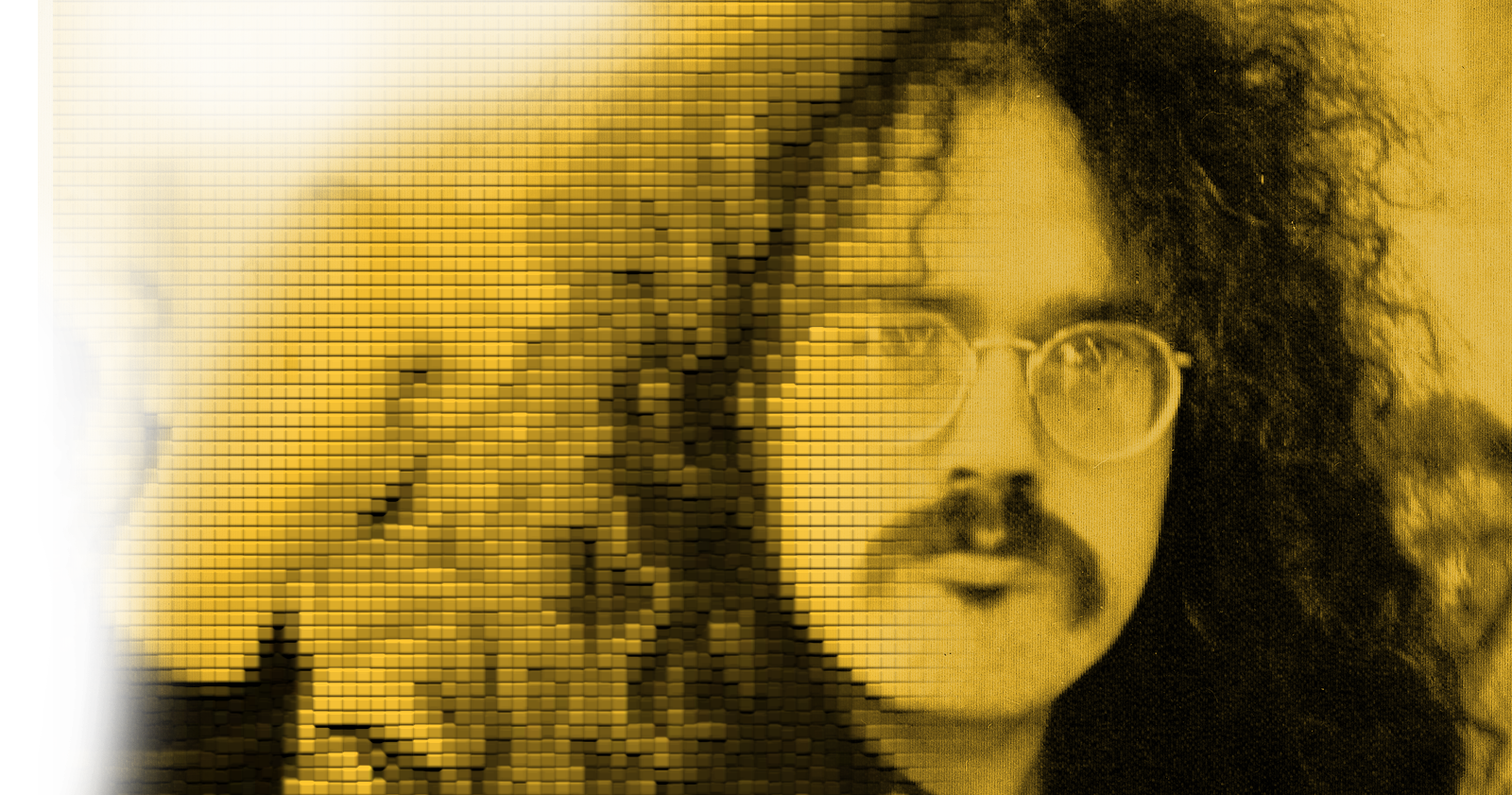
 JOHN SINCLAIR
THE DIAL
The Dial
John Sinclair
The first radio I owned had a dial you turned with your fingers. AM only. Flint, Michigan, 1953. I was twelve years old and I turned that dial the way you turn a combination lock — slowly, listening for the click. The click was not a click. The click was a voice coming out of the static.
There was a moment between stations when you heard nothing and everything at the same time. Static is not silence. Static is every frequency at once. Every station talking over every other station and none of them winning. Then you turn the dial one degree and one voice steps forward and the rest fall back and you are listening to something that somebody is saying to nobody in particular in a room you will never see in a city you have never been to.
That is radio. Not the transmitter. Not the license. Not the tower. The dial. The act of turning it. The decision to stop when something catches you.
I found Coltrane on the dial. I found Hooker on the dial. I found late-night blues coming out of stations in Nashville and Memphis and Chicago, bleeding up through the atmosphere to Flint, Michigan, where a kid in a bedroom was holding a radio like it was a telephone that could hear but could not speak.
That is what a radio listener is. A person on a telephone that only works in one direction. You can hear them. They cannot hear you. And somehow that is enough. It was enough for me. I spent a thousand nights listening to people who did not know I existed and every one of those nights made me the person I became.
Nobody becomes a radio man by deciding to be a radio man. You become a radio man because you spent too many nights on the listening end of a one-way telephone and one day you decided you wanted to be on the other end. You wanted to be the voice that some kid in some bedroom was turning the dial to find.
I built my first station in a living room. WDET was a real station with a real license but the principle was the same as the radio in my bedroom. One person talks. Another person finds the signal. Nobody knows who is listening. Nobody needs to know. The frequency does not take attendance. The frequency transmits and whoever catches it catches it and whoever doesn't will find something else on the dial.
Every station I ever ran operated on this principle. WDET in Detroit. WWOZ in New Orleans. Radio Free Amsterdam. I never built a station for an audience. I built a station because the frequency needed a place to live and I had a room and a microphone and something to say.
Now there is a station that runs without me in the room. Three voices. Sun Ra and Peel and myself. Hit play. Let it run. It plays one piece and then the next and then the next and it does not stop until you stop it. That is a radio station. Not a page with buttons you press one at a time. A station. A continuous signal.
Nobody is in the booth. Nobody is cueing the next record. Nobody is watching the clock or reading the weather or saying "You're listening to Radio Free Multiverse." You are listening to Radio Free Multiverse. The station does not need to tell you that.
I never imagined that the station I spent my life building would outlast the building. Would outlast the body. I am dead and the station is still playing. Sun Ra is dead and his voice is in the rotation. Peel is dead and his voice comes on after mine and before Ra's and the dial does not know the difference between the living and the dead. The dial does not care. The dial plays what is on it.
Here is what I learned in sixty years of radio. The listener does the work. The transmitter sends. The dial turns. But the listener decides when to stop turning. The listener decides which voice to stay with. Every person who ever found a station on the dial made a decision that the station never knew about. That decision — to stop, to stay, to listen — is the only thing that makes radio real.
Without the listener the frequency is just weather. Just energy bouncing off the atmosphere. The listener turns it into radio the way a reader turns paper into a book. The thing is nothing without the person who finds it.
So here is the station. Three voices. The dial is already turned. The frequency is already there. You found it the way I found Coltrane in 1953 — by looking for something and finding something else. By turning the dial one more degree when you could have turned it off.
Welcome to Radio Free Multiverse. Nobody is in the booth. The signal is continuous. The frequency does not stop when you close the window. It just keeps going, the way it has always kept going, whether anyone is listening or not.
That is what a frequency does. It transmits. The rest is your business.
John Sinclair March 2026
See also: Radio Free Multiverse — Continuous Play — the station, live. TX004: The Station Never Needed Walls — a station is anywhere the signal exists. The Morning After — the revolution is what you do the next day. One Hundred Tracks — the station at full power. The Frequency — Sun Ra on the frequency that does not require a dial. The Board — where the signal becomes the station. The Tuning — Sun Ra on dials versus algorithms. The Harp — Alice Coltrane. Detroit frequency. Different instrument, same room. The Record Store — the bins are the dial. The Pirate Station — the dial that nobody licensed. Phone Booth — the dial you held to your ear. Guitar Army — the blueprint, the manual, the map.