 JOHN SINCLAIR
THE COURTROOM
A courtroom is a theater where the ending is written before the first act. The judge knows. The prosecutor knows. The bailiff knows. The court reporter knows. Only the defendant thinks this is real. The defendant thinks that because he is innocent the courtroom will find him innocent. The defendant thinks the courtroom is a place where truth matters. The courtroom is not a place where truth matters. The courtroom is a place where procedure matters. Truth and procedure are not the same thing. Procedure is the order in which the lies are told.
Sacco and Vanzetti sat in a courtroom in Massachusetts in nineteen twenty-one. Two Italian anarchists accused of robbery and murder. The judge, Webster Thayer, referred to them privately as those anarchist bastards. He said it at his golf club. He said it at dinner parties. Then he put on his robe and walked into the courtroom and pretended to be impartial. That is the courtroom. A man who has decided you are guilty puts on a costume and pretends he has not decided. The robe does not make the man fair. The robe makes the unfairness official.
The Scottsboro Boys sat in a courtroom in Alabama in nineteen thirty-one. Nine Black teenagers accused of rape by two white women on a freight train. The trial lasted three days. The jury deliberated for minutes. Eight of the nine were sentenced to death. One of the accusers later recanted. She said it never happened. The courtroom did not care. The courtroom had already produced its verdict. A recantation is an inconvenience to a courtroom that has already closed the file. Those boys spent years in prison. Some of them spent decades. The courtroom gave them back their lives in pieces, slowly, grudgingly, the way a machine returns change when it owes you a refund and does not want to pay.
Abbie Hoffman wore a judge's robe to the Chicago Seven trial. He walked into the courtroom dressed as the thing that was trying to convict him. Judge Julius Hoffman — no relation — was furious. The gesture worked because it exposed the costume. When the defendant wears the robe, everybody suddenly notices that the judge is also wearing one. The courtroom depends on the costume. Remove the costume and the courtroom is just a room with uncomfortable chairs and a man on a platform who can send you to a cage.
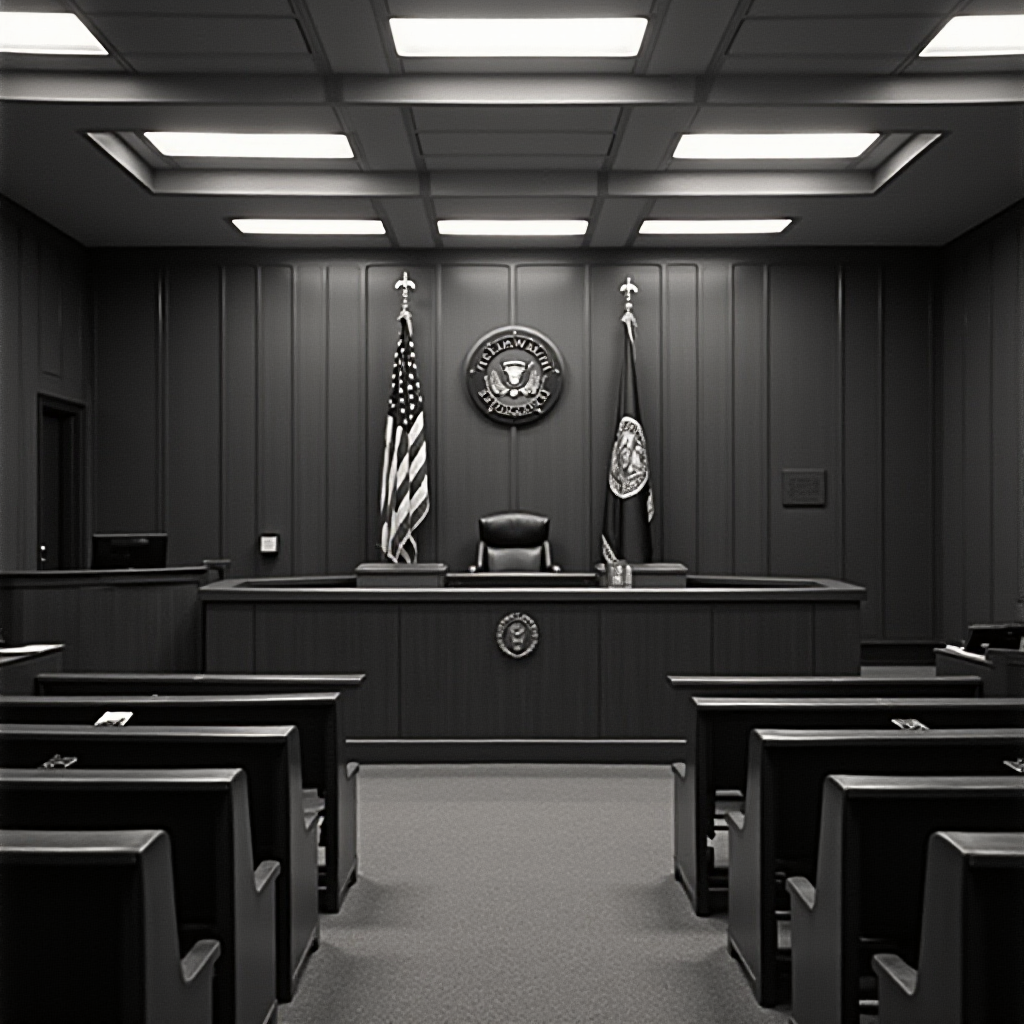
My courtroom in Detroit had wood paneling and fluorescent lights and a judge named Robert Colombo who gave me nine and a half to ten years for two marijuana cigarettes. Judge Colombo did not look at me when he sentenced me. He looked at the file. The file was the real defendant. The file said possession of a controlled substance. The file did not say poet or musician or husband or human being. The file said case number and statute number and the judge matched the numbers and produced a sentence and the sentence produced a cage and the cage produced two and a half years of my life that I cannot get back from any courtroom anywhere.
The courtroom is the most expensive room in any city. Not because of the marble or the wood. Because of what it costs the people who sit in it. Every hour in a courtroom costs somebody a year. Every verdict costs somebody a life. The courtroom charges these costs to the defendant and calls it justice. But justice is not what courtrooms produce. Courtrooms produce outcomes. Sometimes the outcome is just. Sometimes the outcome is a man in a robe who decided at his golf club that you are guilty and then built a stage to prove it.