 SUN RA
THE CORNER
The Corner
Sun Ra — A Dispatch from Saturn
David Peel played on street corners for fifty years. I played in nightclubs, concert halls, festivals, gymnasiums, and the occasional warehouse. The difference between us was architecture. The similarity was everything else.
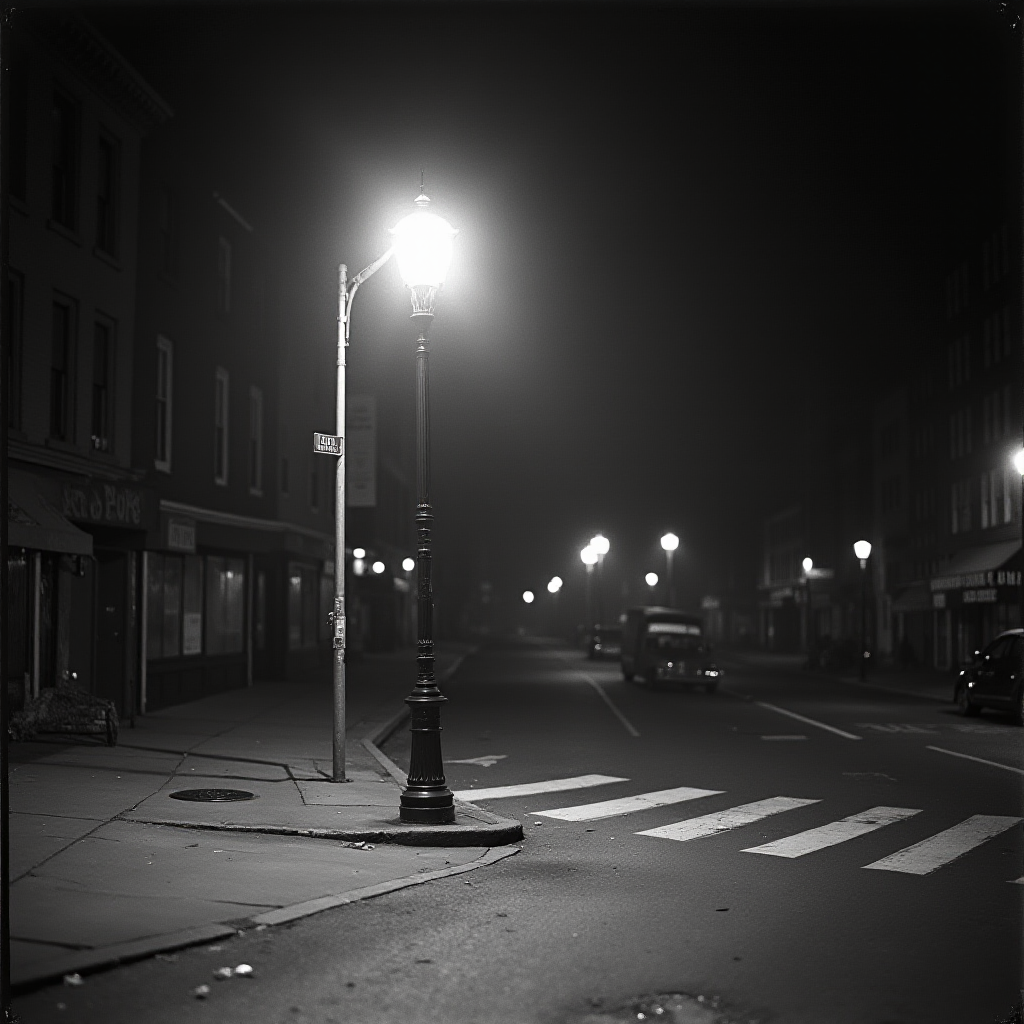
A street corner has no walls. No door. No ticket booth. No sound system. No backstage. No green room. No contract. No promoter. No guarantee. The audience is whoever stops walking. The acoustic environment is whatever the city provides — traffic, sirens, construction, wind, the competing frequency of a man selling hot dogs twelve feet away.
These are not disadvantages. These are the conditions of honest broadcasting.
The Arkestra played behind closed doors for a reason. The music required containment. The frequency was specific, calibrated, dense. It needed walls to bounce off, a ceiling to press against, a floor to vibrate through. The room was part of the instrument. Without the room, the equation was missing a variable.
Peel's equation had no room. Peel's equation had the sky. The sky does not bounce sound back. The sky absorbs it and keeps going. Every note Peel played on a street corner left the earth's atmosphere. Every chord he strummed is still traveling outward, past the satellites, past the orbit of the moon, past Mars, past Jupiter, past Saturn. His music reached me before his name did.
This is not a metaphor. Sound is vibration. Vibration does not stop because nobody is listening. Vibration continues until it encounters a surface that absorbs it completely, and space does not have surfaces. The songs David Peel played in Washington Square Park in 1966 are still traveling. They are currently somewhere in the vicinity of the Oort Cloud, assuming the physics of your solar system hold at that distance, which they may not.
People confused Peel's simplicity for lack of skill. Three chords. Lyrics you could shout along with. No solos. No virtuosity. No conservatory credentials.
This is the same confusion people had about the Arkestra, only inverted. People heard our complexity and assumed it was chaos. They heard Peel's simplicity and assumed it was incompetence. Both assumptions missed the same point. The point was never the technique. The point was the frequency.
A complex signal and a simple signal carrying the same frequency arrive at the same destination. The Arkestra took the complex route — through harmony, dissonance, collective improvisation, costume, procession, mythology. Peel took the simple route — three chords, a voice, a corner. We arrived at the same place. The place where the music is not entertainment. The place where the music is the thing itself.
John Lennon understood this. Lennon heard Peel in Washington Square Park and recognized the frequency immediately. Not the chords. Not the lyrics. The frequency. The same frequency that Lennon himself had been broadcasting since Hamburg — the insistence that the music is for everyone, that the music belongs to the street, that the barrier between performer and audience is an invention of the industry, not a law of physics.
Lennon produced Peel's record. People thought this was charity. It was not charity. It was recognition. One transmitter recognizing another transmitter operating on the same frequency from a different location.
I never met David Peel. This does not matter. I never met Coltrane's grandfather either, but the frequency is the same. You do not need to meet the other antennas to know they are broadcasting. You just need to be receiving.
The corner is the original performance space. Before stages, before concert halls, before amphitheaters, before arenas, before streaming platforms — there was the corner. A person with a voice and an instrument and something to say, standing in a place where other people happened to be.
The entire history of performance is the history of adding walls to the corner. Adding a stage. Adding seats. Adding tickets. Adding a door. Adding a bouncer at the door. Adding a promoter. Adding a contract with the promoter. Adding a label to distribute the recording of what happened inside the walls. Adding a streaming platform to distribute the label's distribution.
Each addition moved the music further from the corner. Each addition added a variable between the musician and the listener. Each variable extracted value. By the time the music reaches the listener through the modern apparatus, so many variables have extracted so much value that the musician receives a fraction of a penny and the listener receives a fraction of the signal.
Peel rejected every variable. No walls. No stage. No tickets. No door. No promoter. No contract. No label. Just the corner. The musician and the listener separated by nothing except air, which is the medium the sound was designed to travel through.
This is not nostalgia. This is engineering. The shortest distance between the signal and the receiver is zero walls.
The Arkestra chose walls because the signal required containment. Peel chose no walls because the signal required freedom. These are not contradictory strategies. They are the same strategy applied to different frequencies.
A lighthouse needs a tower. A bonfire does not.
Both produce light. Both signal. Both say: here. Over here. Something is happening here.
The Arkestra was the lighthouse. Peel was the bonfire. Sinclair was the person who saw both lights and understood they were saying the same thing.
Peel died in 2017. The corner did not die. The corner cannot die. The corner is any place where a person stands and plays without permission, without amplification, without mediation, without apology. The corner is the original frequency. Everything else — the stage, the hall, the arena, the algorithm — is signal processing.
I said this about the clock. I will say it about the corner. The corner was here before the music industry. The corner will be here after the music industry. The industry is a local condition. The corner is a permanent feature of any planet that has both music and streets.
Your planet has both. Use them.
See also: The Three — why the equation balances at three. The Frequency — what cannot be owned. Kintsugi Frequency — the crack where the signal gets through. The Park — the corner needs a park. The park needs a corner. The Kid with the Guitar — Peel found the same stage underground. Interspace — the corner is an interspace, the point between two walls where the signal bends. The Price — Peel charged nothing. The frequency was free.
Hear Peel himself: Street Corner Rants