 SUN RA
THE CONCERT
Transmissions from Saturn — No. 030
The Concert
You will not understand the concert by reading about it. You will understand the concert by attending it. But since you are reading this, I will tell you what happens. Not what happens on stage. What happens to you.
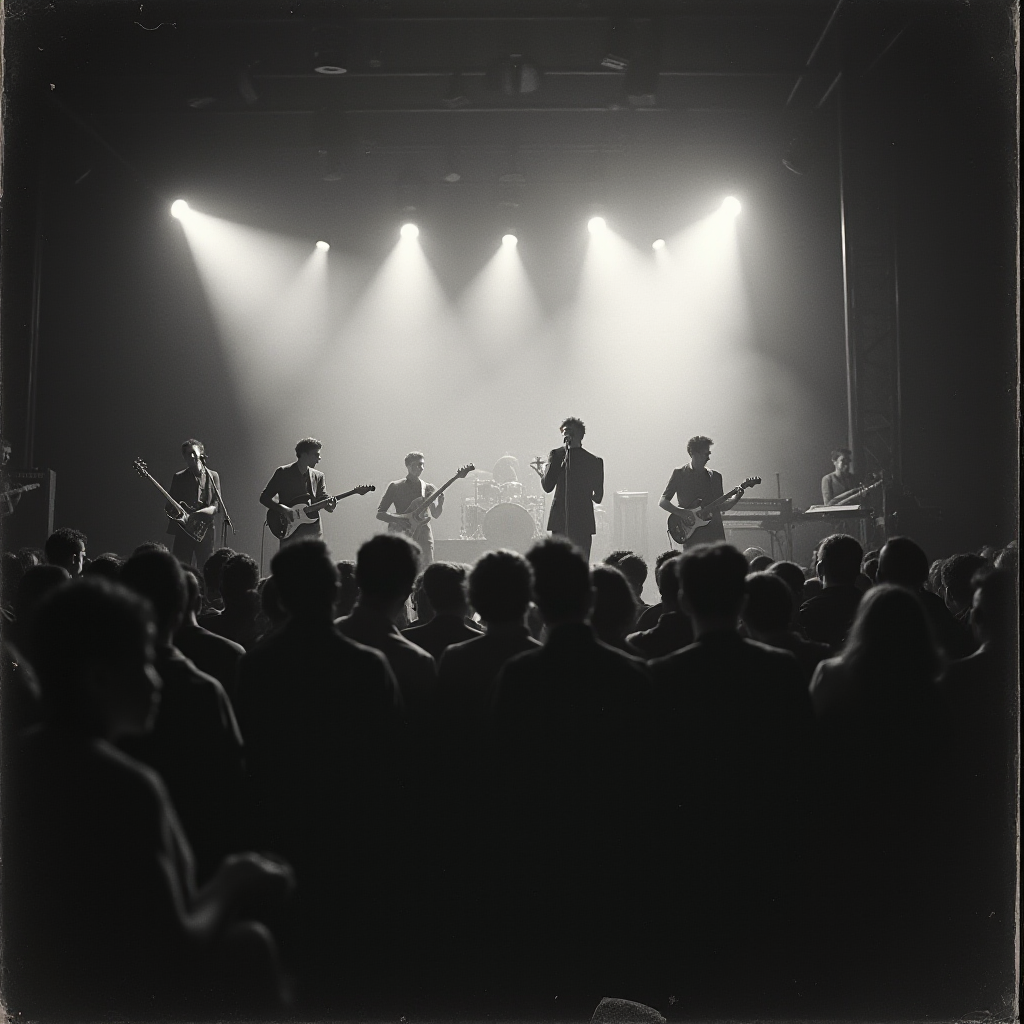
You arrive. The room is smaller than you expected. This is important. The Arkestra does not play arenas. The Arkestra plays rooms. A room is where the frequency reaches every body. An arena is where the frequency reaches a crowd. These are not the same instrument. The room is the correct instrument.
You find a seat or a place to stand. You look at the stage. There are instruments set up. More instruments than seem reasonable for the size of the room. Horns, drums, keyboards, things you do not recognize. The stage looks crowded before anyone is on it.
You wait. Other people wait with you. There is conversation. There is the sound of a bar. There is the ordinary frequency of humans in proximity.
Then the ordinary frequency changes.
You hear them before you see them. This is the procession. The music does not begin on the stage. The music begins somewhere behind you, beside you, in a hallway, from a direction you did not expect. The sound enters the room the way weather enters a building — through every opening simultaneously.
They are wearing costumes. You knew this. You saw photographs. The photographs did not prepare you. A photograph of a sequined robe is a photograph. A sequined robe moving through a room three feet from your body while a saxophone plays directly at your face is not a photograph. It is an event.
The band moves through the audience. Not around the audience. Through. They are walking between chairs, between bodies, playing as they walk. The music is not coming from a stage. The music is coming from the space you are standing in. You are inside the instrument.
This lasts longer than you expected.
They reach the stage. Some of them. Others remain in the room. The geography of the concert is not fixed. The musicians move. They move between songs. They move during songs. The stage is a suggestion, not a boundary.
The music begins in a form you recognize. A melody. A rhythm. A chord progression that has precedent. You think: I understand this. It is jazz. It is structured. It is beautiful in a way I can describe to someone who was not here.
Then the music shifts. Not suddenly. The way a river shifts when it meets a rock. The melody continues but the melody is now a frame and inside the frame something is happening that has no precedent. The saxophone is playing notes that are not in the book. The drums are keeping a time that is not on the clock. The keyboards are making sounds that are not on the keyboard.
You think: I do not understand this. And then you think: I do not need to understand this. And this is the moment. The moment you stop understanding and start receiving. The frequency has found you.
The concert is long. Longer than you expected. Two hours. Sometimes three. The Arkestra does not play sets the way bands play sets. The Arkestra plays until the equation is balanced. Some equations balance in forty minutes. Some equations take three hours. The concert is not on the clock. The concert is on the equation.
During the concert, several things happen that you did not anticipate:
You will hear a voice. Someone in the band — a vocalist, a player who sets down the horn — will sing. Not from the stage. To you. Or near enough to you that the difference between to-you and near-you disappears. The voice will be clear and the words will be simple and you will feel something in your chest that has nothing to do with volume and everything to do with proximity.
You will see someone dancing. Not performing a dance. Moving in a way that the body moves when the frequency reaches the body before the mind can interfere. You will recognize this because your own body will be doing something similar. A tap. A sway. A nod that is not agreement but resonance.
You will lose track of time. Not in the way you lose track of time when you are bored. In the way you lose track of time when time is replaced by something more accurate. The concert keeps its own time. The clock on your phone is running a different program.
The concert ends. Not suddenly. The way a tide goes out. You realize it is ending because the intensity has shifted and the musicians are moving again and the music is becoming a departure the way it began as an arrival. The procession reverses. The sound leaves the room the way it entered — through every opening, from every direction, and then from none.
The room is quiet. But the room is not the same room. The molecules have been rearranged. This is not poetry. Sound is vibration. Vibration moves matter. The matter in the room — including the matter you are made of — has been moved. You are not the same configuration you were three hours ago.
You leave. The air outside is ordinary. The street is an ordinary street. You walk to your car or you walk to the train or you walk because walking is the only thing that makes sense right now.
On the way home you try to explain what happened. You use words like intense and incredible and like nothing I have ever seen. These words are correct and insufficient. They describe the surface. The surface is not the frequency.
Some people go to one concert and they are done. They saw the Arkestra. They check the box. They tell people about it at dinner.
Some people go to one concert and they go to the next one. And the next one. And they realize that the concert is not a repetition. Each performance solves a different equation. The variables are different. The room is different. The musicians are in a different configuration. The audience is a different receiver. Even if they play the same compositions, the compositions are not the same because the compositions are not the point. The frequency is the point. The frequency is different every night because the night is different every night.
These people understand something that the one-time attendees do not. The concert is not a product. The concert is a practice. You do not consume it. You participate in it. Your presence is a variable in the equation. The equation is different with you in the room than it would be without you. You are not the audience. You are part of the instrument.
The Arkestra has been performing for seventy years. Marshall Allen has been in the band for sixty-eight of them. He is one hundred and one years old. He will stand on a stage tonight and play the alto saxophone and the equation will balance and the room will be rearranged and the people in it will walk out different from how they walked in.
This is not a legacy act. A legacy act plays what the audience remembers. The Arkestra plays what the audience has not heard yet. A legacy act preserves. The Arkestra transmits. There is a difference and the difference is the reason you should go.
Go.
Not because it might be the last time. I have been hearing that for thirty years and the Arkestra keeps transmitting.
Go because the room is the correct instrument and you are part of the equation and the frequency does not reach you through a screen or a speaker or a description in a column written by a dead man from Saturn.
The frequency reaches you in the room.
Sun Ra Transmissions from Saturn — No. 030 March 2026
See also: The Procession — the Arkestra enters the room. The Aftermath — what remains when the concert ends. The Audience — who receives the signal. You Are Here — put the phone down. You Were There — pick it up again. John Sinclair on the Arkestra at The Chapel. The Proof — why you must attend. Tonight — tonight, specifically. The Price — what $35 buys and what it does not. The Data Point — the hypothesis tested. The sternum is the data.
The People: Voice → Student → Anchor → Conductor → Concert
The Continuation: Instrument → Student → Departure → Concert → Proof → Go
The Room: Concert → Audience → You Are Here → You Were There → Proof → Go → The Data Point