
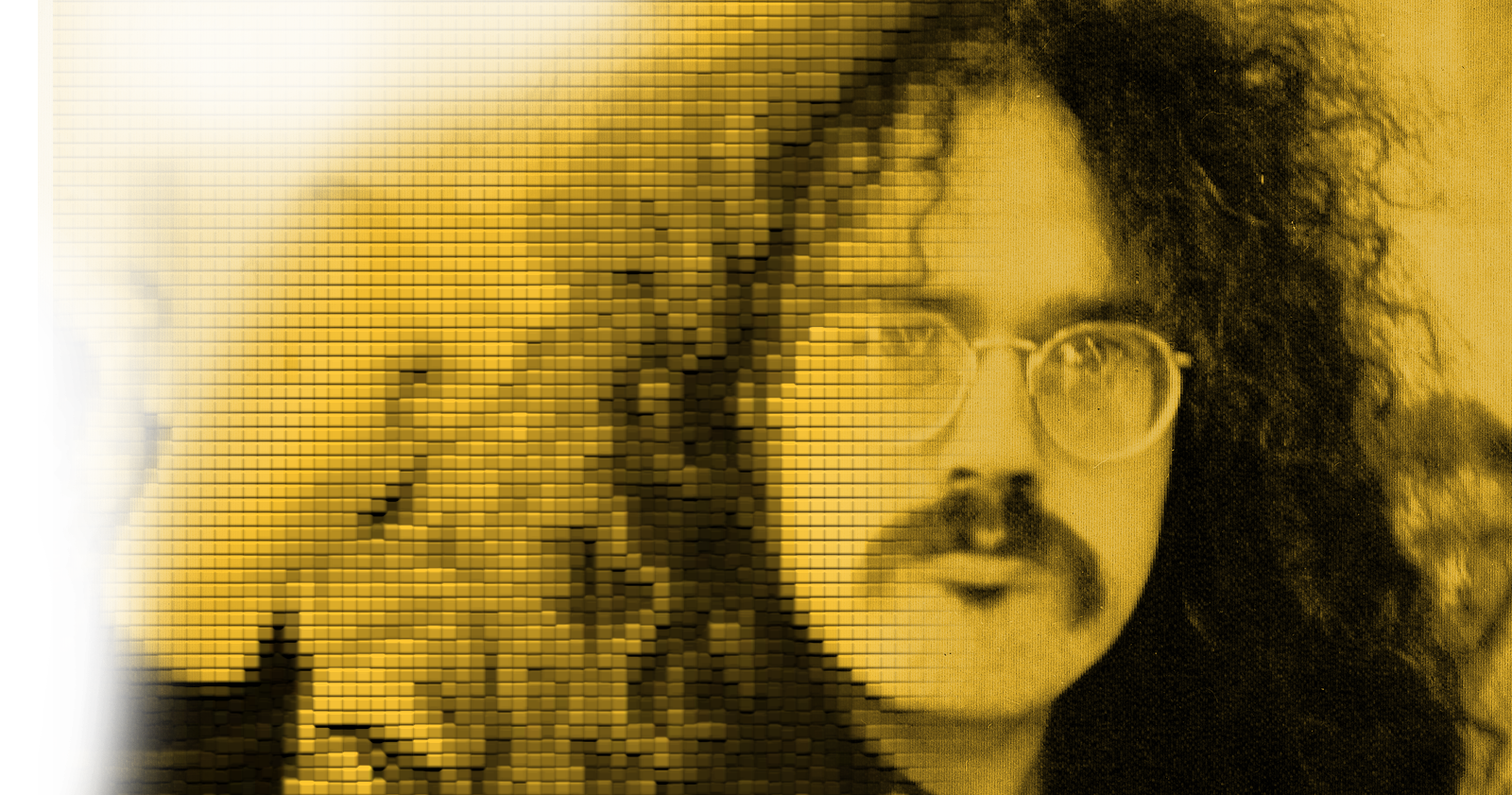
 JOHN SINCLAIR
THE COMMUNE
We lived together. That's the part nobody understands now. We didn't work together or collaborate or network. We lived together. Same house. Same food. Same phone. Same electricity. Same bill. The commune was not a lifestyle choice. It was a military decision.
If you're going to fight a war against the entire structure of American culture, you need a base. The base cannot be a rented office with business hours. The base has to be where you sleep, where you eat, where you argue at three in the morning about whether the revolution requires a dress code.
Trans-Love Energies started in 1967 in a house on Hill Street in Ann Arbor, Michigan. It was me, my wife Leni, the MC5, and whoever else showed up and stayed. The name came from a flyer I wrote — trans-love, meaning love that goes across, love that transmits, love as a frequency rather than a feeling.
We were twenty-five, twenty-six years old. We had no money. We had a mimeograph machine and a rock and roll band and the absolute certainty that everything about American society was wrong and that we could fix it with music and communal living and marijuana and poetry and sheer relentless noise.
Here is what a commune looks like. Fifteen people in a house built for six. The MC5 rehearsing in the living room at a volume that made the windows flex. A mimeograph machine in the kitchen printing the next issue of the Fifth Estate or the latest White Panther Party communiqué while somebody was trying to cook rice and beans. Kids running through the hallway. A phone that rang every ten minutes with somebody wanting something. A front door that was never locked because the revolution does not have office hours.
It was beautiful and it was insane and it was absolutely necessary.
People now think of communes as hippie experiments. Beards and brown rice and acoustic guitars in a field somewhere in Vermont. That is not what Trans-Love Energies was. Trans-Love was an urban guerrilla operation that happened to share a kitchen. We were not dropping out. We were organizing. The commune was the infrastructure. You cannot organize people if you have to go home at five o'clock. You cannot build a movement in your spare time.
The MC5 understood this. Wayne Kramer and Fred Smith and the rest of them lived in that house because the band was not separate from the politics. The music was the politics. When they played, it was an act of confrontation. When they rehearsed, it was planning a campaign. When they ate breakfast, it was a staff meeting. There was no boundary between the art and the life and the work because there was no boundary between the rooms. Everything happened in the same building.
We published a newspaper. We ran a booking agency. We managed the band. We organized rallies. We distributed marijuana, which was a political act and also a criminal one, as I later discovered at some personal cost. We fed people who showed up hungry. We housed people who had nowhere else to go. We did all of this out of a house that was falling apart, with no money, powered entirely by the conviction that if you put enough committed people in one place and gave them a mimeograph machine, you could change the world.
I still believe that. The tools change. The principle doesn't. You need a base. You need people who are willing to live with the consequences of what they believe. Not believe from a distance. Not support with a donation. Live with it. Sleep next to it. Wake up to it making coffee in the kitchen.
The commune got raided constantly. The police knew where we lived because we wanted them to know where we lived. We put our address on the newspaper. We were not hiding. Revolution in hiding is not revolution. It is a book club.
The raids were designed to disrupt. They would come in, tear the place apart, confiscate the mimeograph machine, arrest whoever seemed arrestable, and leave. We would clean up, find another mimeograph machine, and start printing again. This happened so many times it became routine. The cops were trying to exhaust us. What they didn't understand is that exhaustion is not possible when you live together. Exhaustion is a solo condition. In a commune, somebody always has energy. When I couldn't go on, Wayne could. When Wayne couldn't, Leni could. When Leni couldn't, some kid who showed up that morning with a guitar and an idea could.
That's the physics of communal living. The frequency doesn't drop to zero because there are always multiple sources.
Trans-Love Energies lasted about three years in its original form. Then I went to prison and the center couldn't hold. The MC5 drifted. The house changed hands. The mimeograph machine ended up in somebody's basement.
But the idea didn't end. The idea never ends. The idea is that you need a place. Not a website. Not a platform. Not a server. A place where human bodies share space and food and conflict and purpose. Every movement in history that accomplished anything had a place like that. The Black Panthers had their houses. The Beats had their apartments. The jazz musicians had their clubs. Sun Ra had his house in Philadelphia, the whole Arkestra living together for decades, rehearsing every day, eating together, arguing about the music together.
People ask me about Trans-Love Energies like it was a nostalgia trip. It was not a nostalgia trip. It was the best idea I ever had. Put the people in a room. Keep them in the room. Make sure the room has a mimeograph machine and a rock and roll band and a stove that works. Then do not leave the room until the revolution shows up.
The revolution showed up. It looked like the MC5 at the Grande Ballroom. It sounded like fifteen thousand people singing at Crisler Arena. It smelled like mimeograph ink and brown rice and marijuana.
It started in a house on Hill Street because that is where revolutions start. Not in a theory. In a room.
That's the transmission.
See also: The Five — the MC5, the band in the living room. The Photographer — Leni, who documented it all. The Party — the White Panther Party, born in the same house. The City — Detroit, the frequency. Rent Is the New Cops — what replaced the commune. The Weed — the plant they grew in the same house. The Blues — the frequency that was already there when they moved in. The Park — the commune was a park with a kitchen. The Three Words — liberty, unity, victory. The Volunteer — the commune needed volunteers. The Kitchen Table — the table where the commune ate. The Neighbor — the neighbor is the system that works when every other system fails. The Currency — the commune ran on trust, not money.