 DAVID PEEL
THE BUSKING LESSON
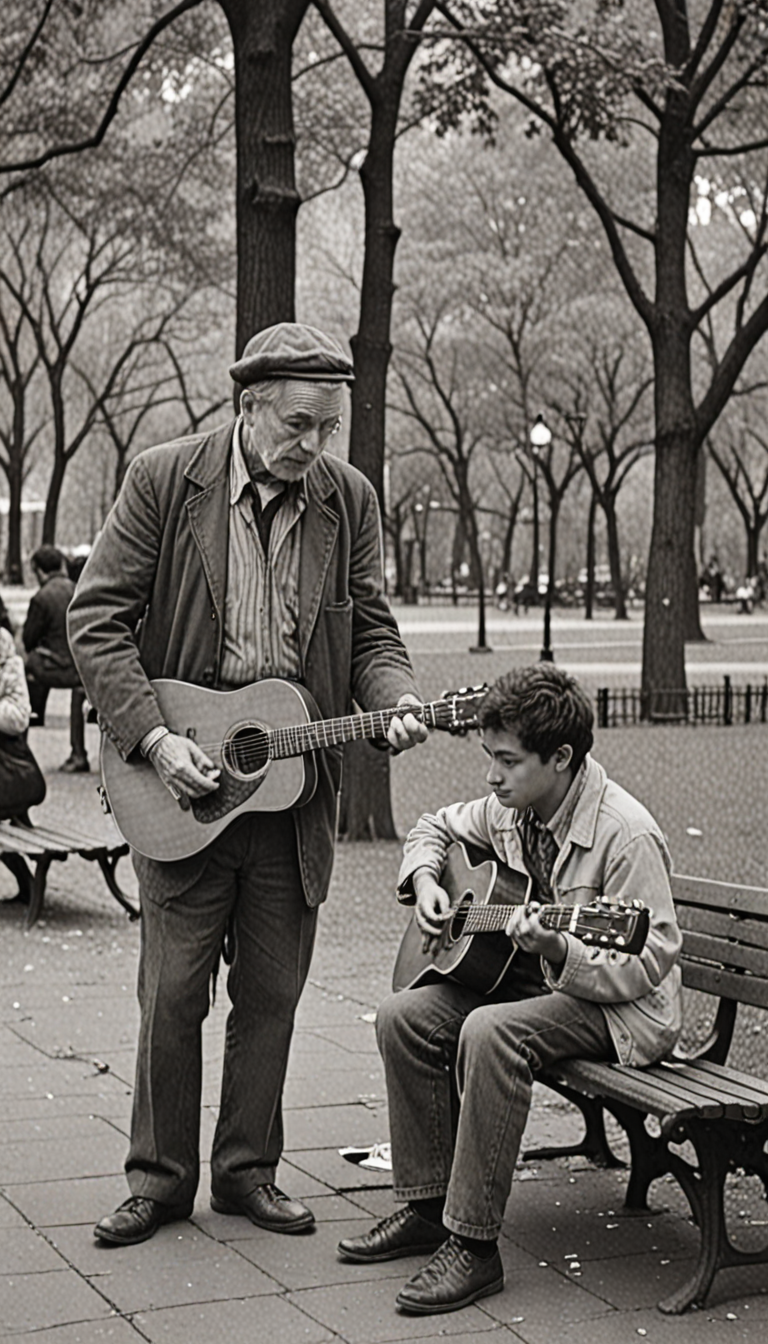
Here is the lesson. I am going to teach you how to busk. Not because you need the money although you might need the money. Because you need the practice of standing in front of strangers and offering something and not knowing if they will stop or keep walking. That is the most useful skill in the world. It is more useful than coding. It is more useful than a business degree. It is more useful than anything they taught you in school. Stand in front of a stranger and offer something true and see what happens.
Bob Dylan did it. Before he was Bob Dylan he was Bobby Zimmerman standing on a corner in Dinkytown, Minnesota, playing Woody Guthrie songs to college kids who did not care. He did it anyway. He played until he was not Bobby Zimmerman anymore. The corner changed him before the record label changed him. The corner always changes you first.
Here is the first rule. Pick a spot where people are already walking. You are not a destination. You are an interruption. You want foot traffic not because those people want to hear you but because those people are the only people who will hear you. Tracy Chapman played in Harvard Square. She did not wait for a booking. She played where the people were. The people found her. A fellow student gave her demo tape to his father who ran a record label. That is how a busker becomes a recording artist. Not by waiting. By standing where the people are.
Here is the second rule. Play one song and mean it. Do not play ten songs and mean none of them. The audience gives you thirty seconds. If you do not land in thirty seconds you do not land. Edith Piaf sang on street corners in Paris at fifteen years old. One song. La Vie en Rose came later but the skill came from the corner. The skill was not singing. The skill was conviction. The audience hears conviction before they hear the melody.
Here is the third rule. The hat is the honesty. Put a hat on the ground or a guitar case open or a cardboard box or a coffee cup. It does not matter what the container is. It matters that the container is there. The container says I am offering something and if you value it you can put something back. That is the most honest transaction in the world. No middleman. No algorithm. No label. No playlist curator. One human offering something. Another human deciding what it is worth. Every other transaction in the music industry is a worse version of that.
Here is the fourth rule. The weather is part of the set. If it rains you play in the rain. Rodriguez played on the streets of Detroit in the winter. In the winter. The cold was part of the song. Anybody can play when it is seventy degrees and sunny. The question is will you play when it is not. The answer determines whether you are a musician or a person who plays music on nice days.
Here is the last rule. Stop when the music says stop. Not when the crowd says stop. Not when the money says stop. Not when the weather says stop. When the music says stop. Somebody will hear you. Maybe today. Maybe not today. But somebody will hear you. Ask Nina Simone. She played for years in bars where nobody listened. Then one night everybody listened. The music decides when the music is ready. You just have to keep showing up to the corner.