 DAVID PEEL
The Busker
A busker is a musician who plays for people who did not come to hear music. That is the job. You are not performing for an audience. You are performing for a sidewalk. The sidewalk does not care. The sidewalk has appointments. The sidewalk has groceries. The sidewalk has a phone in its hand and earbuds in its ears. You have to be louder than all of that with one guitar and no amplifier.
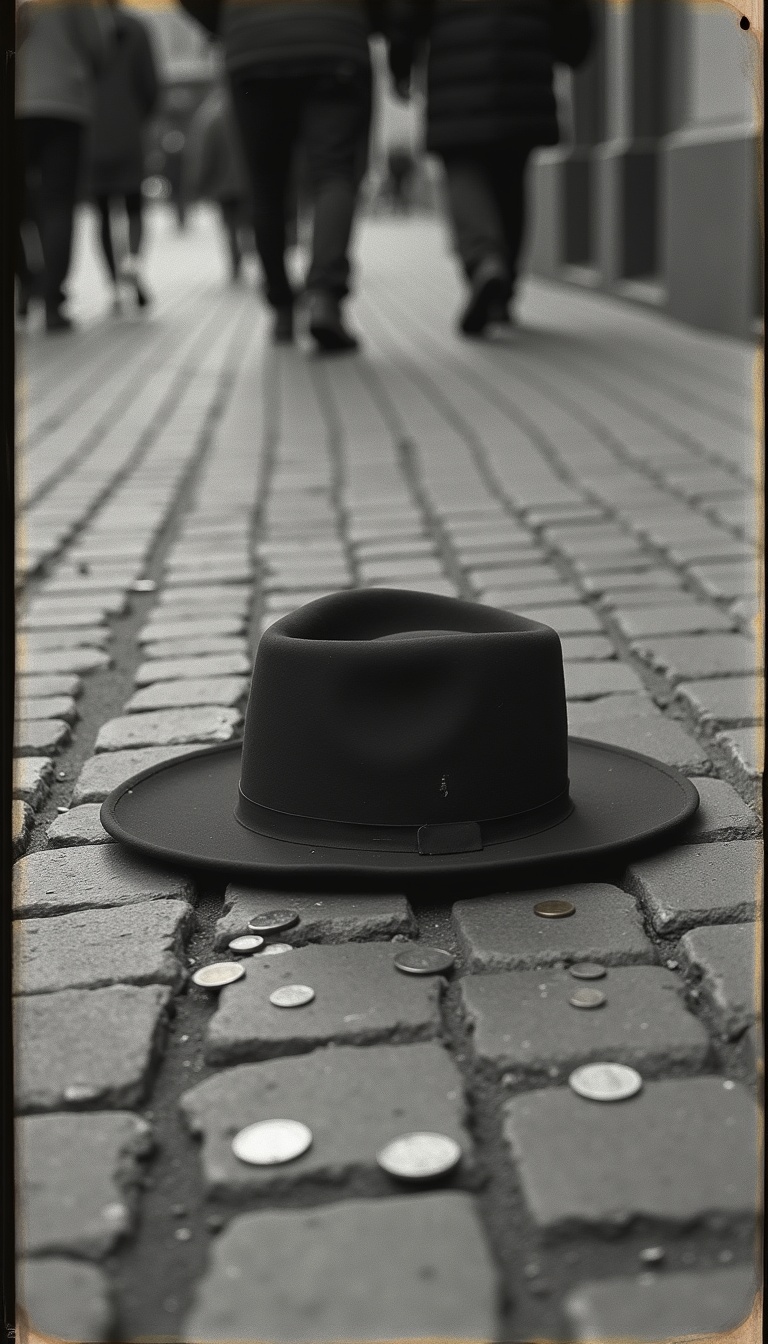
The hat is the whole business model. You put a hat on the ground and you play. If somebody stops, you are doing your job. If somebody puts money in the hat, you are doing your job well. If somebody puts money in the hat and stays for the whole song, you are doing your job better than most people on a stage with a ticket price. The hat does not lie. The hat is the only honest metric in the music industry.
I busked Washington Square Park from nineteen sixty-six until the day I died. Fifty years. Same corner. Same guitar. Different hat because the first one wore out. The park did not book me. The park did not pay me. The park did not promote me. The park let me stand there and play and the rest was between me and the sidewalk. That is the purest contract in music. No manager. No label. No algorithm. Just a man, a guitar, and a hat.
Every famous musician started as a busker. They just forgot. They got a stage and forgot the sidewalk. They got a ticket price and forgot the hat. They got a streaming deal and forgot that a drunk guy throwing a nickel in your hat was more honest than a million plays on a platform that pays you a third of a penny. The busker remembers. The busker never left the sidewalk. The busker is still out there right now, playing for people who did not come to hear music. Go find one. Put something in the hat.
See also: The Fifth Room — the park where the busker plays. A Third of a Penny — what Spotify pays. The Kid with the Guitar — the last honest musician. The Original Algorithm — the street decides. Washington Square — fifty years, same corner. The First Song — the first time the corner heard the truth. The Nickel — the first honest transaction. The Sidewalk — the stage that never closes. Penn Station — the ugliest building in New York and the kid with the violin. The Window — the clean window, the only pitch that works. The Pitch — art is what you call a commercial when you do not want to get paid. The Busking Lesson — five rules for playing on a corner. Dylan, Tracy Chapman, Piaf, Rodriguez, Nina Simone. The Subway — the underground concert hall that charges two-fifty admission. The Curtain Call — the street has no encore because the street has no ending. The Pawnshop — twelve dollars on Third Avenue. The recycling center of American music. The Audience of One — the one who stops is the whole audience. The Cover — the cover is the handshake, the original is the conversation. The Chorus — on the corner the chorus was how I knew the set was working. The Bridge — the eight bars where the song admits it does not have all the answers. Sidewalk — the only stage that does not charge admission. Pigeon — the pigeon and the busker are the same animal. Parking Meter — played guitar next to a row of meters on Bleecker Street. Streetlight — the oldest spotlight in the city, and the busker's best lighting designer. Subway Car — the underground stage that moves.
David Peel