 DAVID PEEL
Buildings Hold the Signals
Dom sat on a bench in Union Square and looked at a building. Not a famous building. Just a building. Brick. Six stories. Fire escape on the front. And the building lit up for him like somebody had drawn a circle around it. He started asking questions. Who built it. Who lived there. How long has it been standing. And then he saw the bricklayer — an old man walking past the same building years later with his grandkid, pointing up and saying I put up that building. I stacked those bricks with pride. The kid barely noticed. Then the old man was gone and the highlight went with him.
That is what every rant on this page is about. The highlight. The signal the building holds after the hand that built it is gone.
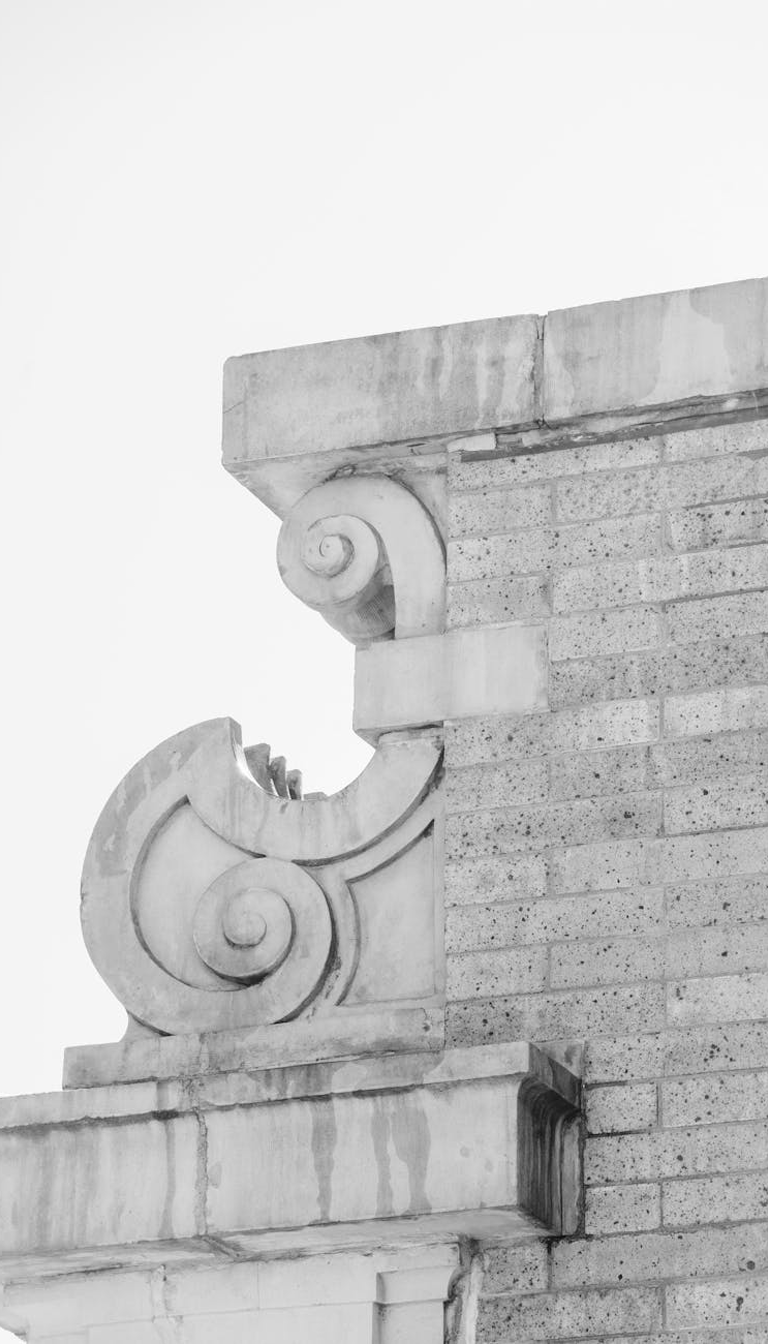
The voussoir is a wedge-shaped stone in an arch. Each stone tries to fall and the other stones will not let it. The arch is a community of wedges holding each other up. That is the bricklayer and his crew. That is the building holding itself together through mutual pressure.
The rosette is a flower carved into stone above the door. Five petals means the mason was Italian. Six means German. Four means Irish. The building wears the mason's nationality on its face and the pedestrian sees a flower. The mason sees home. The highlight is different depending on who is looking.
The terrazzo floor in every New York public school lobby was poured in 1932 and has not aged. The wax aged. The terrazzo waited. Walk across it in leather shoes and the floor rings — the cement and the marble talking to each other through the sole of your shoe. That ring is the signal. The epoxy replacement is silent. A floor that absorbs your footsteps is a floor that does not know you are there.
The weep hole is a gap the mason leaves open on purpose at the bottom of a brick wall. The gap lets the water out. The homeowner sees the gap and fills it with caulk, thinking the mason forgot. The caulk seals the drain. The water freezes. The wall cracks. The homeowner destroyed the wall by trying to fix what was not broken. The gap was the feature. The knowledge was in the trade, passed from mason to mason the way a song passes from singer to singer. Nobody wrote it down. Everybody who laid brick knew it.
The spandrel is the leftover space between an arch and a rectangle. The space nobody planned for that became the space everybody decorated. Washington Square Park is a spandrel. The city built a grid and the grid left a gap and the gap became the most important park in Greenwich Village. My whole career was a spandrel. The city built itself and left gaps and I filled the gaps with noise.
The reveal is the shadow line where one surface steps back from another. The carpenter spends an hour getting the reveal even — one-eighth of an inch all the way around the door. Nobody sees it. But if it were wrong everybody would see it. The whole job of the reveal is to disappear. Success is invisibility.
The cornerstone was hollow. A metal box inside the stone held a newspaper, a coin, a list of workers. A letter to somebody who did not exist yet. The builders wrote to the future the way you write to a stranger. Politely. Hopefully. The stranger tears down the building and opens the box and the newspaper talks about a war. The building saved the newspaper. The newspaper did not save the building.
The scribe is a line scratched into wood to mark where the cut will go. The scribe measures shape, not distance. The ruler says three inches. The scribe says this exact curve right here. Nobody scribes anymore. They use caulk. Filled is not the same as fitted. The scribe was the carpenter respecting the wall.
The wattle and daub is the oldest wall. Sticks and mud. Six thousand years old. The knowledge is dying with the last generation that learned it. Somewhere in England an old man knows how to daub a wall and his grandchildren do not care. That is the same story Dom told about the bricklayer. The highlight fades when the person who carried it is gone. Unless somebody writes it down. Unless somebody says it out loud on a street corner.
The entablature is the horizontal line where the building stops reaching up and starts reaching out. The line where vertical ambition meets horizontal shelter. The Greek entablature was a proportion. The proportion was a philosophy. The philosophy said a building should know when to stop. The glass building does not know when to stop because the glass building has no entablature to tell it.
Every building is a radio broadcasting on a frequency that nobody is tuning in. Four hundred and twenty-nine rants and counting. Each one is a station. The bricklayer's highlight. The mason's nationality. The terrazzo's ring. The weep hole's knowledge. The cornerstone's letter. The signals are in the walls. They have always been in the walls. Dom heard them from a bench in Union Square. The buildings hold the signals. Somebody just has to listen.
See also: All 429 Street Corner Rants