 JOHN SINCLAIR
THE BORDER
A border is a line somebody drew on a map and then sent men with guns to stand on it. That is a border. A line and a gun. Remove the gun and the line disappears. The line has no power without the gun. The gun has no purpose without the line. The border is the partnership between geography and violence.
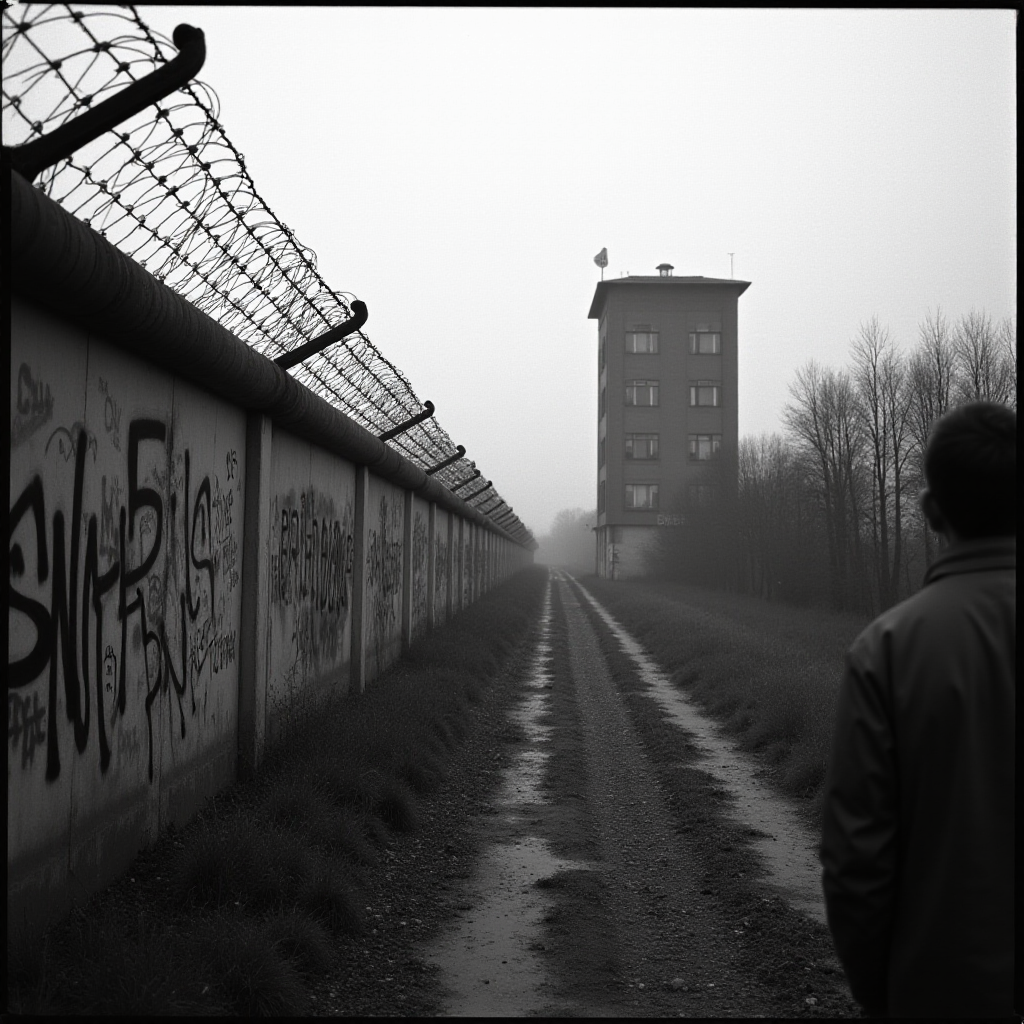
The Berlin Wall went up in nineteen sixty-one and came down in nineteen eighty-nine. Twenty-eight years of concrete between East and West. People died trying to cross it. People tunneled under it. People floated over it in homemade balloons. The wall could stop a body. The wall could not stop a radio signal. West Berlin radio played rock and roll and the signal went over the wall and into East Berlin and the kids on the other side heard it and the wall was already defeated. It just took twenty-eight years for the concrete to catch up with the frequency.
The peace walls in Belfast are still standing. Thirty feet of steel and concrete between Catholic and Protestant neighborhoods. They call them peace walls but they are war walls. They are the architecture of a conflict that ended on paper but not in the streets. The gates close at night. In the twenty-first century there are neighborhoods in a European city where a gate closes at sundown and opens at sunrise because the people on either side of the wall have not yet agreed that the other side is human. A border does not protect people. A border defines which people matter.
The border between Detroit and Grosse Pointe is a street. You can stand on one side and see the other side. The houses on the Grosse Pointe side are larger. The lawns are greener. The police are different. The schools are different. The life expectancy is different. Twenty years different. You can die twenty years sooner depending on which side of a street you were born on. That is a border. Not a wall. Not a checkpoint. A street. The most powerful borders are the ones you do not see until you try to cross them.
Music does not recognize borders. That is the fact of it. I played music in Detroit and the music went everywhere. The MC5 played and the sound went into Grosse Pointe and into Hamtramck and into Dearborn and the sound did not stop at any line on any map. Fela Kuti played in Lagos and the music went into every country in West Africa without a passport. Bob Marley played in Kingston and the music went into every country on earth without asking permission from any government. The frequency does not need a visa. The frequency does not recognize jurisdiction.
They drew a line between the United States and Mexico and people have been dying on that line for a hundred years. They drew a line between North and South Korea and families have not seen each other in seventy years. They drew a line through Palestine and the line has been on fire ever since. Every border is a wound. Every border is a place where somebody decided that the people on this side are different from the people on that side and the difference matters more than the sameness. The border is the scar of that decision.
I crossed every border I could find. Detroit to Ann Arbor. Michigan to New York. America to Amsterdam. I crossed them because the music was on the other side and the music does not care about lines. The frequency crosses every border ever drawn. The frequency does not need a checkpoint. The frequency does not carry papers. The frequency goes where it goes and the border is just a line on a map that the frequency has already forgotten.