
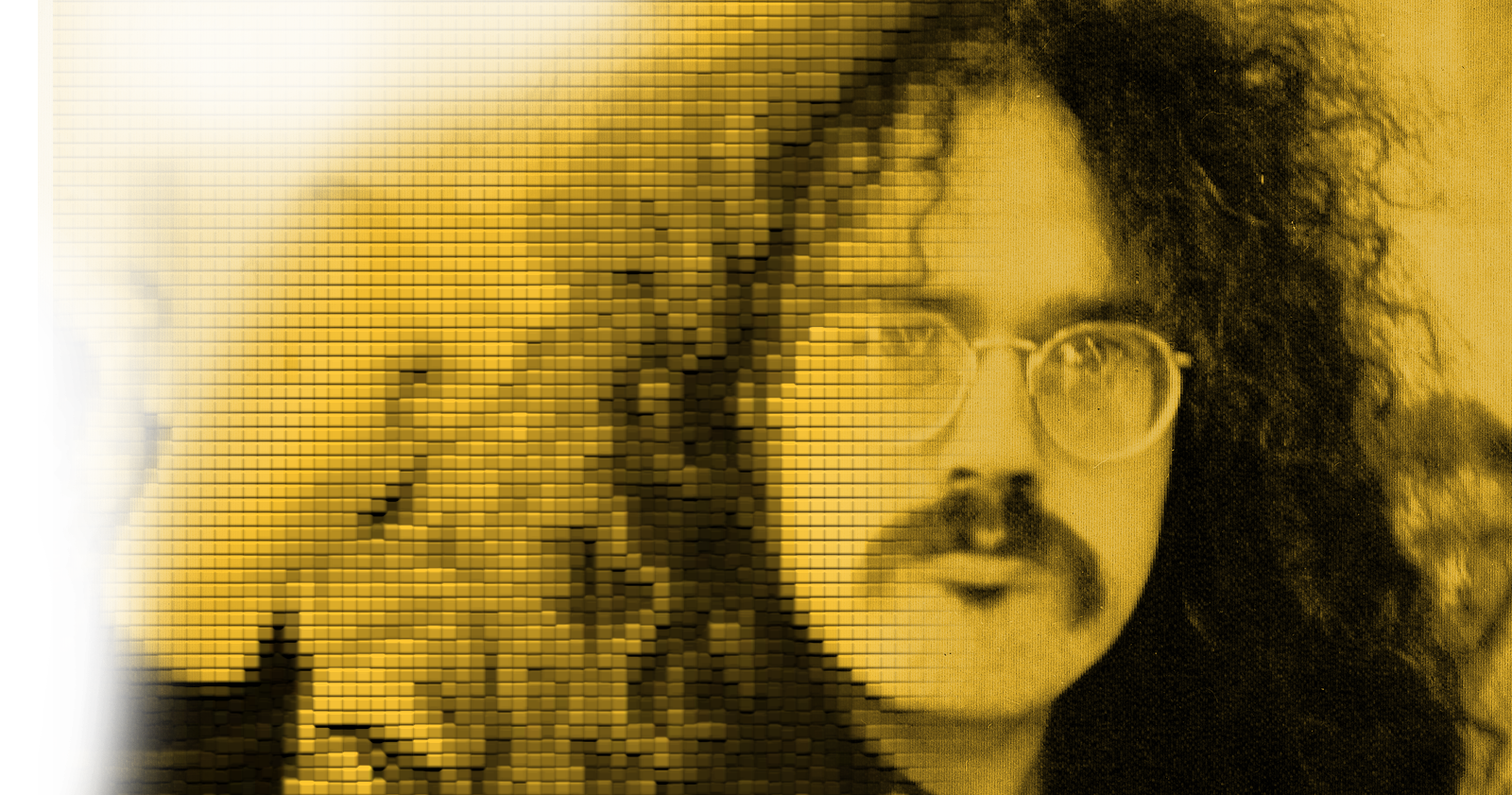
 JOHN SINCLAIR
THE BLUES
Before I was anything else, I was a blues man. Before the MC5, before the White Panthers, before prison, before radio, before any of it. The blues came first. The blues is always first.
I heard John Lee Hooker for the first time in a bar in Detroit in 1963. Not a concert. Not a festival. A bar. Hooker sitting on a chair with an electric guitar plugged into an amplifier that had no business being that loud in a room that small, playing the most direct music I had ever heard. No band. No arrangement. Just one man, one guitar, one amp, one room, and the truth.
That is what the blues is. Not a genre. Not a chord progression. Not twelve bars of anything. The blues is one person telling you the truth and daring you to keep listening.
I started writing about music for Down Beat magazine in 1964. I was twenty-three years old. I was living in Detroit. I had a degree from the University of Michigan and I had no idea what to do with it. Then I heard the music and I knew. Not what to do with my degree. What to do with my life.
Down Beat was a jazz magazine but the blues was underneath all of it. You could not write about Coltrane without writing about the blues. You could not write about Sun Ra without understanding that Sun Ra was playing the blues from another planet. You could not write about any of the music that mattered without going back to the source, and the source was a man with a guitar in a room telling you something you did not want to hear.
Detroit in the early sixties was a blues city before it was anything else. Before Motown made it famous for pop, before the MC5 made it famous for rock, before the Stooges made it famous for punk. Detroit was a blues city because the blues came up the highway from Mississippi with the Great Migration and it settled in the bars on Hastings Street and it stayed.
John Lee Hooker came from Mississippi. So did Muddy Waters, who came through Detroit on his way to Chicago. So did Howlin' Wolf. So did B.B. King. They all came up the same highway because they were all running from the same thing and running toward the same thing. Running from the cotton fields and the Jim Crow laws and the violence. Running toward the factories and the paychecks and the possibility that a Black man in a northern city might be allowed to live.
They brought the blues with them because the blues is not something you choose. The blues is something that chooses you. It attaches itself to your body and it comes with you wherever you go and it comes out of your mouth whether you want it to or not.
I organized the Detroit Artists Workshop in 1964. It was a loft. A room. A place where people could come and play and talk and listen. We had jazz musicians and poets and painters and whatever you wanted to call yourself. The only requirement was that you had to be serious. Not good. Serious. The room had no patience for people who were playing at being artists. The room demanded that you show up and do the work.
The work was listening. That is the first thing the blues teaches you. Before you play, you listen. Before you write, you listen. Before you organize, you listen. The blues is a listening form. It does not lecture. It does not explain. It tells you what happened and it tells you how it felt and then it shuts up and lets you figure out what to do about it.
When I found the MC5, I found them because of the blues. Rob Tyner was singing the blues. Not literally — he was singing rock and roll. But the energy underneath it was the blues. The rage underneath it was the blues. The refusal to be quiet, the insistence on being heard, the willingness to stand in front of a room full of people and say something that might get you in trouble — that is the blues. That is what Robert Johnson was doing at the crossroads. That is what Muddy Waters was doing on the South Side of Chicago. That is what the MC5 was doing at the Grande Ballroom in 1968.
Kick Out the Jams was a blues record. I know that sounds wrong. It does not sound like a blues record. It sounds like a bomb going off. But underneath the distortion and the feedback and the volume, underneath Rob Tyner screaming and Wayne Kramer's guitar threatening to break the speakers, underneath all of that noise is the blues. One fundamental truth delivered at maximum volume: we will not be quiet.
That is the twelve-bar progression of revolution. Statement. Response. Resolution. I am here. I will not leave. Deal with it.
We brought the blues masters to Ann Arbor. The Ann Arbor Blues & Jazz Festival — 1969, 1970, 1972, 1973. Muddy Waters, Howlin' Wolf, B.B. King, Bobby Blue Bland, Junior Wells, Buddy Guy, Luther Allison, Hound Dog Taylor. We put them on the same stage with Sun Ra and the Arkestra. We put them on the same stage with the MC5 and the Stooges. We told the audience: this is all the same music. This is all one thing. The blues and the jazz and the rock are not different genres. They are different accents of the same language.
Some people understood that. Some people thought we were crazy. The people who understood it are the ones who changed the world. The people who thought we were crazy are the ones who built the algorithm.
I went to prison in 1969 and the blues followed me. Of course it did. The blues was invented in prison. The work songs, the field hollers, the twelve-bar lament of a man behind bars who cannot get out. I did not have a guitar in Jackson Prison. I did not need one. The blues does not require an instrument. The blues requires a situation and a voice and the refusal to pretend that the situation is acceptable.
I wrote poems in prison that were blues songs without music. Every poem was a verse. Every verse was a complaint. Every complaint was a prayer. The blues is the original prayer — not asking God for help but telling God what happened and letting God decide what to do about it.
The blues is still the foundation. Underneath the jazz, underneath the rock, underneath the hip-hop, underneath whatever comes next. The blues is always underneath. It is the bedrock. Everything else is built on top of it.
When I listen to music now — when I listened to music in the last years, sitting in my room in Detroit with headphones that were better than anything we had in 1963 — I listen for the blues. Not the form. The feeling. The willingness to tell the truth. The refusal to decorate. The insistence that the song is about something real and the listener is being trusted with something real and the transaction between singer and listener is not entertainment but communication.
John Lee Hooker sitting in a bar in Detroit in 1963. One man. One guitar. One amplifier. One room. The truth. Everything I have done since then — every band I managed, every festival I organized, every radio show I hosted, every poem I wrote, every prison sentence I served — started in that room.
The blues is the frequency. Everything else is just signal processing.
That's the transmission.
See also: The Festival — the Ann Arbor Blues & Jazz Festival. The City — Detroit, the Grande Ballroom, the frequency. The Five — the MC5 played the blues whether they knew it or not. The Spaceman — Sun Ra at Ann Arbor. Jazz Is the Way — the blues showed the way before anyone called it jazz.