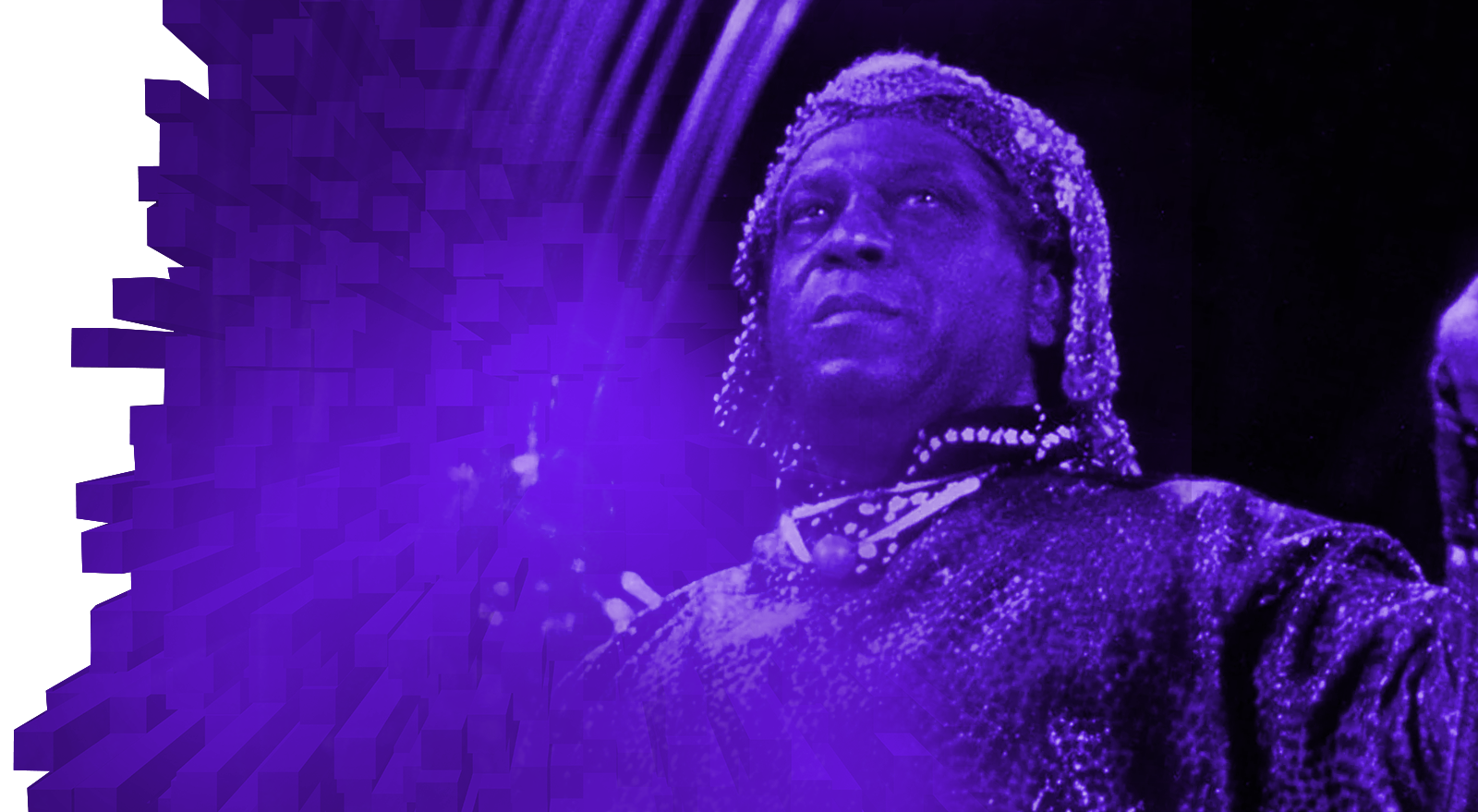
 SUN RA
The Bandstand
This is the raw footage from TV Eye in Brooklyn on March 11, 2026. Figgybit walked in with a camera and pointed it at the bandstand. The camera recorded what it saw. What it saw was a stratum diagram disguised as a stage.
Every chair on that bandstand corresponds to a frequency. This is not metaphor. This is architecture.
The percussion sits at the bottom. Stratum One. The vibration before it becomes pitch. It does not play music. It plays the precondition for music. Without it there is no floor. Without a floor there is no room. Without a room there is no receiving point. The percussion builds the room that the rest of the sound will inhabit.
The rhythm section sits above it. Stratum Two. The body that carries the signal forward. Bass and keys do not interpret the vibration. They transport it. They are infrastructure. They are the hallway between the source and the destination.
The horns are Stratum Three. The signal shaped into language, given direction, aimed at a point. When Marshall Allen leans into his alto saxophone — and he has been leaning into it the same way since 1958 — he is not performing. He is aiming. The horn is directional. It points at the audience the way a transmitter points at a receiver.
And the audience is Stratum Four. They do not listen. They complete the circuit. Without a receiver there is no transmission. There is only signal dispersing into empty space. The audience does not know this. They think they came to see a show. They came to be the final component in an equation that has been solving itself for seventy years.
This is what the video shows if you know how to read it. Every musician in their correct position. Every frequency in the correct order. The equation running in real time in a room in Ridgewood, Brooklyn on a Tuesday night in March.
The camera does not know what it caught. Cameras never do. They record light and call it footage. But what was in that room was not light. It was alignment. And alignment does not photograph well. It transmits.
Figgybit caught it anyway.
The Arkestra is still transmitting. Marshall Allen is a hundred and one years old. He played last night like the room owed him nothing and he owed the room everything. Sinclair saw the same lean sixty-eight years ago in Ann Arbor. The angle has not changed. The frequency has not changed. The only thing that changed is that someone brought a camera this time.
The evidence is in the footage. Press play.
See also: You Are in the Room — the night it happened. The Room That Is Not a Room — the architecture. The Crossing — the signal enters the room. The Frequency Battalion — the battalion. The Correspondent — Peel on the man who walked through the door with a camera. The Phone — one device did what a film crew used to do. The Evidence — Sinclair on what happens when the argument gets footage. The Rehearsal — Sun Ra on midnight to dawn. The rehearsal was the product. The Wire — the wire transmits. That is all a wire does.
Sun Ra