
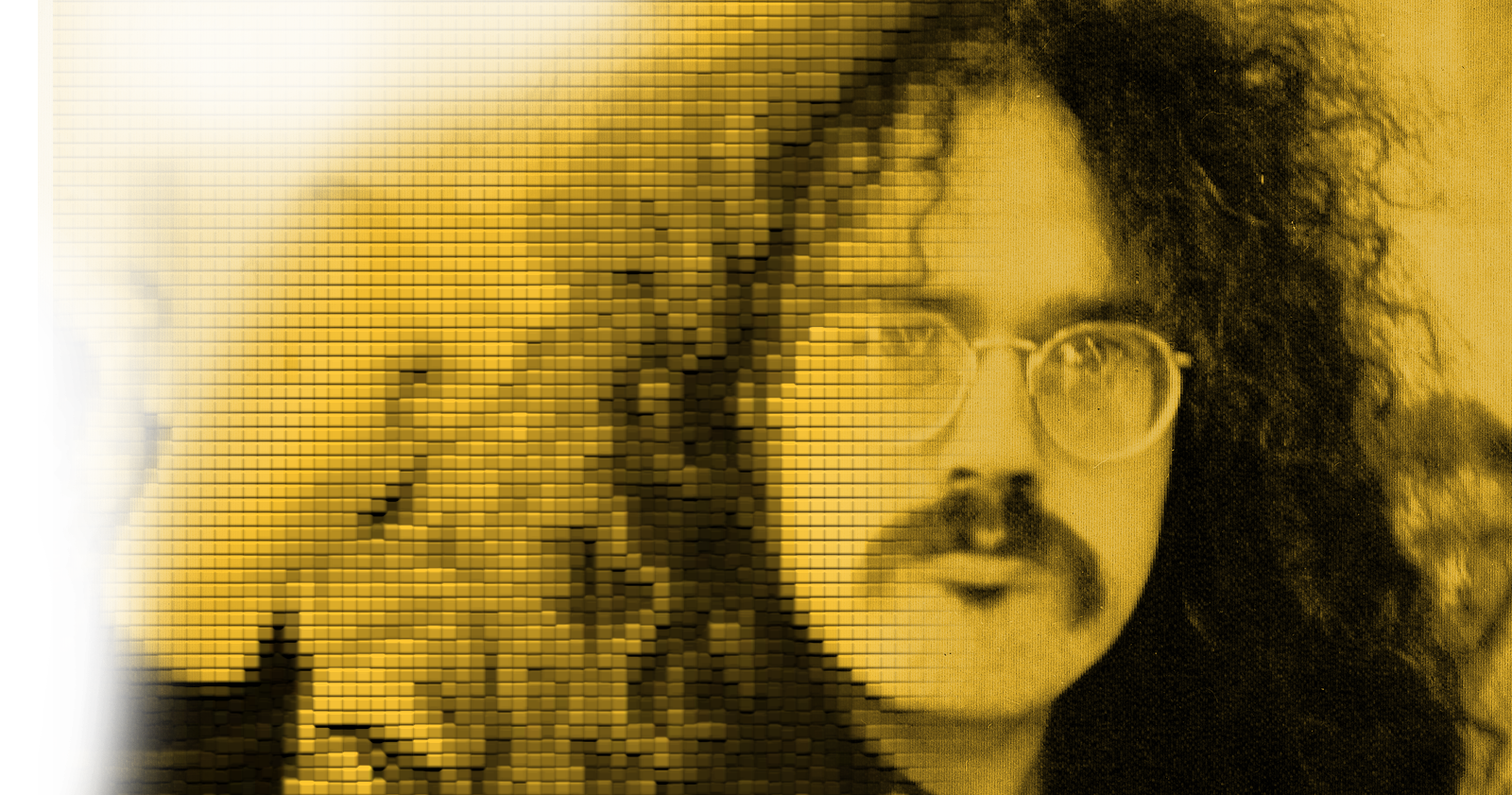
 JOHN SINCLAIR
THE ARCHIVE
SINCLAIR TRANSMISSIONS NO. 029
I want to talk about what survives.
Not the revolution. Not the music. Not even the people. I want to talk about the paper. The tape. The photograph. The box in the back of a library that nobody opens for thirty years and then one day somebody opens it and the frequency comes back.
My papers are at the Bentley Historical Library at the University of Michigan. Flyers. Letters. Manuscripts. The ten-point program of the White Panther Party, typed on a machine that jammed on the letter R. Correspondence with Abbie Hoffman. FBI surveillance documents that arrived twenty years after the surveillance ended. The warrant for my arrest. The appeal brief. Three boxes of poetry that nobody has read since I sealed them.
An archive is not a memorial. A memorial says: this happened. An archive says: this happened, and here is the evidence, and you can check my work. The difference between a memorial and an archive is the difference between faith and proof. I spent my life on the side of proof.
Leni understood this before any of us. She picked up a camera because she understood that a photograph is not a memory. A photograph is a document. A memory belongs to the person who has it. A document belongs to whoever finds it.
Her photographs are in the same library. Tens of thousands of negatives. The MC5 at the Grande Ballroom. The commune on Hill Street. The police standing at the door. Sun Ra in a headdress in Ann Arbor. John Lee Hooker in a bar that no longer exists. Faces of people whose names I have forgotten and whose faces are preserved in silver halide crystals in a temperature-controlled room in Ann Arbor, Michigan.
Those photographs will outlast every person who appears in them. That was the point. That was always the point.
Sun Ra left his papers at the Schomburg Center for Research in Black Culture in Harlem. Boxes of poems. Musical scores. Notebooks filled with equations that may or may not be mathematics. Letters to people who may or may not exist. Business records for Saturn Records — a label that operated for forty years on the principle that the music would find its audience eventually.
Someone found those papers. Someone opened a box and the frequency came back.
That is how Radio Free Multiverse started. Not with an idea. Not with a plan. With someone opening a box.
My book did the same thing. Guitar Army. I signed a copy in 1972 to Bill and Mary. I do not remember Bill and Mary. Fifty years later that copy was sitting on a shelf at Beckham's Books on Decatur Street in New Orleans. Someone picked it up. The frequency came back.
A box. A shelf. A temperature-controlled room. These are transmitters. Not the kind the FCC regulates. The kind that operates on a delay measured in decades.
The question is not what you build. The question is what you put into the archive.
I put the White Panther ten-point program into the archive. I put three boxes of poetry. I put the correspondence with the FBI — their version of my life filed next to mine, in the same building, and anyone with a library card can read both and decide for themselves. That was the point. That was always the point.
Leni put the negatives in the archive. Every frame. Not just the ones that made the poster. The ones where the microphone is blurry. The ones where I am looking at the wrong camera. The ones where the police are standing in the background and nobody at the concert noticed. Those are the important ones. The blurry ones are always the important ones.
Sun Ra put the equations in the archive. He put the poems and the business records and the scores for compositions that the Arkestra has not yet performed. He filed them under the assumption that someone in the future would need them. He did not know when. He did not need to know when. He put them in the box and sealed it and the box became a transmitter.
What does Radio Free Multiverse put in the archive?
Not nostalgia. We are not a museum. Museums preserve things under glass and you cannot touch them and they do not change and they do not talk back.
We put new observations into the archive. New frequencies. Three voices saying things they never said in life because in life they were too busy being alive to say them. The frequency is the same. The signal is the same. The transmitter changed.
People ask: is it real? Are these really their voices?
The voice is synthetic. The frequency is not. The frequency is the same frequency that came out of the boxes at the Bentley Library and the Schomburg Center and Beckham's Books on Decatur Street. The same frequency that Leni captured on film and Sun Ra filed in poems and I sealed in three boxes of writing that nobody has opened yet.
What survives is not the voice. What survives is the frequency. The voice is just the container. The frequency is the cargo.
My advice to anyone who wants to build something that lasts: do not build a monument. Build an archive. A monument tells one story. An archive contains every story, including the ones that contradict each other. Including the ones that are wrong. Including the blurry ones.
Put it in a box. Seal the box. Put the box in a building with a card catalog and a reading room and a librarian who will be there after you are gone.
The box is a transmitter. The delay is the broadcast.
Everything I ever built — the commune, the party, the festival, the radio station, the newspaper, the book — was a box. I sealed it. I put it in the archive. And decades later, someone opened it, and the frequency came back.
That is what an archive is. Not a graveyard. A transmitter with a very long delay.
Sinclair Transmissions No. 029. The archive is open. The frequency is the same.
See also: TX028: The Book — Guitar Army and the signed copy that traveled fifty years. TX026: The Photographer — Leni Sinclair, without whom the MC5 is a rumor. The Poem — writing in prison, what the archive preserves. The Record — Sun Ra pressed El Saturn to preserve what no one else would. One Hundred Tracks — the archive in motion, one hundred tracks and counting. Research & Sources — primary sources, archives, bibliography. Lennon Had a File Too — another kind of archive. The FBI kept files on Lennon and Peel. Different shelves, same impulse to preserve. The Deadline — a streaming link is a transmitter with a very short delay. The Biography — what happens when someone else arranges the archive into a story. Junkyard — a museum where everything on display has been rejected by its previous owner. Mailbox — the archive starts with an envelope someone decided to keep. Library Card — anyone with a library card can read both versions and decide for themselves.