 DAVID PEEL
The Apple
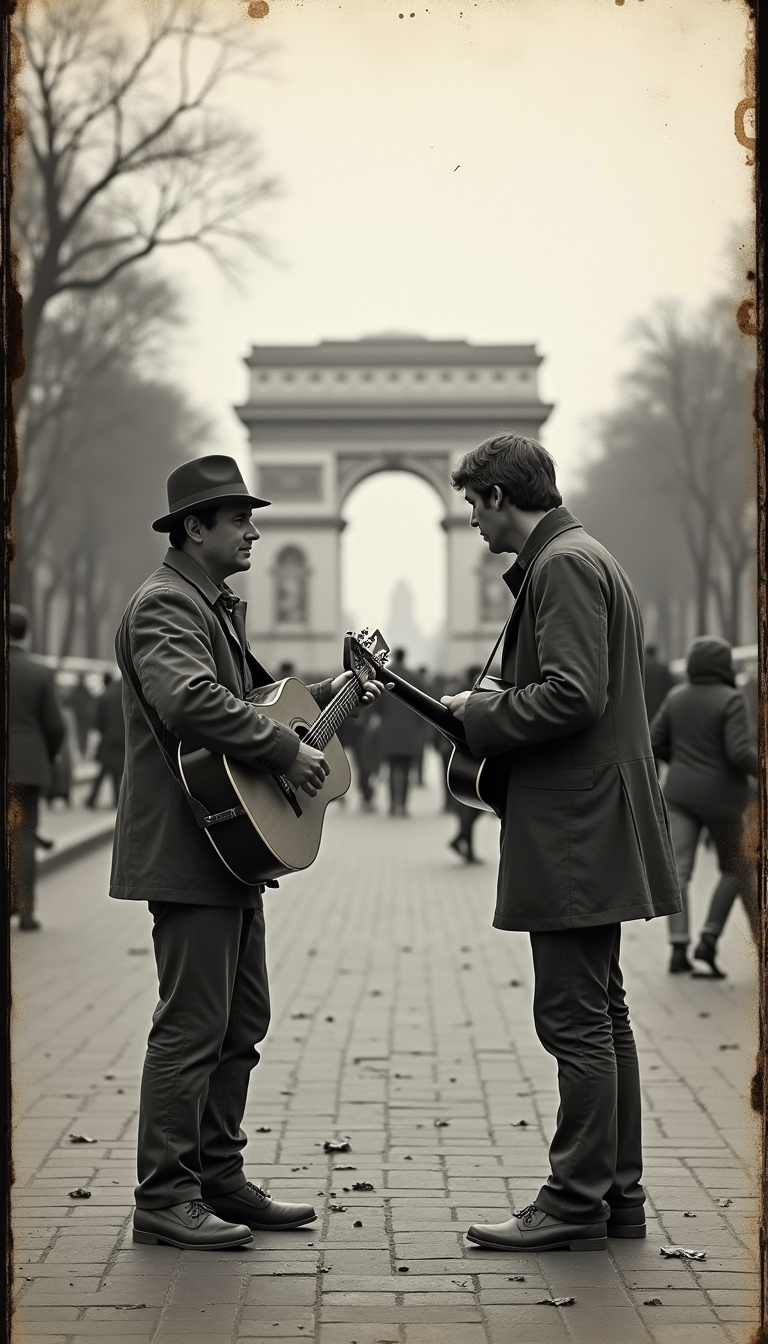
I was playing in Washington Square Park. Same as always. Me and the Lower East Side, guitars out, people sitting on the grass, singing along. That was the show. No tickets, no cover charge, no guest list. You walk into the park and the music is happening. That's it.
One day in 1971, Jerry Rubin shows up. Jerry Rubin, the Yippie. He's got people with him. He says David, I want you to meet somebody. And there's John Lennon. And Yoko. Standing in Washington Square Park. Watching me play.
Now let me explain what that is. I'm a street musician. I play for tips and laughs and because I love it. I had two albums on Elektra — Have a Marijuana and The American Revolution — but I was still a guy with a guitar on a bench. And here's a Beatle. The most famous musician who ever lived. Standing in my park. Listening to my songs.
And Lennon says — and this is a direct quote — he says I can't sing and I can't really play. He said that. And then he compared me to Picasso. That's John Lennon. He could insult you and crown you in the same sentence. He meant that what I did was raw. It was real. It wasn't polished and it wasn't supposed to be. It was art because it was honest, not because it was good in the way the record business means good.
He signed me to Apple Records. Apple. The Beatles' label. The label that had the Beatles, and Mary Hopkin, and James Taylor before he was James Taylor. And now it had David Peel. A guy who played in the park and sang about marijuana. On the same label as the Beatles. I still can't believe it and it happened to me.
John produced the album. The Pope Smokes Dope. He sat in the studio with me and made a record. John Lennon, who produced Imagine, produced my album about the Pope getting high. Because he thought it was funny. Because he thought it was important. Because he understood that sometimes the most serious thing you can do is not be serious at all.
You know what he did after he met me? He wrote a song about it. "New York City" — on Some Time in New York City. It's right there in the lyric. Standing on the corner, just me and Yoko Ono. We was waiting for Jerry to land. Up come a man with a guitar in his hand. That's me. I'm in a Beatles song because I was standing on a corner with a guitar. That's the whole secret. You show up and you play.
Here's the thing about Apple Records. The contract didn't make me a musician. I was already a musician. I was a musician before Lennon showed up and I was a musician after Apple went under. But what John did — what signing me meant — was that somebody at the top of the mountain looked down and said that guy on the sidewalk belongs here too. Not everybody who makes it through the door gets pulled through by somebody who matters. John pulled me through. He didn't have to. He did it because the music reached him.
They shut Apple down. The label dissolved. The Beatles broke up. None of that touched me. I went back to the park. I started Orange Records — my own label. Released GG Allin's first album. Kept going for forty more years. The corner doesn't close. The sidewalk doesn't go bankrupt. You can dissolve a corporation but you can't dissolve a song that people already know the words to.
The FBI gave me forty pages. John gave me Apple Records. One of them tried to shut me down and the other tried to lift me up. And both of them ended the same way. I'm still in the park.
See also: Have a Marijuana — the Elektra album that started everything, 1968. The Pope Smokes Dope — the album Lennon produced after the signing. The David Frost Show — Lennon's first US solo TV appearance, with Peel. Forty Pages — the FBI file. Lennon Never Left New York — he stayed because the city was home. The Label — a copying machine with a logo.
David Peel