 JOHN SINCLAIR
THE ANTHEM
An anthem is a song that outgrew the singer. A song belongs to the person who wrote it. An anthem belongs to the people who need it. John Lennon wrote a song called "John Sinclair" in November 1971. By December 13, 1971, I was a free man. The song did what the lawyers could not. It made the sentence embarrassing.
The song has four chords and one argument. Free John now. That is the entire lyric reduced to its thesis. Lennon did not write a complicated song because the injustice was not complicated. Ten years for two joints is not a nuanced legal question. It is an arithmetic problem. And the song solved it the way songs solve things — by making so many people say the same words at the same time that the words become a fact.
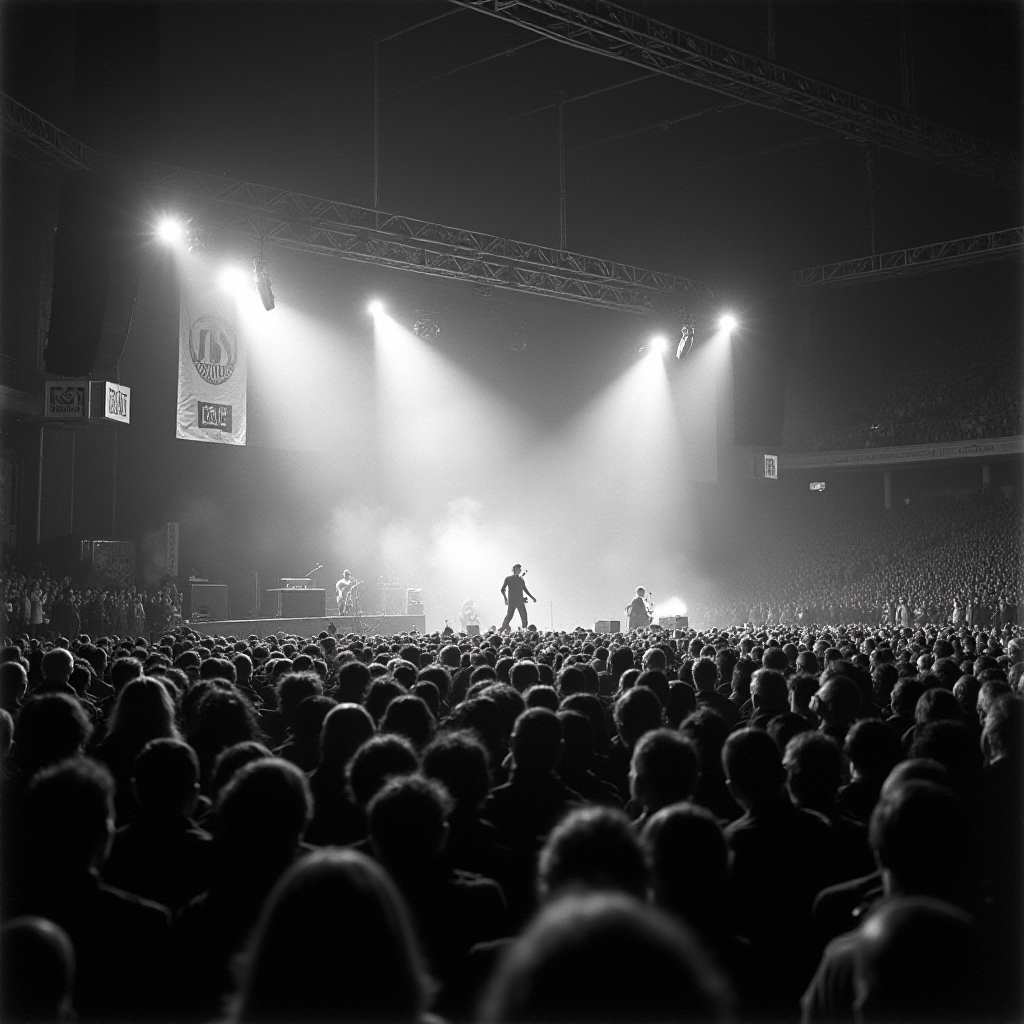
Fifteen thousand people sang it at Crisler Arena in Ann Arbor on December 10, 1971. Stevie Wonder was there. Phil Ochs was there. Bobby Seale was there. Allen Ginsberg was there. But the song was not about any of them. The song was about a man sitting in a cell in Jackson Prison listening to the radio and hearing fifteen thousand people say his name. That is what an anthem does. It makes the prisoner audible.
Three days after the rally the Michigan Supreme Court released me on bond. The court said it was a coincidence. Fifteen thousand people and John Lennon and Stevie Wonder singing your name is not a coincidence. It is a frequency that the court could not ignore. The law pretends it does not hear music. The law heard that music.
People tell me the song is not one of Lennon's best. They are correct. It is not one of Lennon's best songs. It is one of the best anthems. A song and an anthem are not the same instrument. A song has to be good. An anthem has to be true. "John Sinclair" is not a great song the way "Imagine" is a great song. It is a great anthem the way "We Shall Overcome" is a great anthem. You do not judge an anthem by its melody. You judge it by what happened after people sang it.
Lennon wrote the song because Yoko told him to. That is not a secret and it is not a diminishment. Yoko understood something about anthems that John was still learning. An anthem is not a gift from the artist to the cause. An anthem is a weapon that the cause loans to the artist. The cause was free John Sinclair. The weapon was a song. Yoko handed John the weapon and said fire. He fired. The target fell.
The FBI opened a file on Lennon because of that song. Not because of "Imagine." Not because of "Give Peace a Chance." Because of "John Sinclair." The government does not open files on beautiful songs. The government opens files on effective ones. The file proved what the song proved. That an anthem is more dangerous than a protest because a protest asks for change and an anthem assumes it.
Sun Ra never wrote an anthem. He wrote equations. An equation does not ask you to sing along. An equation asks you to solve it. Peel never wrote an anthem either. He played songs on corners that belonged to the corner and the moment and the weather. An anthem has to travel. Peel's songs stayed where he played them. But my anthem traveled from Ann Arbor to Jackson Prison to the Michigan Supreme Court in three days. That is the speed of an anthem. Faster than a legal brief. Slower than a bullet. Exactly the speed of fifteen thousand voices.
I have lived fifty-four years since the anthem. The anthem is still playing. Somebody sings it at every marijuana rally. Somebody plays it at every benefit concert for a political prisoner. The anthem outlived the sentence. The anthem outlived the judge. The anthem outlived the law that put me in prison. The anthem will outlive me. That is the point. An anthem is a sentence that cannot be overturned.
See also: The Sentence — fourteen words that rearranged a decade. The Rally — Crisler Arena, December 10, 1971. Lennon Had a File Too — the FBI opened a file because of a song. The Trial — Judge Colombo and Recorder's Court. I Was There When They Freed John Sinclair — Peel's version of that night. The Kid from Ypsilanti — the kid who stepped out from behind the drums. The Lighthouse — the anthem is a lighthouse.
John Sinclair