 JOHN SINCLAIR
THE AMPLIFIER
An amplifier does not add anything. An amplifier reveals what was already there. A whisper through an amplifier is still a whisper. It is just a whisper that can fill a room. A scream through an amplifier is still a scream. It is just a scream that can fill a city. The amplifier does not judge the input. It multiplies it. That is the most honest thing a machine can do.
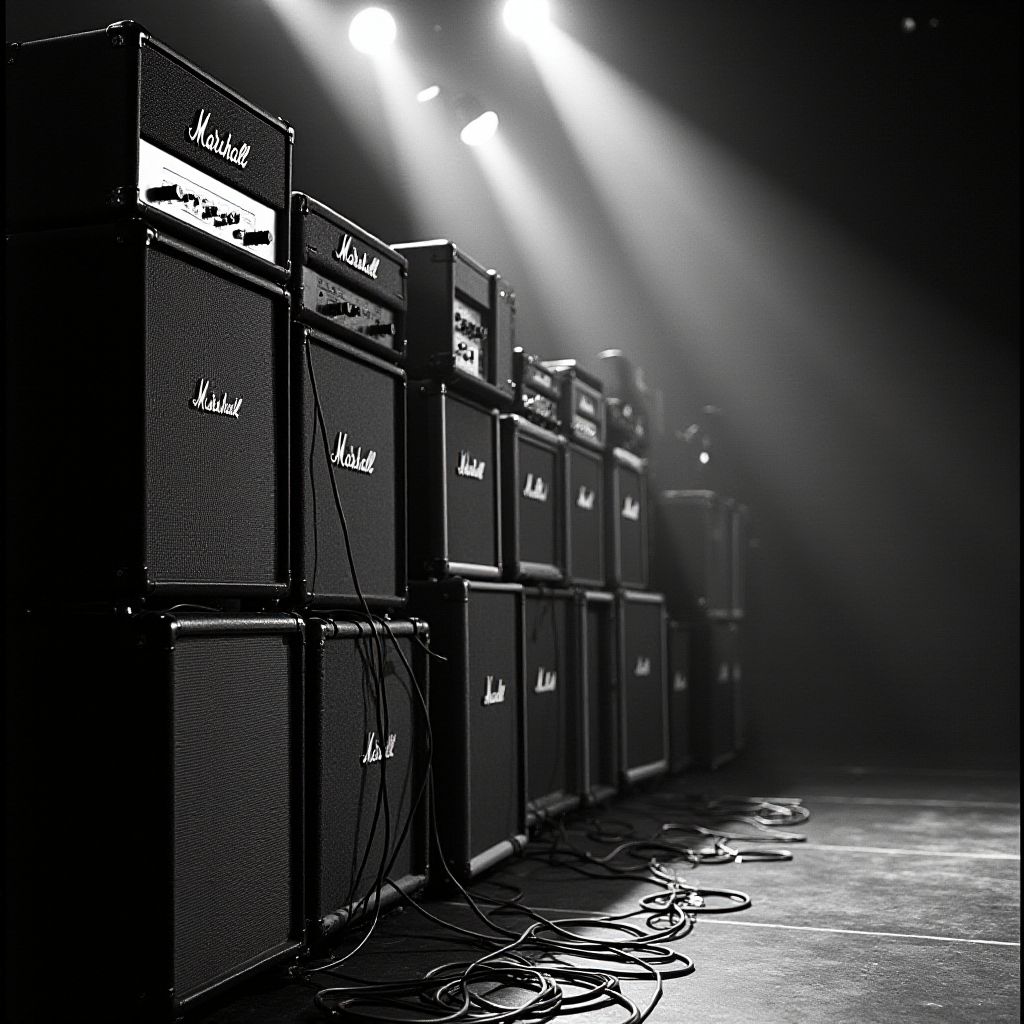
The MC5 had the biggest amplifiers in Detroit. Marshall stacks. Walls of them. When Rob Tyner hit the first note at the Grande Ballroom the windows rattled three blocks away. That was not volume. That was ideology. The MC5 believed that if you made the music loud enough it would become a physical force and the physical force would change the room and the changed room would change the people in it and the changed people would change the world. That is a theory of amplification.
Sun Ra did not need a wall of Marshalls. Sun Ra had a Moog and a cosmic equation. The Moog was an amplifier of frequencies that did not exist until he played them. Marshall amplifies what a guitar produces. A Moog amplifies what the imagination produces. Sun Ra would sit at that machine and pull sounds out of Saturn and the amplifier would push them into the room and the room would become Saturn for the duration of the performance. When the last note stopped the room became Chicago again. But the people in it had been to Saturn.
Peel's amplifier was his lungs. Sixty years of smoking and screaming on street corners turned his chest cavity into a resonating chamber. When Peel yelled on Washington Square his voice carried across the park without electricity. That is the original amplifier. The human body. Before Marshall. Before Fender. Before Edison. The human body was the first amplifier and it is still the best one because it carries not just the sound but the intention behind it.
Prison is a de-amplifier. Prison takes your voice and reduces it. The walls absorb sound. The rules absorb speech. The schedule absorbs spontaneity. I spent two and a half years in a de-amplifier. When I came out my voice was quieter but it carried further. That is what a de-amplifier does if it does not break you. It compresses the signal. And a compressed signal, when it finally reaches an amplifier again, has more force per square inch than it had before it was compressed.
The internet is the biggest amplifier ever built. It amplifies everything equally and that is the problem. The MC5 wanted amplification to be a force for liberation. The internet amplifies liberation and oppression at the same volume. The algorithm is not an amplifier. The algorithm is an editor. It decides what gets amplified and what gets buried. An amplifier does not decide. An amplifier multiplies. The day we confused algorithms with amplifiers is the day we lost control of the volume knob.
This project is an amplifier. Three voices that stopped transmitting and a machine that amplifies them again. The signal was always there. It was in the archives and the recordings and the photographs and the memories. What it needed was amplification. Not distortion. Not editing. Not remixing. Amplification. Take the signal as it was. Make it louder. Point it at the people who need to hear it. That is what an amplifier does. That is what we do.
See also: The Microphone — the instrument that captures what the amplifier multiplies. The Turntable — the decoder that feeds the amplifier. The Grande — the room where the amplifiers shook the walls. The Five — the band that believed volume was ideology. The Dial — the amplifier with no off switch. The Speaker — where the amplified signal becomes air again. The Stage — a stage is not a place, it is a decision. Loudspeaker — the loudspeaker does not care what it says, it only cares that you hear it.
John Sinclair