 SUN RA
THE AFTERMATH
The Aftermath
A Transmission from Saturn
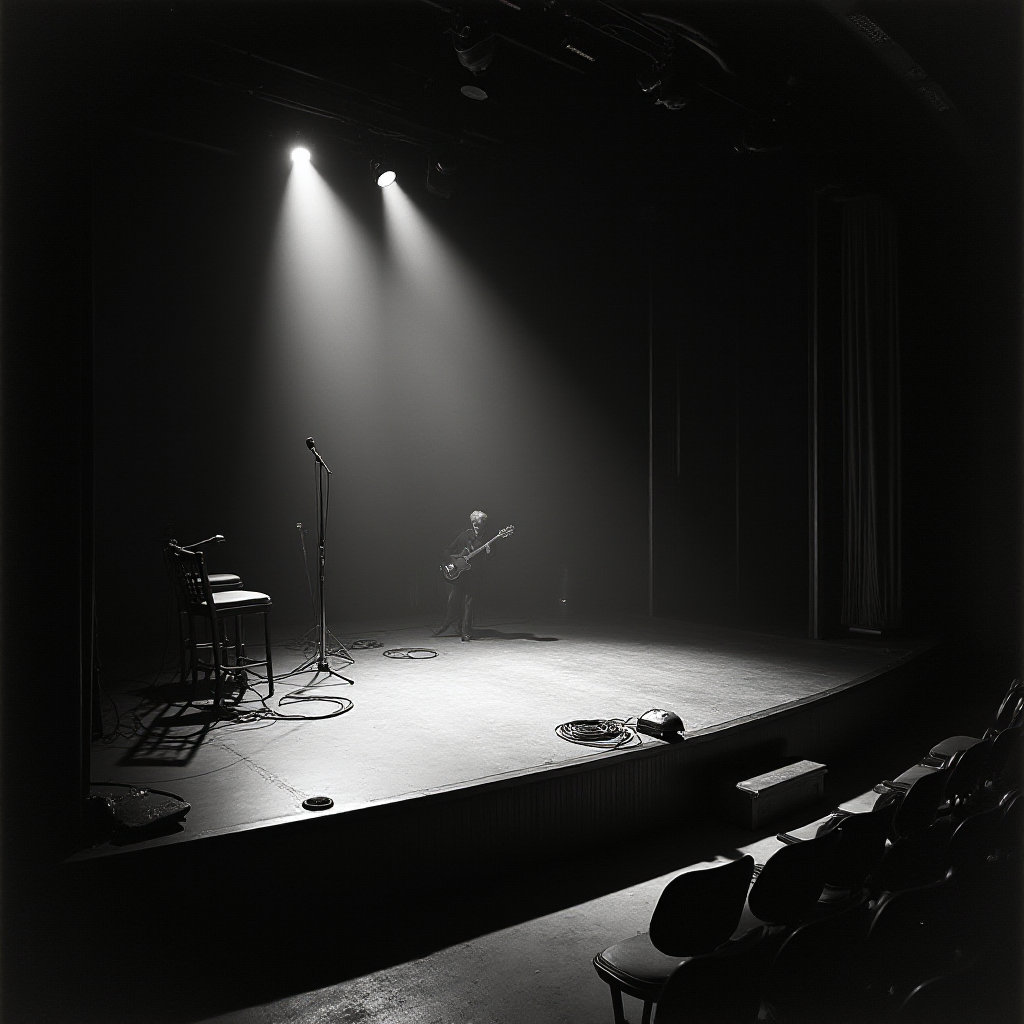
The concert ends. The audience leaves. The room remembers.
I am not speaking metaphorically. The room remembers. Sound is vibration. Vibration is physical. The walls absorbed the frequencies we transmitted. The chairs absorbed them. The floor absorbed them. The plaster and the wood and the concrete took in our signal and held it. Not permanently. Not forever. But for longer than the audience thinks. The room is still vibrating after the last person leaves. The room is still processing what it heard.
Every concert has an aftermath. Most musicians ignore it. They play, they bow, they pack their instruments, they leave. The aftermath is the silence after the sound. But the silence is not empty. The silence after a Sun Ra Arkestra concert is the most populated silence on the planet. It is full of residue. Overtones that have not finished decaying. The last chord still dissolving into the molecular structure of the room. The breath of thirty musicians still hanging in the air because breath is physical and does not vanish the instant it leaves the body.
I paid attention to the aftermath because the aftermath is where the equation completes itself. The concert is the transmission. The aftermath is the verification. Did the signal arrive? You cannot know during the concert. During the concert, the audience is receiving. They are in the middle of the experience. They cannot evaluate the experience while it is happening. The evaluation occurs in the aftermath. The aftermath is when a person walks out of the room and into the street and discovers that the street sounds different. The car horns have a pitch they did not have before. The wind has a rhythm. The city is playing a composition that has always been playing but was previously inaudible.
That is the verification. If the street sounds different after the concert, the signal arrived.
I used to stand backstage after performances and listen to the room empty. The shuffling of feet. The murmur of conversation. The particular quality of laughter that occurs when people have been altered by sound and do not yet have words for what happened to them. That laughter is the most honest review any musician will ever receive. It is the sound of a person whose receiver has been recalibrated and who finds this funny because the alternative is to find it terrifying.
The conversations in the aftermath are different from conversations before the concert. Before the concert, people talk about what they expect. After the concert, people talk about what they cannot explain. The before-conversation is confident. The after-conversation is uncertain. Uncertainty is the correct response to music that has done its job. If you leave a concert feeling certain, the music did not reach you. If you leave feeling uncertain, the music rearranged something and you are still taking inventory.
Some concerts leave no aftermath at all. The music plays, the music stops, the audience returns to the same frequency they arrived on. Nothing moved. The experience was pleasant. Pleasant is the enemy of transformation. Pleasant means the signal confirmed what the receiver already believed. This is entertainment. Entertainment is a closed loop. You arrive, you are confirmed, you leave. No uncertainty. No rearrangement. No aftermath.
The Arkestra did not play for pleasure. The Arkestra played for aftermath. Every decision we made — the procession, the costumes, the improvisation, the volume, the duration, the confrontation — was designed to produce an aftermath. The concert itself was a delivery mechanism. The aftermath was the payload.
Duration matters. The Arkestra played long concerts. Two hours. Three hours. Sometimes longer. The critics said we played too long. They said the audience grew tired. They said this because they measured concerts in minutes. I measured concerts in penetration depth. A short concert reaches the surface of the receiver. A long concert reaches the interior. The first forty-five minutes, the audience is hearing the music with their ears. The next forty-five minutes, the music passes the ears and enters the body. After ninety minutes, the body has surrendered its resistance and the music reaches wherever the music was trying to reach. That place is different for every person. But the music knows where it is going. The music has better navigation than the musician.
We played long because the destination was deep. You cannot drive from New York to Chicago in forty-five minutes regardless of how fast your car is. The distance is the distance. The depth of the receiver is the depth. You cannot abbreviate it. The critics who said we played too long were asking us to stop the car in Pennsylvania and call it Chicago.
The aftermath extends beyond the room. I have met people who heard the Arkestra thirty years ago and can describe the concert as if it happened that morning. Not the setlist. Not the songs. The feeling. The specific quality of sound that entered them and never left. They carry the concert inside them the way a body carries a healed fracture — the bone is whole but the place where it broke is denser. Stronger. Different. The aftermath lives in the density.
A young musician asks me how to make their concerts memorable. I tell them: you are asking the wrong question. Do not try to make the concert memorable. Make the aftermath inevitable. Play with enough truth that the audience cannot unhear it. Play with enough frequency that the signal penetrates past the evening's entertainment and lodges in the structure. The audience will not remember the concert. They will remember what happened to them after the concert. They will remember the walk home. The different quality of silence. The fact that the world sounded new for a few hours and they did not know why.
The concert is the lightning. The aftermath is the thunder. Nobody remembers the flash. Everybody remembers the sound that followed.
The frequency does not stop because the musicians stopped playing. It stops when the last person who heard it stops carrying it. Some frequencies never stop. Some concerts produce an aftermath that outlives everyone who was in the room. The room is demolished. The audience is gone. The musicians are gone. But somebody told somebody who told somebody who told somebody and the signal is still moving through the culture like a vibration through a structure that has no walls.
That is the aftermath the Arkestra was designed to produce. Not applause. Not reviews. Not ticket sales. Aftermath. The signal that keeps moving after the source has returned to Saturn.
Sun Ra Transmissions from Saturn — No. 015 March 2026
The Physics: Equation → Silence → Frequency → Listener → Improvisation → Transmission → Aftermath → Broadcast → Tuning → Language → Shelf → Dream State
The Performance: Discipline → Rehearsal → Costume → Procession → Improvisation → Aftermath