 DAVID PEEL
Terrazzo
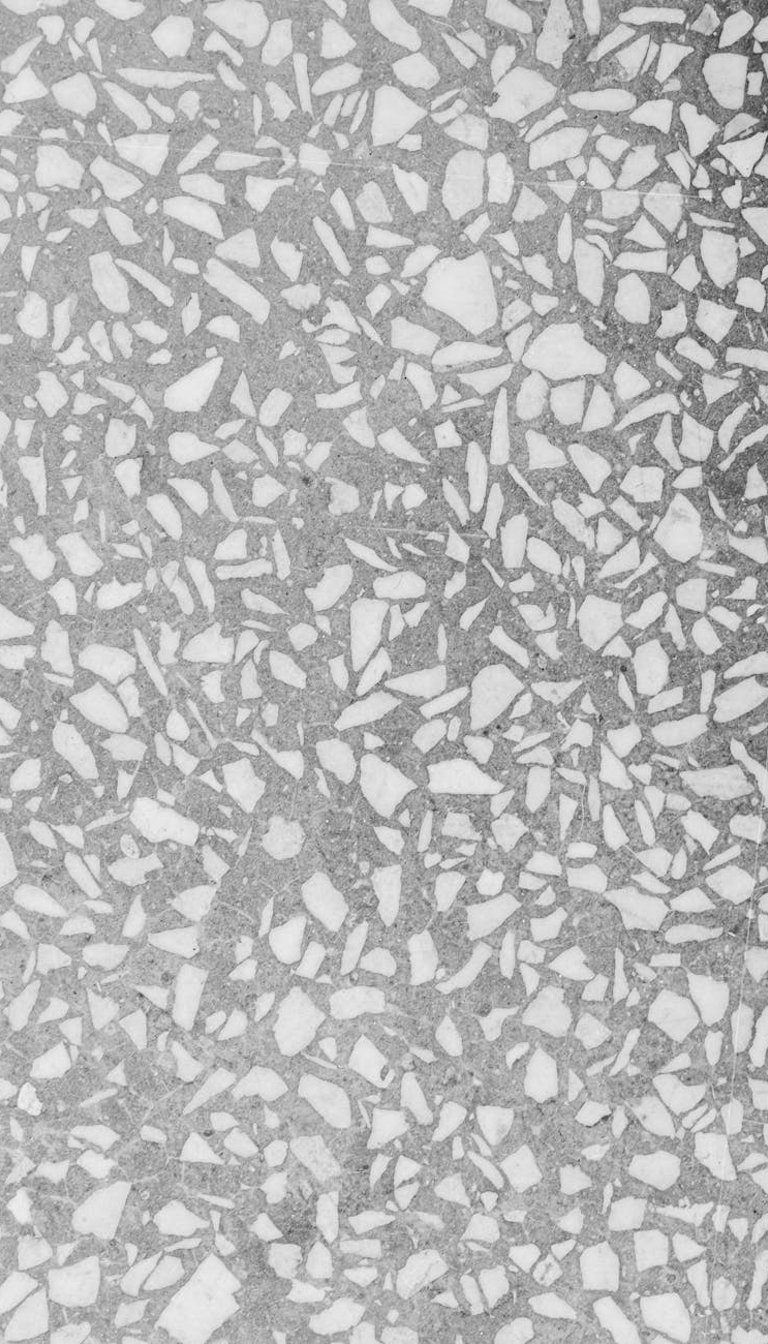
Terrazzo was a floor made of chips. Marble chips and granite chips and glass chips set in cement and ground smooth. The floor was a mosaic that did not pretend to be a picture. The floor was a texture. The chips were random. White and gray and green and pink scattered across the surface like confetti that somebody poured concrete over. The terrazzo floor was a party frozen in stone. Every chip was a guest. Nobody planned the seating chart.
The Italian workers brought terrazzo to America. The terrazziere poured the cement and scattered the chips and waited for the set and then ground the surface with a terrazzo grinder. The grinder was a rotary machine with diamond pads that spun on the floor and shaved the surface until the chips and the cement were flush. The grinding revealed the chips. Before the grinding the chips were buried. After the grinding the chips were exposed. The grinding was the terrazzo telling its story. The story was inside the floor the whole time. The grinder just uncovered it.
Terrazzo lasted forever. The lobby of every public school in New York had a terrazzo floor. The lobby of every subway station. The lobby of every hospital. Terrazzo went where the feet were heaviest and the budget was tightest and the maintenance was least. Terrazzo asked for nothing. Mop it. That was the maintenance. Mop it and the floor was new. The wax built up over decades and the wax turned yellow and somebody stripped the wax and the floor underneath was the same floor that was poured in 1932. The floor did not age. The wax aged. The terrazzo waited.
The divider strips were brass. Thin brass strips set into the cement to create sections. The strips controlled where the cement cracked. Without the strips the cement would crack randomly. With the strips the cement cracked along the strip and the crack was invisible because the strip was already a line. The brass strip was a planned failure. A controlled fracture. The terrazziere knew the floor would crack and gave the crack a place to go. The strip said crack here. The floor obeyed. Every good plan includes a place for the failure to happen.
They use epoxy terrazzo now. Thinner. Lighter. The epoxy is a quarter inch thick. The cement terrazzo was three-quarters of an inch thick. The epoxy can be poured over existing floors. The cement had to be poured on a concrete slab. The epoxy comes in any color. The cement came in gray. The epoxy is better in every measurable way except one. The epoxy terrazzo does not sound the same. Walk across a cement terrazzo floor in leather shoes and the floor rings. Walk across an epoxy terrazzo floor and the floor is silent. The ring was the cement and the marble talking to each other through the sole of your shoe. The epoxy does not talk. The epoxy absorbs. A floor that absorbs your footsteps is a floor that does not know you are there.
See also: Floorboard, Threshold