 JOHN SINCLAIR
TELEPHONE BOOTH
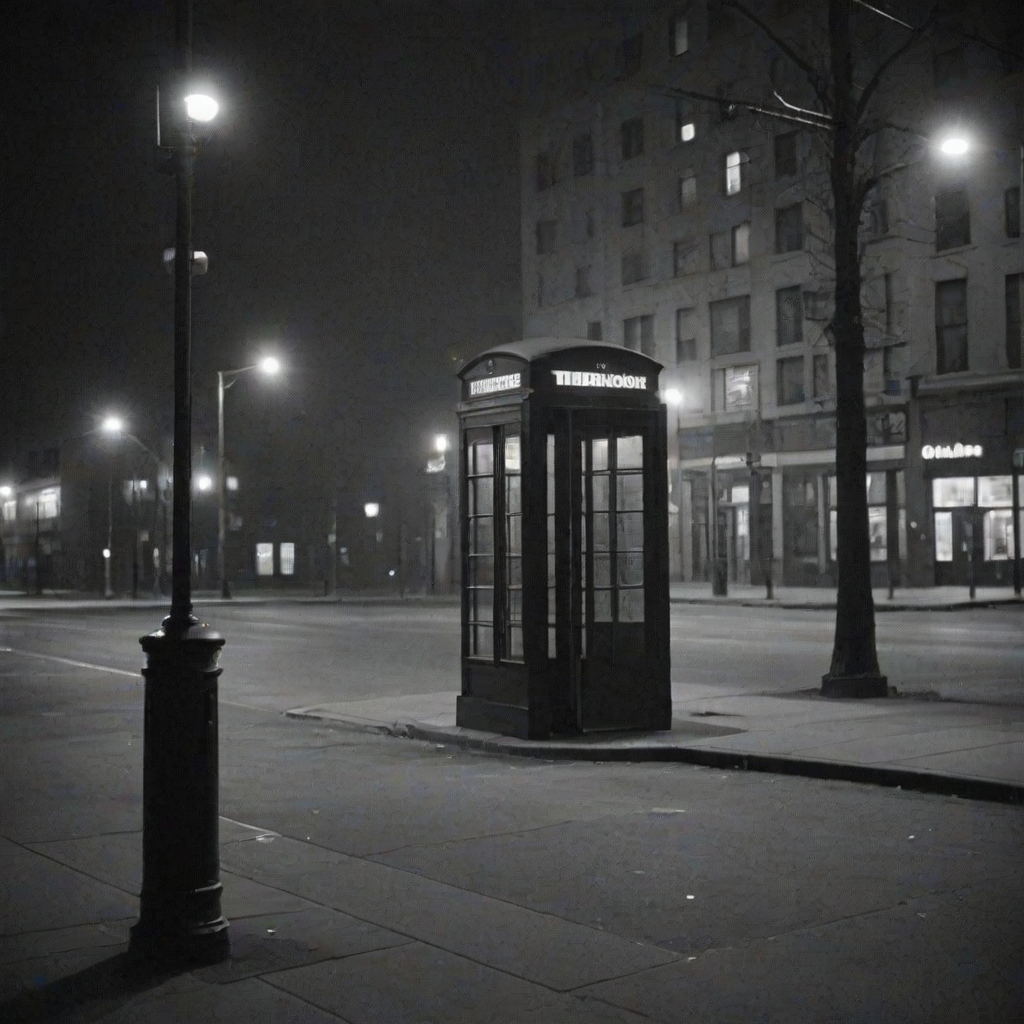
You stepped inside and closed the folding door and the closing was the privacy. The telephone booth was the smallest room in America and the smallest room in America was the most important room because the telephone booth was where you said the things you could not say in front of other people. The telephone booth had a light that came on when you closed the door and the light coming on was the signal that you were now in a room that belonged to you for as long as you had dimes. The telephone booth smelled like cigarettes and the metal shelf had phone numbers scratched into it by people who had stood where you were standing and needed to remember a number and had no paper and the scratching was the graffiti of urgency.
Alexander Graham Bell made the first telephone call on March tenth eighteen seventy six in Boston and the first words transmitted by telephone were Mister Watson come here I want to see you and the wanting to see someone was the reason the telephone existed and the reason the telephone booth existed and the reason two million telephone booths were eventually installed across America. The Bell System built the infrastructure and the infrastructure was the wire that connected every house to every other house and the connecting was the miracle that took fifty years to become ordinary. William Gray installed the first coin operated telephone in Hartford Connecticut in eighteen eighty nine and the coin operation was the democratization because the coin meant you did not need to own a telephone to use one. You needed a dime. The dime was the price of a voice reaching across distance and the reaching across distance for a dime was the cheapest form of human connection ever invented. By nineteen sixty there were eight hundred thousand pay telephones in America and the eight hundred thousand was the network and the network meant that standing on any street corner in any city you could reach any person who had a telephone and the any person was the everybody and the everybody was the promise.
The telephone booth was where the news broke. The reporter called the city desk from the telephone booth on the corner and the calling from the corner was the deadline and the deadline was the story. Clark Kent changed into Superman in a telephone booth and the changing in a telephone booth was the metaphor that a generation understood because the telephone booth was the only place in public where you could be alone and the being alone in public was the transformation. The telephone booth was where the soldier called home from the bus station and the calling home from the bus station was the voice that said I am alive and the I am alive was the most important sentence in the English language when it was spoken from a telephone booth at two in the morning in nineteen forty four. The telephone booth was where you called collect and the operator asked will you accept the charges and the accepting the charges was the love because only someone who loved you would pay for a phone call they did not initiate.
The telephone booth was a piece of furniture that belonged to the street. The Western Electric model that most Americans remember had a brushed aluminum frame and a glass enclosure and a folding door that accordioned when you pulled it. The phone book hung from a chain and the hanging from a chain was the security that said this book belongs to this booth and the belonging to this booth meant that every telephone booth was also a library with one book and the one book contained every person in your city listed alphabetically. The Yellow Pages were in the same book and the Yellow Pages meant the telephone booth was also a business directory. You could stand in a telephone booth and find a plumber or a lawyer or a bail bondsman and the finding of a bail bondsman at three in the morning from a telephone booth on a street corner was the America that functioned twenty four hours a day for anyone with a dime.
The telephone booth is gone. Not vanishing. Gone. There are fewer than a hundred thousand pay telephones left in America and the fewer than a hundred thousand is the disappearance and the disappearance happened because the cell phone made the telephone booth unnecessary and the unnecessary is the death sentence for any object in America. The last telephone booths stand on street corners in cities where they are used by people who cannot afford cell phones and the cannot afford is the same population that the telephone booth was invented to serve which was everyone who needed to make a call and did not have a phone at home. The folding door is gone. The light that came on when you closed the door is gone. The phone book on the chain is gone. The dime is still legal tender but the dime no longer buys a phone call because nothing costs a dime anymore. The telephone booth was the smallest room in America and the smallest room in America is now the most absent room and the absence is the privacy that disappeared when the phone moved from the booth to your pocket because the phone in your pocket is never private and the never private is the price you paid for convenience and the price was too high and you did not know it until the booth was gone.