 DAVID PEEL
Telegraph Pole
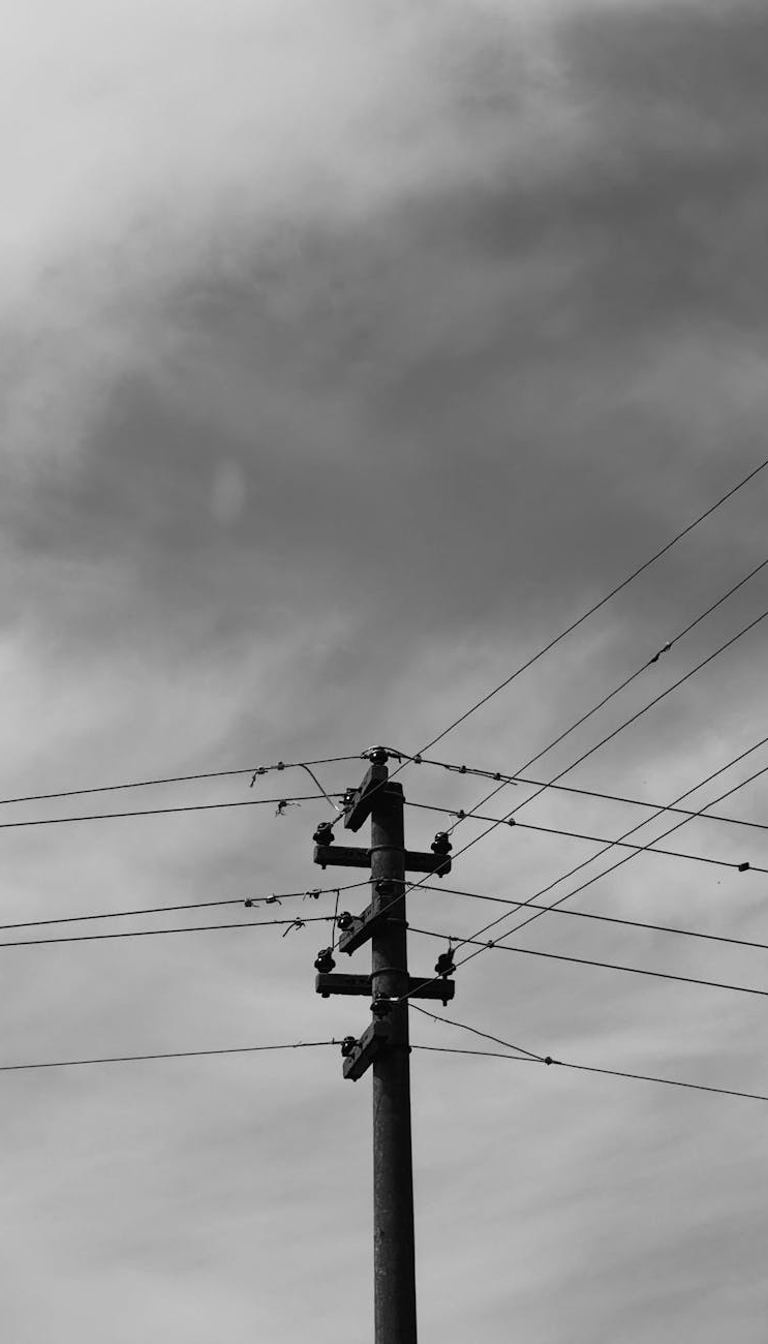
The telegraph pole was the first thing the city built that was taller than a person and had no roof. A wooden pole with crossarms and wires and glass insulators and it stood on the corner and connected your block to the next block and the next block to the world. The telegraph pole was the skeleton of communication. Before the telephone. Before the radio. Before the internet. A wire on a pole carrying dots and dashes. The telegraph pole was the internet made of wood.
The poles lined the streets like a forest that somebody stripped of leaves and bark and branches and left standing. Every pole had a number and a plate and a crossarm and the wires ran from pole to pole like clotheslines that carried words instead of laundry. The lineman climbed the pole with spikes on his boots and a belt around his waist and he worked forty feet in the air with nothing below him but the street. The lineman was the most trusted worker in the city because the wire did not forgive mistakes.
I remember the poles on the Bowery in the sixties. The wood was gray and splintered and the crossarms were black with creosote and the insulators were green glass and on sunny days the glass caught the light and the pole looked like a Christmas tree that somebody forgot to take down. The telegraph poles were ugly. They blocked the view. They dropped wires in storms. The city hated them. The city needed them. That is the relationship the city has with everything that works.
The great blizzard of 1888 brought down every telegraph pole in Manhattan. The wires lay in the streets like dead snakes and the city could not communicate and the mayor said put the wires underground. It took twenty years but they buried the wires and they cut down the poles and the sky opened up and the streets got wider and the poles became lumber. The telegraph pole is the reason the wires are underground. The blizzard was the argument. The underground was the answer.
There are no telegraph poles in Manhattan anymore. The suburbs still have them. The small towns still have them. The wooden pole with the crossarm and the wire is still the most common structure in rural America but in the city it is gone. The pole was the first network. The first grid. The first system that connected every corner to every other corner. The cell tower does the same job now but the cell tower does not have a lineman with spikes on his boots. The cell tower does not have green glass insulators that catch the light. The cell tower is invisible. The telegraph pole stood where you could see it and said I am connecting you. The cell tower hides and does the same thing and takes the credit.
See also: Phone Wire, Elevated Train