 DAVID PEEL
Tar Paper
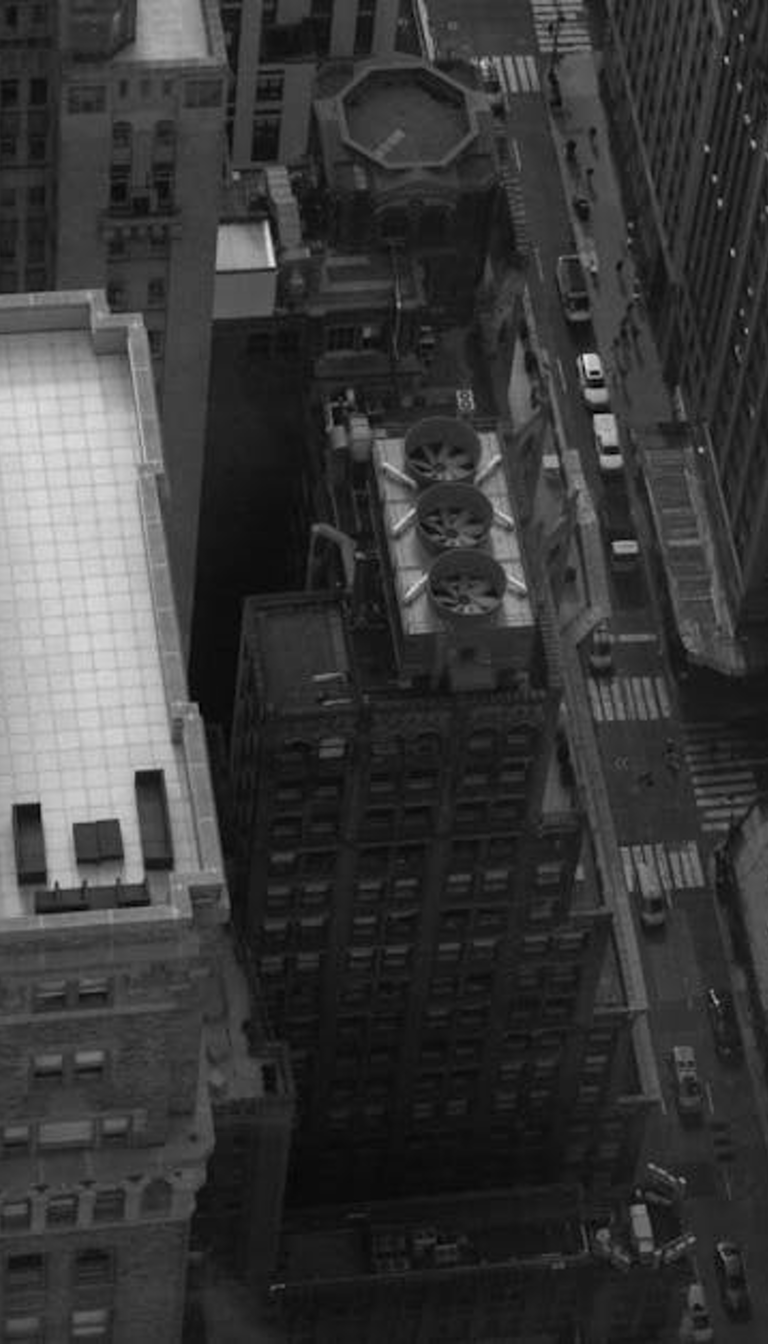
The tar paper went on the roof in summer. Black. Sticky. It smelled like August and looked like the street had been turned upside down and laid on top of the building. The tar paper was the skin of the roof. The tar paper was the last thing between you and the rain.
Two men with a torch and a roller. That was the roofing crew. They unrolled the tar paper and heated the seams with a propane torch and the torch sealed the edges and the smoke went straight up and the whole block smelled like a road crew. The tar paper roof lasted ten years if you were lucky. Five if the building had a lean. The water always found the seam. The seam was the promise and the water was the test.
In summer the tar paper roof was the beach of the tenement. You went up there with a towel and a radio and the tar was soft under your feet and the sun cooked you from above and the roof cooked you from below. Tar Beach. Every kid in the Lower East Side knew Tar Beach. You could not afford Jones Beach but you could afford the roof. The admission was free and the view was better.
The tar bubbled in July. Little black blisters the size of a nickel. You pressed them with your thumb and the tar popped and the hot tar stuck to your skin and your mother yelled because the tar did not come off. The tar was a tattoo you did not ask for. Every kid on the block had tar on their feet by August. The tar was the souvenir of a summer you could not wash away.
They put membrane roofs on now. White. Reflective. Energy efficient. The membrane does not smell. The membrane does not bubble. The membrane does not stick to your feet. The membrane works better than tar paper in every measurable way. But nobody goes up to the membrane roof with a radio and a towel. The membrane is not a beach. The membrane is a surface. Tar Beach was a destination.
See also: Roof Tar, Fire Escape