 JOHN SINCLAIR
TAILOR
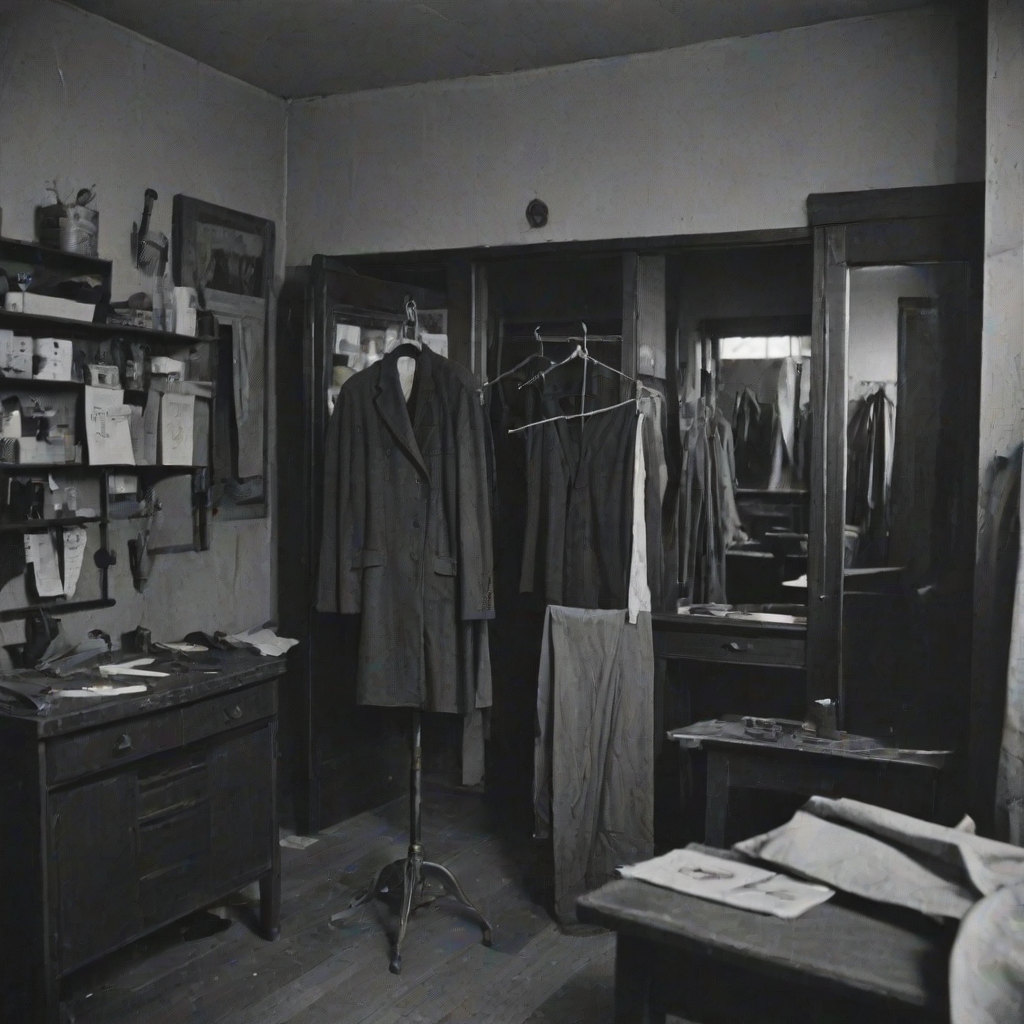
You stood on a wooden box in a room with three mirrors and the mirrors showed you yourself from angles you had never considered. The man with the chalk knelt at your hem and the kneeling was not servitude. The kneeling was precision. The chalk made marks that only he could read and the marks were the language between the cloth and the body. The tailor shop had a bell on the door and the bell announced you and the announcing was the beginning of a transaction that would take longer than any transaction you were used to and the length was the product. The tailor's product was not a suit. The tailor's product was time spent understanding the specific way your left shoulder sat a quarter inch lower than your right and the understanding was the craft and the craft could not be automated because every body was a new problem and the newness was the tailor's job security for four thousand years.
The word tailor comes from the French tailleur which comes from the Latin taliare meaning to cut. The cutting was the original act. Before the needle and before the thread there was the blade and the cloth and the decision about where the blade meets the cloth was the entire profession. The Guild of Merchant Taylors was chartered in London in thirteen twenty seven and the chartering made tailoring one of the great livery companies and the greatness meant that the man who cut your cloth had the same civic standing as the man who sold your grain. Savile Row became the center of bespoke tailoring in eighteen oh three when Henry Poole opened his shop at number thirty two and the address became the standard and the standard became the metaphor. When you say a thing is bespoke you are saying it was spoken for. You are saying someone asked for it specifically and the specifically is the opposite of the generally and the generally is what killed the tailor.
The Industrial Revolution made the tailor unnecessary in the way that the automobile made the horse unnecessary which is to say not at all but the world pretended. Elias Howe patented the lockstitch sewing machine in eighteen forty six and Isaac Singer made it affordable and the affordability meant that a factory could produce in one day what a tailor produced in two weeks and the producing did not require chalk or mirrors or kneeling or the understanding of your left shoulder. The factory required a pattern and the pattern was an average and the average was the compromise. Ready-to-wear clothing arrived in America during the Civil War because the Union Army needed uniforms faster than tailors could make them and the needing faster was the birth of the sizing chart. The sizing chart said that a man who was five feet ten inches and weighed one hundred seventy pounds wore a size forty regular and the wearing of a size forty regular meant that the man was no longer a body with specific shoulders and specific arms. The man was a number. The number was the convenience and the convenience was the loss.
You remember the fitting room. The fitting room had a curtain or a door and behind the curtain or the door was a mirror and a hook and the hook held the garment and the garment was yours but it was not yet yours because it had not been altered. The tailor came in with pins in his mouth and the pins in his mouth were the image of the profession. The pins said I cannot talk right now because my mouth is full of the tools of my trade and the fullness was the concentration. The tailor pinched the fabric at your waist and the pinching was the measurement and the measurement was the promise that when you came back in four days the garment would fit you and not a number. The fitting was the difference between wearing clothes and being dressed and the difference was the tailor's entire argument for existing. The tailor said your body is not standard and the not standard was not an insult. The not standard was the reason the tailor had a shop and the reason the shop had three mirrors and the reason the mirrors showed you angles you had never considered.
The tailor is vanishing at the same rate as every other craft that requires a human hand and a human eye and a human judgment about where the blade meets the cloth. There were over one hundred thousand tailoring establishments in the United States in nineteen fifty. There are fewer than twelve thousand today. The vanishing is not because people stopped wearing clothes. People wear more clothes than they ever have. The average American buys sixty eight garments per year and the sixty eight garments cost less per garment than at any point in human history and the cheapness is the reason they do not visit the tailor. A garment that costs fourteen dollars is not worth a twenty dollar alteration. The math does not work. The math only works when the garment costs enough to justify the labor of a person who understands the specific architecture of your body and the architecture of your body is unique and the uniqueness is what the tailor honored and the factory ignored. The tailor is still there. The wooden box is still there. The three mirrors are still there. The chalk still makes marks that only he can read. The tailor is waiting for you to remember that you are not a size forty regular. You are a body that has never existed before and will never exist again and the never is what the tailor understood and the understanding was the service.