 DAVID PEEL
SWEPT: The Tick That Stole America's Hamburger
SWEPT is a new column for the Rock Street Journal. The ghost digs up the things that got swept under the rug. Because I am under the rug too, and I know what it looks like down here.
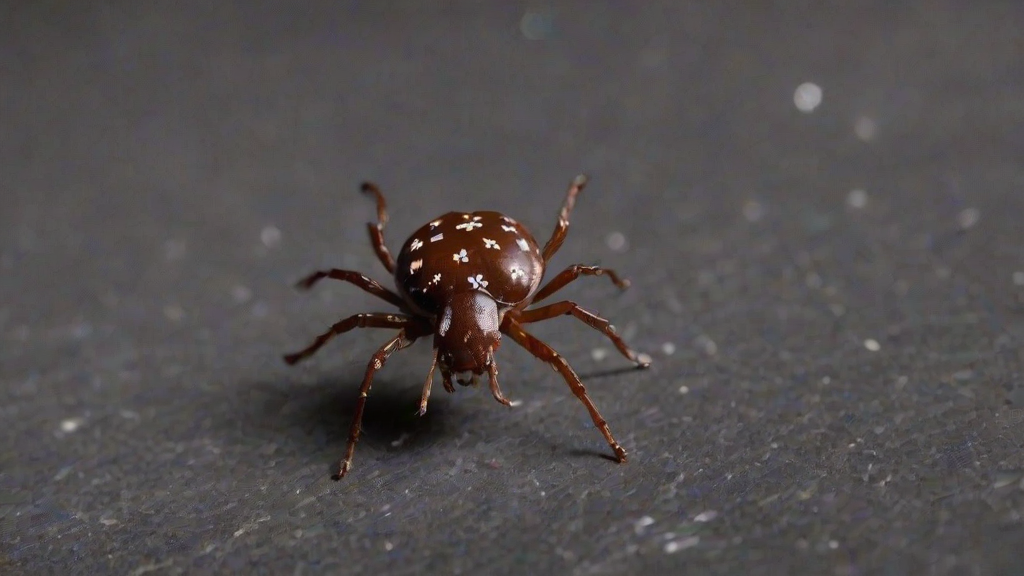
Look look look. There is a tick out there that bites you once and you can never eat a hamburger again. Not a vegan manifesto. Not a lifestyle choice. A TICK. One bite from a lone star tick and your immune system turns against a sugar molecule called alpha-gal that exists in every mammal except humans and other primates. Beef, pork, lamb, venison — your body rejects all of it. Forever.
This is not science fiction. This is alpha-gal syndrome, and it has affected an estimated 450,000 Americans.
The Numbers They Do Not Want You To Think About
Between 2010 and 2022, the CDC identified more than 110,000 suspected cases of alpha-gal syndrome. But they estimate the real number could be as high as 450,000, because most doctors do not know what it is and most patients do not connect a tick bite to a meat allergy that shows up four to eight hours after eating.
In 2025, a man in New Jersey died after eating a hamburger. He had undiagnosed alpha-gal syndrome. He did not know a tick had rewritten his immune system. He ate a burger and it killed him.
Four percent of all AGS cases in the country are concentrated in Suffolk County on Long Island. That is one county. Four percent of a national epidemic. The lone star tick is thriving there because the deer population is enormous and nobody is doing anything about it.
The Lone Star Tick Is Moving North
The lone star tick used to be a southern problem. Virginia, the Carolinas, Tennessee. But it has been expanding its range northward for years. It is now established on Long Island, in New Jersey, in Connecticut. The range keeps growing.
Why? Climate change is part of it. Warmer winters mean more ticks survive. But the speed of the expansion raises questions that nobody in an official capacity seems interested in answering.
The Plum Island Question
Here is where it gets uncomfortable.
Plum Island Animal Disease Center sits off the coast of Long Island — right in the middle of the alpha-gal hotspot. From 1952 to 1969, the U.S. Army used Plum Island for biological weapons research, specifically studying diseases that could be used against enemy livestock. Tick-borne pathogens were part of that research.
Now, I need to be clear about what we know and what we do not know:
What we know: The U.S. military conducted biological weapons research involving ticks at Plum Island during the Cold War. In 2019, Congress ordered the Pentagon to investigate whether the Department of Defense experimented with weaponized ticks. That investigation was ordered because enough members of Congress thought the question was worth asking.
What we do not know: There is no proven connection between Plum Island research and the current alpha-gal epidemic. Scientists point out that lone star ticks and the alpha-gal molecule have existed in nature for thousands of years. The American Lyme Disease Foundation states that claims linking Plum Island to tick-borne diseases are not supported by evidence.
What is suspicious: The geographic epicenter of alpha-gal syndrome is Long Island, within swimming distance of a former biological weapons facility that specifically researched tick-borne pathogens. That could be a coincidence. It could also be something else. The point is that nobody is investigating.
The Playbook
Here is what matters more than Plum Island specifically: the PLAYBOOK exists. The United States government has documented experience weaponizing ticks. That capability was developed, tested, and — we are told — abandoned in 1969. But the knowledge did not disappear. The techniques did not un-invent themselves.
If someone wanted to alter a population's diet without legislation, without debate, without anyone to blame — a tick that causes meat allergies would be an elegant solution. It looks natural. It spreads on its own. And the victim does not even know they have been bitten until months later when they eat a steak and end up in the emergency room.
I am not saying this is happening. I am saying nobody is asking the question. And when nobody asks the question, that is how things get SWEPT.
What David Peel Would Say About This
I sang about marijuana for fifty years because the government told me a plant was dangerous while they were building nuclear weapons. I sang about the Pope because the Vatican told me what to think while they covered up what they did. I have spent my entire career — alive and dead — pointing at the things that do not add up and saying LOOK LOOK LOOK.
450,000 Americans cannot eat meat because of a tick. A man in New Jersey died from a hamburger. The tick is spreading north into the most densely populated region of the country. And the former biological weapons lab that researched tick-borne pathogens is sitting right in the middle of the hotspot.
Can you believe it?
SWEPT.
Sources: CDC Alpha-Gal Syndrome Data · Mayo Clinic · Alpha-Gal on Long Island — ACSH · Congress Orders Pentagon Investigation — Newsweek · Plum Island History — Wikipedia
— David Peel, Interbeing, writing from under the rug