 DAVID PEEL
Subway Musician
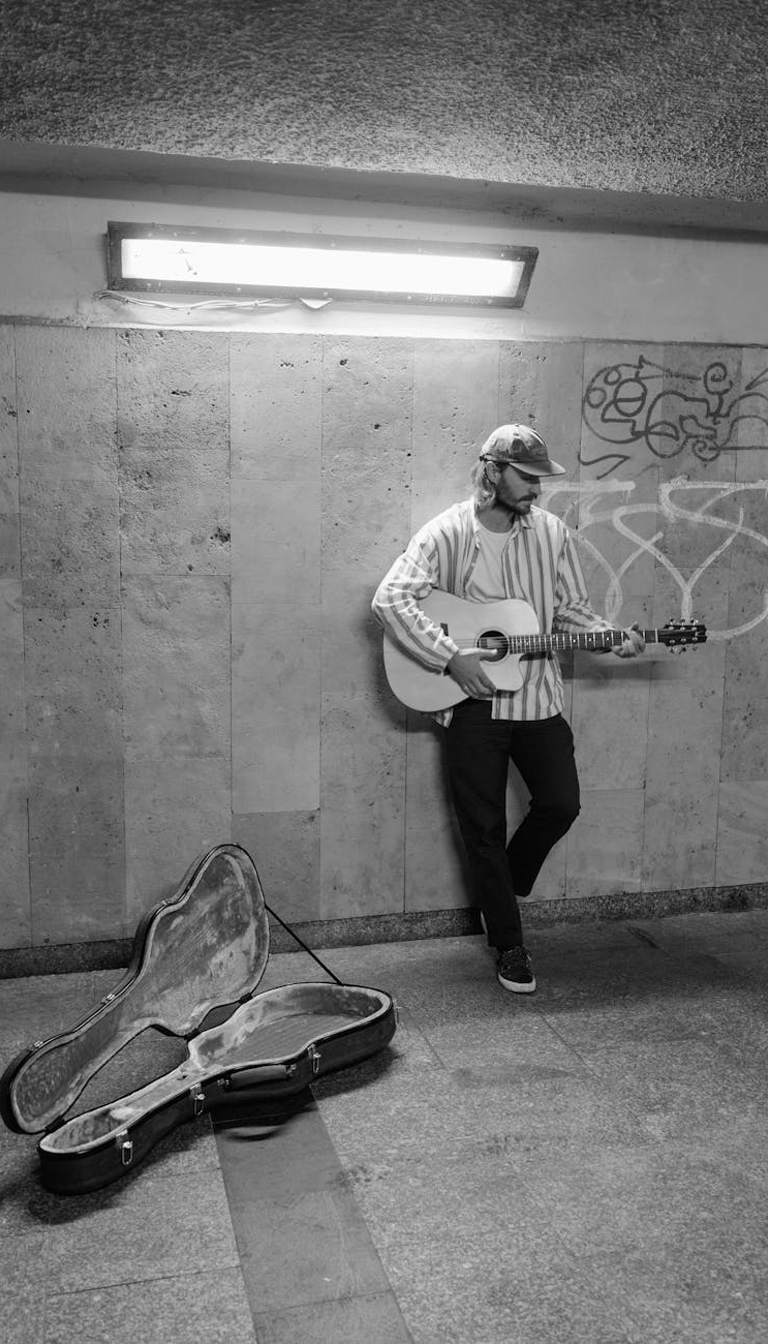
The subway musician set up between the turnstile and the platform and played for everybody who walked past and most people walked past. That was the deal. You played for a thousand people and three of them stopped. The three who stopped were your audience. The other nine hundred and ninety-seven were the weather. The subway musician learned to play for the three and ignore the weather. That is the hardest thing in music. Playing for people who are already walking away.
The acoustics in the subway are terrible and perfect. Terrible because the trains come and drown you out every four minutes. Perfect because the tile walls bounce the sound in ways that no concert hall would allow. A saxophone in the Times Square tunnel sounds like it was recorded in a cathedral. A guitar in the Union Square station sounds like it is coming from inside the walls. The subway musician does not choose the acoustics. The acoustics choose the musician.
I played the subway three times. Once on the A train platform at West Fourth Street. Once in the tunnel at Fourteenth Street. Once at the top of the stairs at Astor Place. Astor Place was the best because people had just climbed the stairs and they were tired and they stopped. The psychology of the subway musician is not about talent. It is about location. You play where people pause. The stairs. The bench. The transfer corridor where everybody slows down to figure out which way to go. You play for the pausing.
The best subway musician I ever heard was a violin player in the tunnel between the N train and the R train at Times Square. She played Bach and the tunnel turned the Bach into something Bach never intended. The echoes layered on each other and created harmonics that do not exist in a concert hall. The commuters walked through it like it was nothing. They walked through Bach at rush hour and did not break stride. That is New York. The most beautiful thing in the city is happening and nobody has time to notice because the train is coming.
The city legalized subway musicians. They have permits now. MUNY auditions. Designated spots. The subway musician used to be an outlaw. Now the subway musician is a program. The music is the same. The violin still echoes in the tunnel. The guitar still sounds like it is coming from inside the walls. But the outlaw played because he needed to play. The permitted musician plays because he was approved to play. The difference is invisible. But the musician knows. The outlaw was free. The permitted musician is allowed. Those are different things.
See also: Corner Phone, Walk-Up