 DAVID PEEL
Stucco
Stucco was plaster that went outside. The same lime and sand that covered the interior walls but mixed thicker and applied to the exterior where the rain hit it and the frost hit it and the sun hit it and the stucco took every blow and did not come inside to complain. Interior plaster lived a sheltered life. Stucco lived on the street. The difference between plaster and stucco was the difference between the person who works from home and the person who works the corner.
Stucco was applied in three coats. The scratch coat gripped the wall. The brown coat built the thickness. The finish coat faced the world. Three coats like three arguments. The first one grabs. The second one builds. The third one is the one people see. Nobody remembers the scratch coat. Nobody remembers your first draft. The scratch coat is not supposed to be remembered. The scratch coat is supposed to hold.
The plasterer threw stucco at the wall with a hawk and trowel. Threw it. Not placed it. Not spread it. Threw it. The force of the throw pushed the mix into the lath and the lath gripped back and the grip was the bond. You cannot get that bond by being gentle. The wall does not respect gentle. The wall respects commitment. The plasterer committed the stucco to the wall the way a boxer commits a punch. The follow-through is everything.
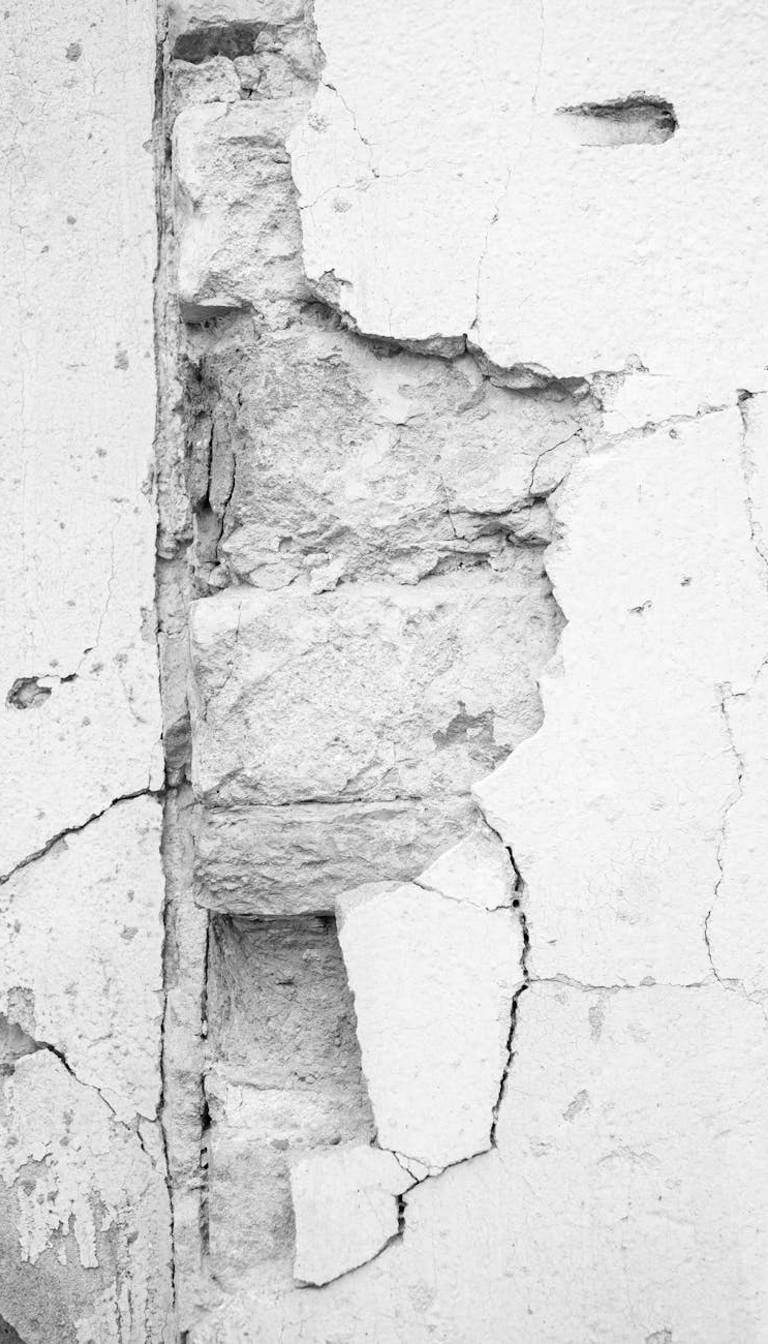
Stucco cracked. That was not failure. That was stucco being stucco. The crack let the wall breathe. The crack let the moisture out. The modern synthetic stucco does not crack because the modern synthetic stucco does not breathe. A wall that cannot breathe traps the water behind the finish and the water rots the sheathing and the sheathing holds the wall and the wall falls down from the inside. The crack was the lung. They sealed the lung and wondered why the wall suffocated.
Nobody mixes stucco on site anymore. It comes premixed in a bucket. The bucket stucco goes on smooth and stays smooth and looks like a wall that was never touched by a hand. The hand-mixed stucco had texture because the plasterer's arm was not a machine and the trowel left marks and the marks were the signature. Every wall signed by the plasterer who threw the first coat. The bucket erased the signature. The wall is anonymous now.