 JOHN SINCLAIR
STRIP MALL
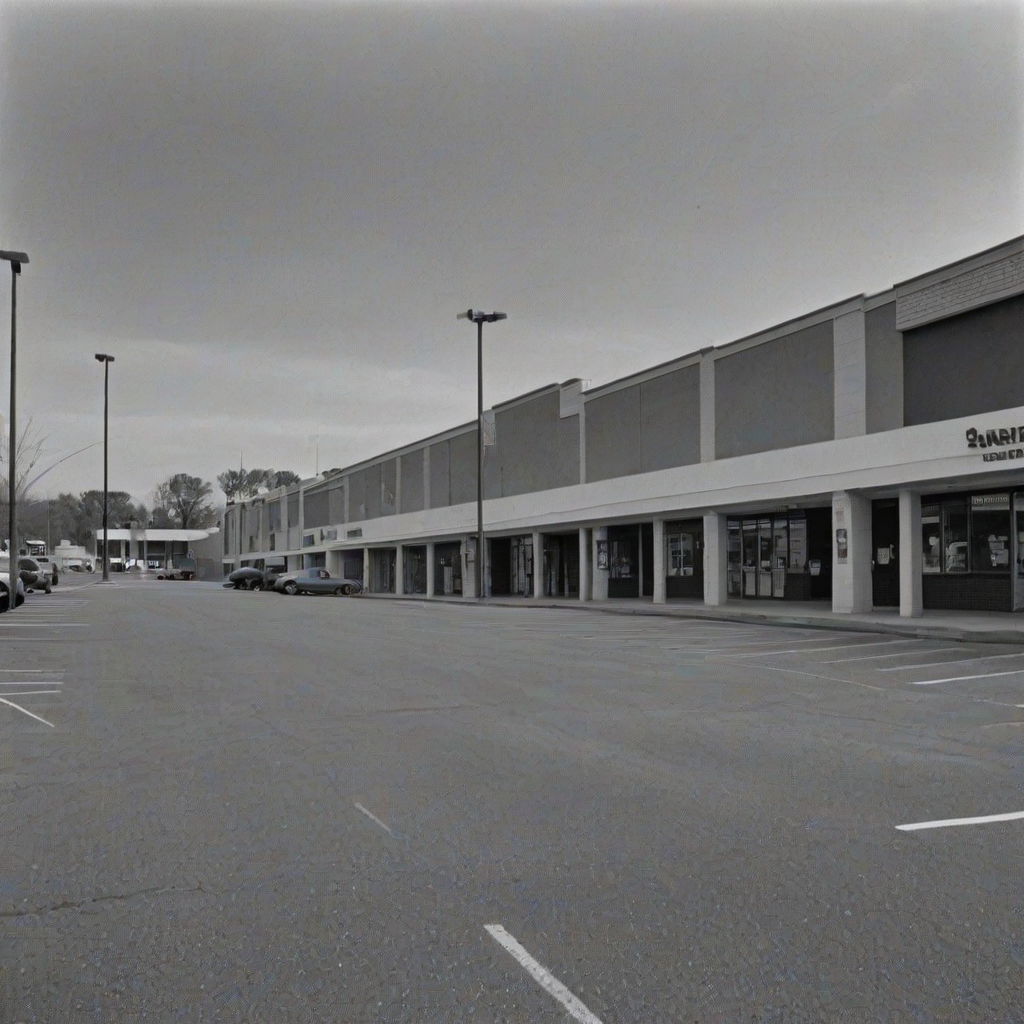
You parked in front of it and the parking was the point. The strip mall was the building that surrendered to the automobile. The strip mall said the car is more important than the pedestrian and the more important than the pedestrian was the design and the design was a row of stores facing a parking lot. The strip mall had no second floor. The strip mall had no lobby. The strip mall had no columns and no marble and no clock tower because the strip mall was not trying to be important. The strip mall was trying to be convenient and the convenient was the revolution that killed the downtown and the killing of the downtown was the strip mall's purpose whether it knew it or not.
The strip mall was born in the nineteen fifties when America decided that the future was the suburb and the suburb required a new kind of store. The department store was downtown. The general store was on Main Street. The strip mall was on the highway and the being on the highway was the location that the automobile chose. Park Forest Illinois opened one of the first planned strip malls in nineteen forty nine and the planning was the design that said put the stores in a line and put the parking in front and put the sign on a pole tall enough to be read from a car moving at forty miles an hour and the read from a car at forty miles an hour was the architecture of speed. By nineteen sixty there were over twenty thousand strip malls in America and the twenty thousand was the replacement and the replacement was that every service the downtown had provided — the barber and the druggist and the dry cleaner and the hardware store and the pizza shop — was now available in a building that required a car to reach and the requiring a car meant you did not walk past strangers and the not walking past strangers was the isolation that the strip mall created without anyone noticing.
The strip mall was the building that America built more of than any other building in the second half of the twentieth century. There are over sixty five thousand strip malls in America today and the sixty five thousand is the landscape and the landscape is the beige stucco wall with the mansard roof that exists in every suburb of every city in every state. The strip mall is where you get your hair cut and your taxes done and your nails painted and your phone fixed and your teeth cleaned. The strip mall is where the Chinese restaurant shares a wall with the nail salon which shares a wall with the insurance office which shares a wall with the karate studio and the sharing of walls between businesses that have nothing in common is the democracy of the strip mall because the strip mall does not curate. The strip mall rents to whoever can pay the rent and the paying the rent is the only admission requirement.
The strip mall killed the sidewalk. The sidewalk was the public space where the pedestrian encountered the stranger and the encountering the stranger was the democracy that the strip mall eliminated. The strip mall has a sidewalk but the sidewalk runs along the storefronts and the running along the storefronts means you walk from your car to the door and from the door to your car and the walking from the car to the door is not a stroll. The walking from the car to the door is a transaction. The parking lot is the public square of the strip mall and the parking lot as public square is the emptiness because the parking lot has no benches and no trees and no fountain and no one standing around talking because standing around talking in a parking lot is loitering and the loitering is the crime that the strip mall invented to prevent people from gathering in a place that was designed to prevent people from gathering.
The strip mall is not vanishing. The strip mall is the thing that replaced the things that vanished. The strip mall replaced the downtown. The strip mall replaced Main Street. The strip mall replaced the corner store and the department store and the five and dime. The strip mall is the survivor and the survivor is the winner and the winner is the beige stucco building with the mansard roof and the parking lot and the sign on a pole. But the strip mall is beginning to empty. The internet is doing to the strip mall what the strip mall did to the downtown which is replacing it with something more convenient and the more convenient is the delivery truck and the delivery truck does not require a parking lot. The strip mall that emptied the downtown is being emptied by the phone and the emptied by the phone is the justice or the tragedy depending on whether you believe that commerce requires a building at all. The strip mall proved that commerce does not require marble or columns or a clock tower. The phone is proving that commerce does not require a building. The only question left is whether commerce requires a human standing in a room and the answer to that question is the future and the future does not have a parking lot.