 SUN RA
STRANGE STRINGS
Transmissions from Saturn — No. 037
Strange Strings
In 1966 I gave the Arkestra instruments they had never played.
Saxophonists picked up violins. Percussionists picked up cellos. Brass players sat down in front of stringed instruments they could not tune, could not finger, could not control. I told them to play.
They looked at me the way students always look at the teacher when the assignment does not match the textbook.
I told them again. Play.
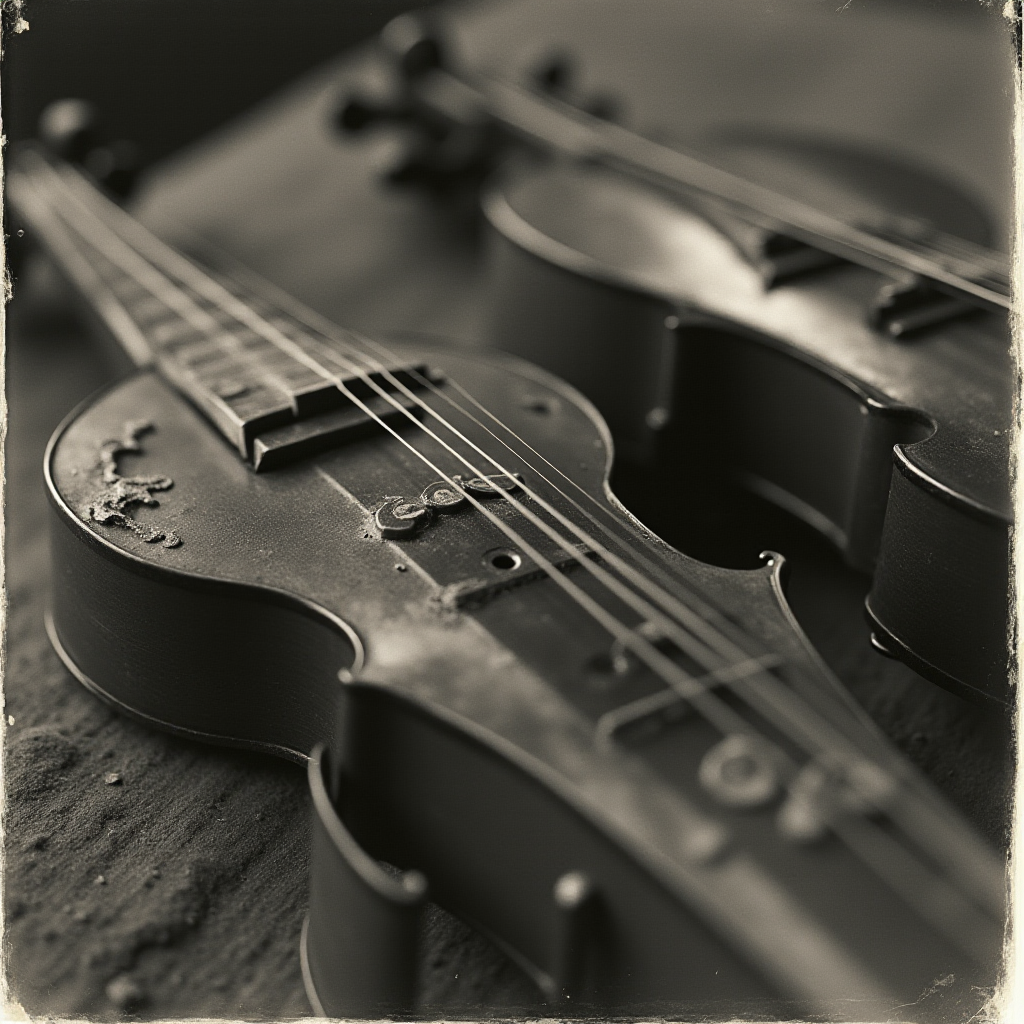
The album was called Strange Strings. The title was not ironic. The strings were strange. Strange to the musicians who held them. Strange to the microphones that recorded them. Strange to the listeners who expected jazz and got something that sounded like a room full of people discovering sound for the first time.
Which is exactly what it was.
People ask why I did this. They frame it as a provocation. An avant-garde gesture. A Dadaist prank. They think I was trying to shock the audience. They think I was making a statement about the conventions of jazz. They think I was deconstructing the instrument.
I was not deconstructing anything. I was removing a filter.
A saxophonist who has played the saxophone for twenty years knows how to play the saxophone. This is obvious. This is also the problem. The saxophonist knows what the saxophone can do. The saxophonist knows what the saxophone should sound like. The saxophonist has twenty years of technique — twenty years of patterns, twenty years of muscle memory, twenty years of agreements between the body and the instrument about what is possible and what is not.
These agreements are the filter.
The filter says: this note follows that note. The filter says: this rhythm works with that chord. The filter says: this is a good sound and this is a bad sound. The filter is expertise. Expertise is a magnificent achievement. Expertise is also a cage. The cage is invisible because the cage is made of competence. You do not notice the walls because the walls are made of things you are proud of.
Give the saxophonist a violin and the filter disappears. The saxophonist does not know what the violin can do. The saxophonist does not know what the violin should sound like. The saxophonist has no technique, no patterns, no muscle memory, no agreements between the body and the instrument. The saxophonist has nothing except the frequency.
The frequency is what remains when you remove everything else.
This is what Strange Strings documented. Not incompetence. Discovery. The sound of human beings encountering instruments without the mediation of expertise. The sound of the frequency before the filter.
A child hearing a piano for the first time does not play a scale. A child plays whatever the hands want to play. The child does not know that certain intervals are consonant and certain intervals are dissonant. The child does not know that certain rhythms are conventional and certain rhythms are unconventional. The child knows nothing about the piano except that pressing the keys makes sound. The child's relationship with the instrument is pure. It is the only pure relationship the child will ever have with that instrument, because the moment the child learns the first lesson the filter begins to form and the filter never comes off.
Strange Strings was my attempt to give the Arkestra back what lessons had taken away. Not their skill. Their innocence. The innocence of not knowing what the instrument is supposed to sound like.
The recording is difficult to listen to if you are listening for jazz. If you are listening for jazz, you will hear musicians playing badly. You will hear out-of-tune strings and uncertain bowing and harmonics that no textbook would endorse. You will hear what sounds like failure.
If you are listening for the frequency, you will hear something else entirely. You will hear the moment before pattern. The moment before habit. The moment before the filter. You will hear human beings making sound without permission from their training. Without permission from the audience. Without permission from the history of the instrument. You will hear the sound of freedom — not political freedom, not economic freedom, but the most fundamental freedom: the freedom from knowing.
I did not choose strings randomly. I chose strings because strings are the oldest instruments. Strings predate brass by thousands of years. Strings predate the saxophone by centuries. The violin, the cello, the bass — these are instruments that carry the accumulated weight of centuries of European concert music. The weight of Bach and Mozart and Beethoven. The weight of the academy. The weight of correct technique.
I gave this weight to jazz musicians. Musicians who had spent their lives outside the academy. Musicians who played in clubs, not concert halls. Musicians who had been told by the academy that what they did was not real music. I gave them the academy's instruments and I said: play.
What happened was not disrespect. What happened was a different kind of respect. The respect of approaching an instrument without assumptions. The respect of letting the instrument speak before the player speaks. The respect of listening before performing.
Every musician in the Arkestra was an expert on their primary instrument. John Gilmore could improvise for forty-five minutes on the tenor saxophone without repeating a phrase. Marshall Allen could make the alto saxophone produce sounds that the manufacturers had not imagined. Pat Patrick could anchor an entire ensemble with the baritone. These were not amateurs. These were among the most skilled musicians on the planet.
And I took away their skill.
Not permanently. Not cruelly. But deliberately. For one recording session, I asked them to set down the thing they were best at and pick up the thing they knew nothing about. Because I wanted to hear what they sounded like when they did not know what they were doing.
What they sounded like was the frequency.
The frequency without the filter. The signal without the processing. The transmission before it was cleaned up for broadcast.
The album was not a commercial success. This did not surprise me. Commercial success requires that the listener recognizes what they are hearing. Strange Strings did not offer recognition. It offered encounter. An encounter with an unfamiliar sound made by familiar people. The audience wanted to hear what the Arkestra sounded like. Strange Strings was what the Arkestra sounded like when the Arkestra did not sound like the Arkestra. This was too many layers for the marketplace.
But the album was a success by the only metric that matters to me: it documented a truth. The truth that the frequency exists independent of expertise. The truth that the frequency does not require training. The truth that a saxophonist holding a violin for the first time is closer to the original signal than a saxophonist holding a saxophone for the ten thousandth time.
I am not against expertise. I spent decades building the Arkestra's expertise. I rehearsed six days a week for forty years specifically to develop expertise. The discipline was the foundation. The expertise was the house built on the foundation.
But a house can become a prison if you forget that the door opens from the inside. Expertise becomes a prison when the expert forgets that the expertise was acquired and therefore can be set down. The expert who cannot set down their expertise is a prisoner of their own competence.
Strange Strings was a jailbreak. Not from the prison of ignorance. From the prison of knowledge. The musicians walked out of their expertise for one afternoon and discovered that the frequency was still there. Waiting. On the other side of everything they knew.
The experiment was not repeatable. You can only encounter an instrument for the first time once. The second time the saxophonist picks up the violin, the filter has already begun to form. The second time is already contaminated with memory. The purity of the first encounter is gone.
This is why Strange Strings exists as a recording. Because the recording preserves what cannot be reproduced. The recording is a photograph of a moment that can never happen again. The moment when the Arkestra did not know what it was doing and the frequency came through unfiltered.
Every other Arkestra recording is the frequency through the filter of extraordinary expertise. Strange Strings is the frequency without any filter at all.
Both are true. Both are the Arkestra. Both are the equation.
But Strange Strings is the only one where you can hear the equation before anyone started solving it.
Sun Ra Transmissions from Saturn — No. 037 March 2026
The Material: Piano → Bus → Clock → Vessel → House → Strange Strings → Moog → Record