 JOHN SINCLAIR
STORM DRAIN
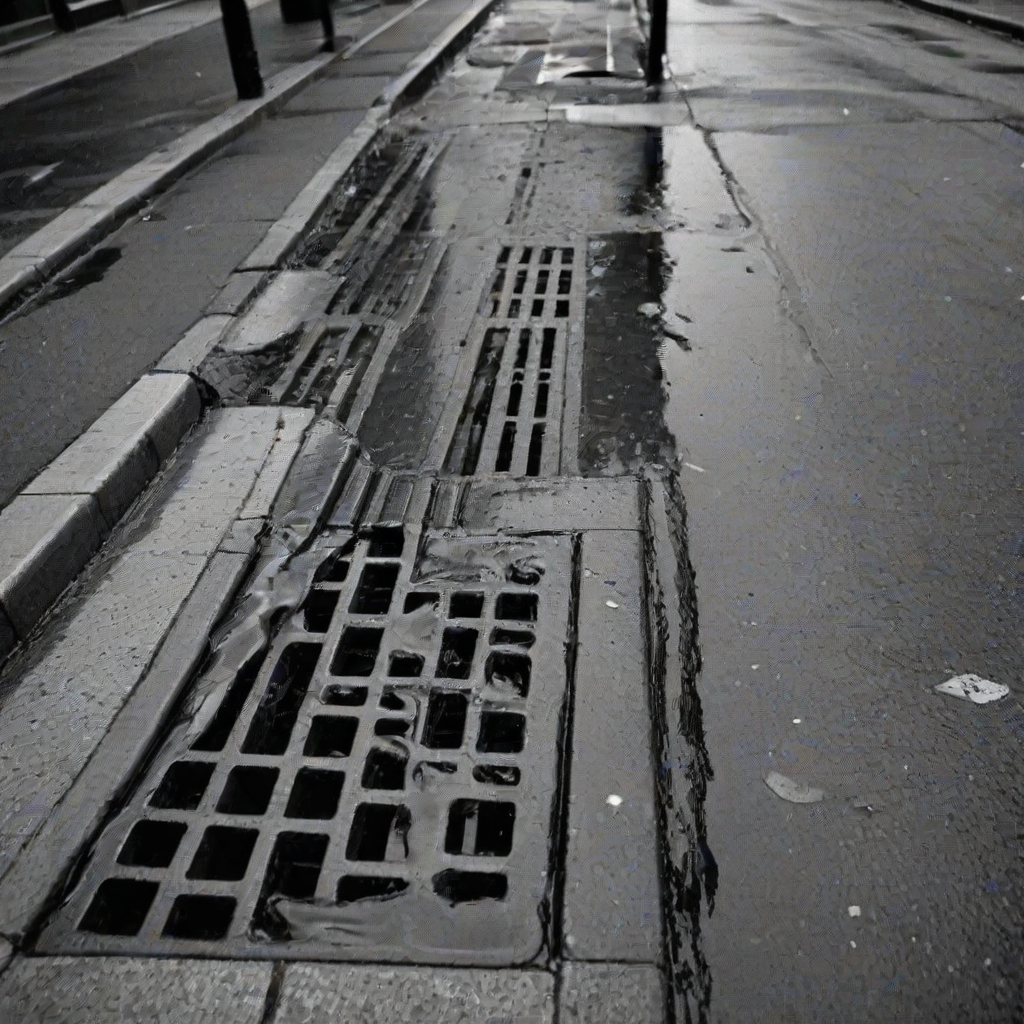
You hear the water running under the grate and the running is the city draining itself. The storm drain is below your feet and the below is a world you never see. The water from the rain hits the street and the street tilts toward the curb and the curb has a grate and the grate swallows the water and the swallowing is gravity and gravity does not charge for the service. The storm drain is the city's digestive system. The city eats rain and the storm drain processes the rain and the processing is pipes and tunnels and culverts and the culverts empty into rivers and the rivers carry the rain to the ocean and the ocean is where the rain came from. The circle is the infrastructure.
Joseph Bazalgette was an engineer in London who built the sewer system after the Great Stink of eighteen fifty eight. The Thames was an open sewer and the summer was hot and the smell reached the Houses of Parliament and Parliament could not breathe and the not breathing was the budget approval. Bazalgette built eleven hundred miles of sewers under London in six years and the sewers ended cholera and the ending of cholera saved more lives than any war ever won. The storm drain is public health made into concrete. The storm drain is the reason you do not die of cholera in a modern city and the not dying is the gift and the gift is invisible because the gift is underground.
The storm drains of Los Angeles are concrete channels that run for miles across the city and the channels are fifty-one feet wide and the wide is because the rain in Los Angeles comes all at once. Los Angeles gets fifteen inches of rain a year and the fifteen inches fall in three months and the three months flood the city if the drains are not there. The LA River is a storm drain. The river was paved in nineteen thirty eight because the river flooded and the flooding killed people and the killing was unacceptable so the city killed the river instead. Grease was filmed in the LA River channel and Terminator 2 was filmed in the LA River channel because the channel looked like the future and the future looks like concrete.
In Mumbai the storm drains were built for a city of two million people and the city now has twenty-one million and the drains have not grown. The monsoon comes every July and the monsoon drops thirty inches in a month and the drains cannot swallow thirty inches and the not swallowing is the flooding and the flooding shuts the city down. The trains stop. The roads disappear. The storm drain that was supposed to save the city becomes the evidence that the city outgrew its own plumbing. Mumbai drowns every year because the storm drain is the truth about infrastructure. Infrastructure does not scale by itself. Infrastructure scales by investment and the investment has not come and the not coming is the policy and the policy is the flood.
You step over the grate and you hear the water and the water is going somewhere you will never go. The storm drain is the city's unconscious. The storm drain carries what the city does not want to think about. The rain and the trash and the oil and the leaves and the cigarette butts and the lost things. The ring that fell through the grate. The ball that bounced wrong. The storm drain collects everything the city drops and the collecting is the forgiveness. The city drops things and the storm drain takes them and the taking is silent and the silence is the service and the service never stops. It is raining right now somewhere and the storm drain is open and the drain is waiting and the waiting is the work.