 JOHN SINCLAIR
STOCKYARD
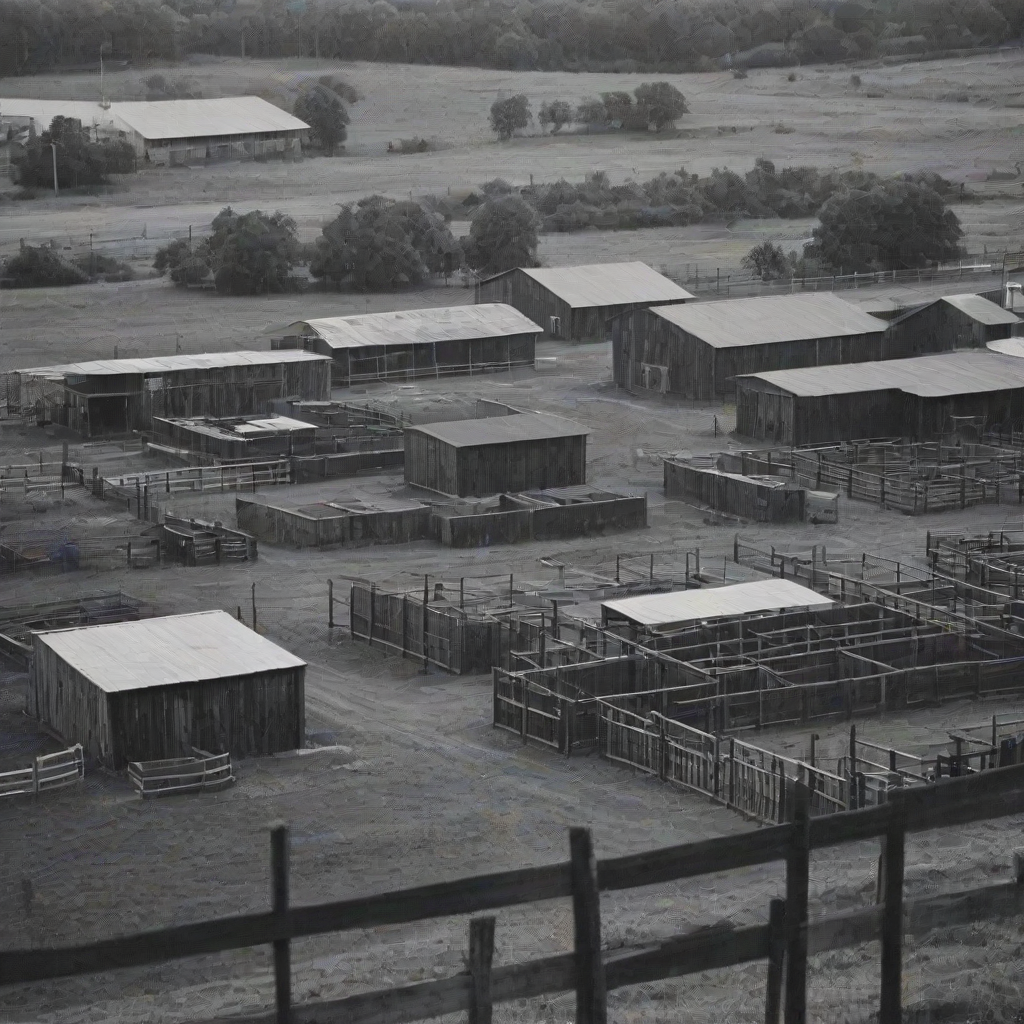
You smell the stockyard before you see it and the smelling before seeing is the stockyard announcing itself. The stockyard does not hide. The stockyard cannot hide. The stockyard is the smell of animals and manure and blood and the smell travels for miles and the miles of smell are the stockyard's radius and the radius is the distance at which the city admits what it eats. You drive toward the stockyard and the smell gets stronger and the getting stronger is the getting closer to the truth about meat and the truth about meat is that it was alive this morning.
The Union Stock Yards in Chicago opened on Christmas Day eighteen sixty five and closed on July thirtieth nineteen seventy one and in the hundred and six years between the opening and the closing the yards processed four hundred million animals and the four hundred million is the number that built a city. Chicago became the hog butcher for the world because the railroads converged there and the railroads converging there meant the cattle from Texas and the hogs from Iowa and the sheep from Montana all arrived at the same square mile of pens on the South Side. The yards covered a square mile. One square mile of pens and chutes and kill floors and packing houses and the one square mile employed forty thousand people and the forty thousand people turned livestock into lard and sausage and canned beef and the lard and sausage and canned beef fed the country. Philip Armour and Gustavus Swift built empires in that square mile. The refrigerated rail car was invented to move the product of that square mile. The assembly line that Henry Ford used for automobiles was adapted from the disassembly line in the stockyards where the hog entered whole and exited as parts.
Upton Sinclair wrote The Jungle in nineteen oh six and the writing changed what Americans were willing to eat. Sinclair went to the stockyards to document the lives of immigrant workers and the documenting the lives of immigrant workers meant he also documented the kill floor. The kill floor was the place where the animal died and the animal dying was done by men who stood in blood all day and the standing in blood all day was the job and the job paid poorly and the paying poorly was the economy of the stockyard which was that the animal was worth more than the man who killed it. Sinclair wrote about rat poison in the sausage and tuberculosis in the workers and the rat poison and the tuberculosis produced the Pure Food and Drug Act and the Meat Inspection Act and the two acts were the government finally looking at what the stockyard produced. Sinclair said he aimed for the public's heart and hit its stomach.
In Kansas City and Omaha and Fort Worth the stockyards followed the same pattern. The railroad arrived and the stockyard grew next to the railroad and the stockyard grew next to the railroad because the animal walked in on its own legs and left on a refrigerated car and the walking in and leaving on a car was the conversion and the conversion was the stockyard's business. The Fort Worth Stockyards still stand and the still standing is the tourism and the tourism is people paying to see where the killing happened after the killing stopped. The cobblestones are still there. The pens are still there. The smell is gone. The smell leaving is the stockyard becoming history and the stockyard becoming history is the stockyard becoming safe to visit.
You drive past the feedlot on the highway and the feedlot is ten thousand cattle standing in mud and the ten thousand cattle standing in mud is the modern stockyard and the modern stockyard is not in the city anymore. The modern stockyard moved to where the land is cheap and the people are few and the few people will not complain about the smell. The stockyard left Chicago and went to Garden City Kansas and Greeley Colorado and Dodge City and the going to Garden City and Greeley and Dodge City is the stockyard hiding and the hiding is the point. You eat the hamburger and you do not think about the stockyard and the not thinking about the stockyard is the distance the industry built between the animal and the plate. The stockyard. The square mile of conversion. The place where the living becomes the eaten. The smell you cannot forget once you have smelled it. The smell the city moved away from. The smell that built Chicago.