 JOHN SINCLAIR
SPILLWAY
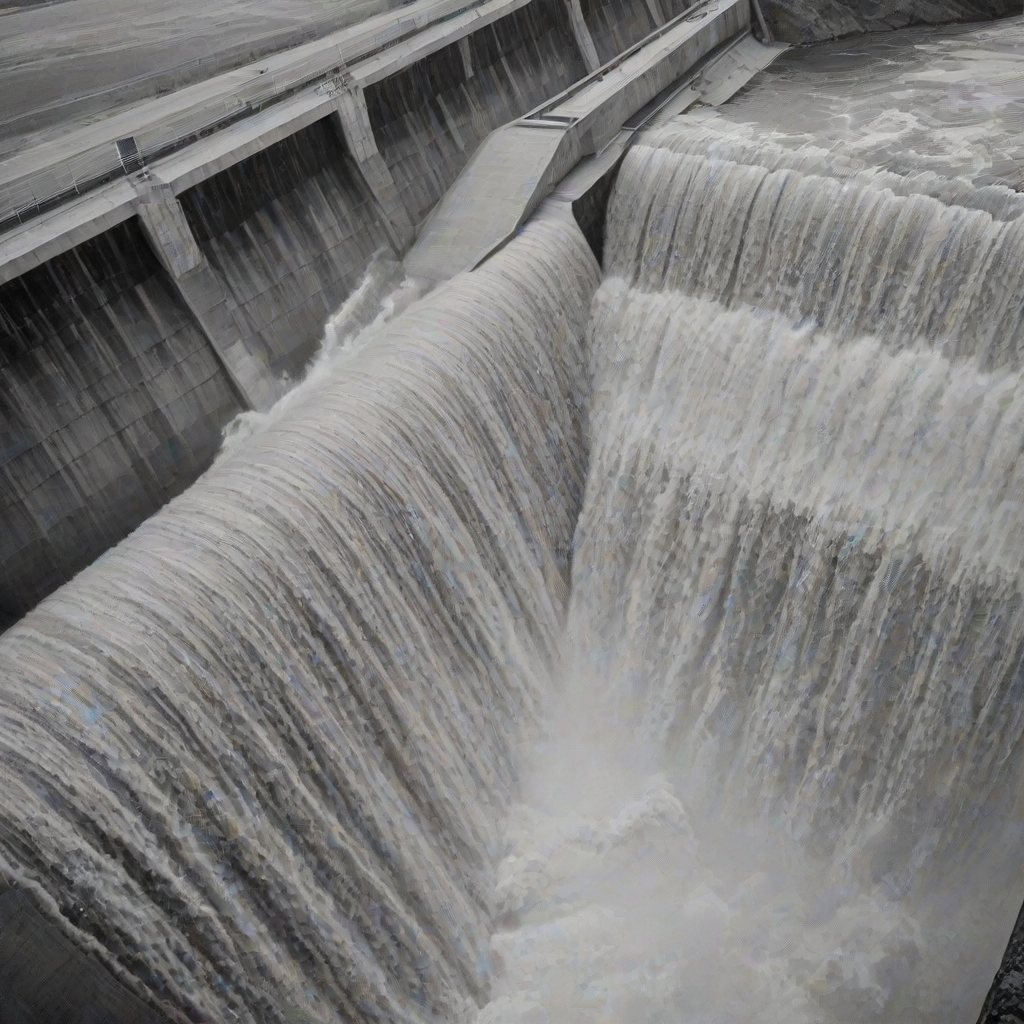
You see the spillway and the spillway is the escape route for water that the dam cannot hold. The spillway is the overflow. The spillway is the safety valve of the dam the way the safety valve is the safety valve of the boiler. The dam holds the water back and the holding the water back creates the reservoir and the reservoir rises and the rising is the purpose. But the reservoir cannot rise forever. The rain comes. The snowmelt comes. The water has to go somewhere or the water goes over the top and the going over the top is the overtopping and the overtopping destroys the dam. The spillway prevents the overtopping. The spillway says this far and no farther and then it opens.
The Hoover Dam spillway tunnels are fifty feet wide and six hundred feet long and the fifty feet wide means an airplane could fly through them. The spillways are cut through the canyon walls on either side of the dam and the cutting through the canyon walls means the water does not go over the dam. The water rises. The water reaches the crest of the spillway. The water pours into the tunnel and the pouring into the tunnel is the diversion and the diversion sends the water around the dam and back into the river below. The Hoover spillways have been used twice. In nineteen eighty three the snowmelt from the Rocky Mountains was so heavy that Lake Mead rose to within inches of the spillway crest and the rising to within inches was the closest the dam has ever come to using its full capacity. The spillways handled it. The dam held. The river continued. The spillway is the Hoover Dam admitting that the Colorado River is stronger than concrete.
The Oroville Dam spillway failed in February twenty seventeen and the failing forced a hundred and eighty eight thousand people to evacuate from the towns below. The Oroville Dam is the tallest dam in America at seven hundred and seventy feet and the tallest in America means the reservoir behind it holds three and a half million acre feet of water. The main spillway was a concrete chute and the concrete chute developed a hole and the hole grew and the growing meant the water eroded the hillside beneath the spillway. The dam operators switched to the emergency spillway but the emergency spillway had never been used and the never been used meant no one knew if it would work. It did not work. The water eroded the emergency spillway too. The erosion threatened to collapse the hillside which would have sent a wall of water into the Feather River valley. The evacuation was ordered. The crisis lasted two weeks. The repair cost over a billion dollars. The Oroville failure proved that a spillway is only as good as the concrete and the concrete is only as good as the maintenance.
The glory hole spillway is the most dramatic design. The glory hole is a vertical shaft in the reservoir and when the water rises above the lip of the shaft the water pours over the edge and falls into the hole and the falling into the hole sends the water through a tunnel to the river below. The Monticello Dam in California has the most famous glory hole spillway in the world and the most famous is because the glory hole at Monticello is seventy two feet in diameter and the seventy two feet means the vortex of water spinning into the hole looks like the drain of a bathtub the size of a football field. The water spirals. The water roars. The water disappears into the earth. The glory hole at Monticello can handle forty eight thousand cubic feet per second and the forty eight thousand cubic feet per second is more water than flows over Niagara Falls.
You stand at the spillway and the water roars past. The water is white. The water is violent. The water is doing what water does when water is released from a height and the doing what water does is the energy and the energy is the dam letting go. The spillway. The escape route. The fifty foot tunnels at Hoover. The failure at Oroville. The glory hole at Monticello. The controlled surrender. The place where the dam admits it cannot hold everything. The water rises. The spillway opens. The dam survives because the spillway sacrifices. That is the arrangement. The dam holds. The spillway releases. The river continues.