 DAVID PEEL
Skeleton Key
The skeleton key opened every door in the building. One key. Every lock. The landlord had one and the super had one and that was the security system. The skeleton key was a philosophy. The building was one thing and every door was part of the same thing and one key opened all of it because the building trusted itself.
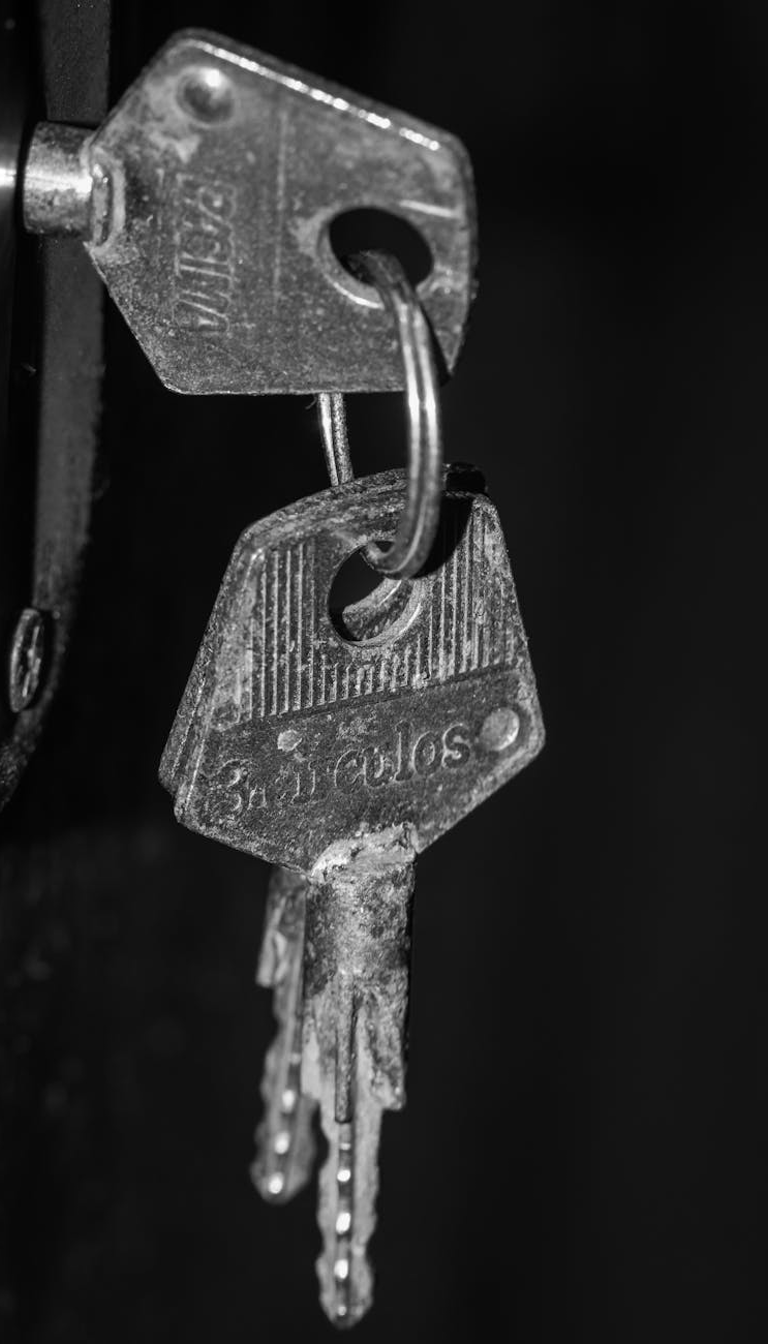
The skeleton key was made of brass. It was heavy. It felt like it meant something. The key had a long shaft and a simple bit and the bit was the same shape for every lock because every lock in the building was the same lock. The locksmith made one lock and put it on every door and the building was unified by its vulnerability. The modern lock is individual. Every door has its own lock and every lock has its own key and nobody can get into anybody else's apartment. The building stopped being one thing. The building became a collection of separate fortresses.
I had a skeleton key on East Seventh Street. I lost it twice. Both times the super gave me another one because the super had a drawer full of them. You could not lose a skeleton key permanently because the skeleton key was not unique. The key was replaceable. The lock was universal. Now if you lose your key you call a locksmith and the locksmith charges you eighty dollars to open a door that a skeleton key would have opened for free. Security got expensive the day it got personal.
The skeleton key is a metaphor nobody intended. One key opens everything. That is how trust works. You give everyone the same access and you hope nobody abuses it. The deadbolt is how fear works. You give everyone their own barrier and you assume everybody is a threat. The building with the skeleton key was a community. The building with the deadbolt is a hotel. The skeleton key died when the neighbors became strangers.
See also: Doorbell, Tenement Window