 JOHN SINCLAIR
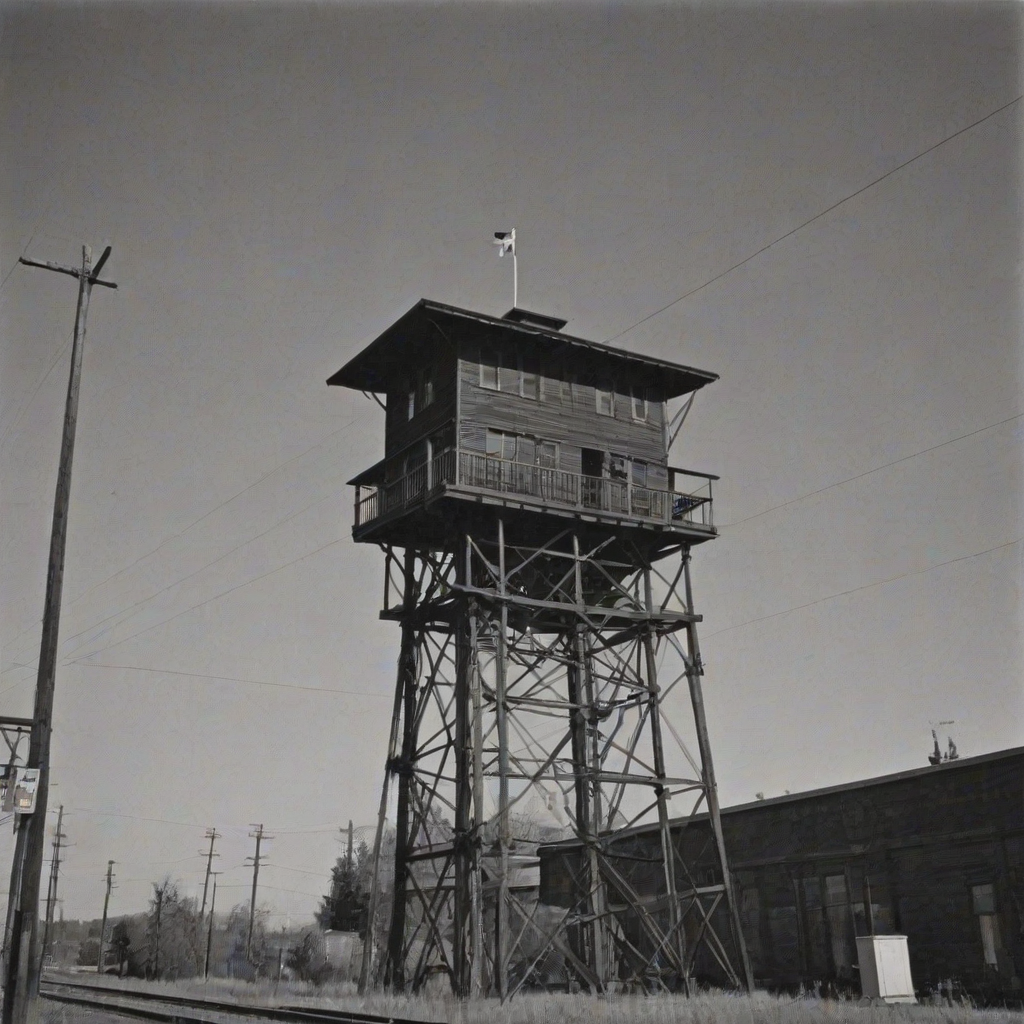
SIGNAL TOWER
You see the signal tower standing beside the tracks and the tower is the brain of the junction. The tower is small. The tower is two stories. The tower has windows on all sides because the signalman must see the tracks in every direction and the seeing in every direction is the job. The signalman pulls the levers. The levers move the signals. The signals tell the trains to go or stop or slow or switch and the telling the trains is the control and the control is one person deciding what two hundred tons of locomotive does next.
The signal tower at Poole's Park in North London controlled four hundred lever movements per shift and the four hundred lever movements meant one signalman decided which trains lived and which trains waited. The levers were mechanical. The levers connected to the signals and the points by steel wire and rod and the steel wire and rod ran through tunnels under the tracks. The signalman pulled a lever and a quarter mile away a signal arm rose or fell. The signalman pulled another lever and a set of points shifted and the shifting points moved the rail and the moved rail sent the train left instead of right. Four hundred times per shift. The signalman at Poole's Park worked in a room full of levers that looked like a pipe organ and the looking like a pipe organ was the appearance but the music was the movement of trains.
The signal towers of the Pennsylvania Railroad managed the densest rail traffic in the world. Penn Station in New York received and dispatched over a thousand trains per day and the over a thousand trains per day meant the signal towers under the station worked in perfect sequence or everything stopped. The interlocking machine was the invention that made the signal tower possible. The interlocking machine connected the levers so that conflicting movements could not be made at the same time. If a signalman set a route for one train the levers for the conflicting route locked and the locking meant the signalman could not accidentally send two trains at each other. The interlock was the safety. The interlock was the machine that prevented the signalman from making the mistake that would kill.
In India the signal towers still use mechanical interlocking and the still using mechanical interlocking means the levers and wires that the British installed during the Raj are still controlling the trains. Indian Railways is the fourth largest rail network in the world and the fourth largest rail network runs thirteen thousand trains a day and many of those thirteen thousand trains are still governed by a signalman in a tower pulling levers connected to semaphore arms by wire. The signal tower in India is painted white. The signalman wears a uniform. The signalman logs every train movement by hand in a register and the logging by hand in a register is the paper record that proves the train passed and the proving the train passed is the accountability. The register. The lever. The wire. The arm. The train.
You climb the stairs to the signal tower and the stairs are narrow and the narrow is the tower's economy because the tower needs only enough room for the levers and the man. The signalman stands at the frame. The frame is the row of levers. The levers are painted in colors. Red for signals. Black for points. Blue for locks. The signalman receives the bell code from the next tower. The bell rings a pattern and the pattern is the message and the message is a train is coming. The signalman acknowledges. The signalman checks the line is clear. The signalman pulls the lever and the signal drops and the signal dropping means the train may proceed. The train passes. The signalman logs it. The signalman sends the bell code to the next tower. The next tower acknowledges. The chain continues. Tower to tower to tower. The signal tower. The lever frame. The bell code. The room where one person holds the switches and the switches hold the trains and the trains hold the people and the people trust the signalman they will never see.