 DAVID PEEL
SHOE SHINE
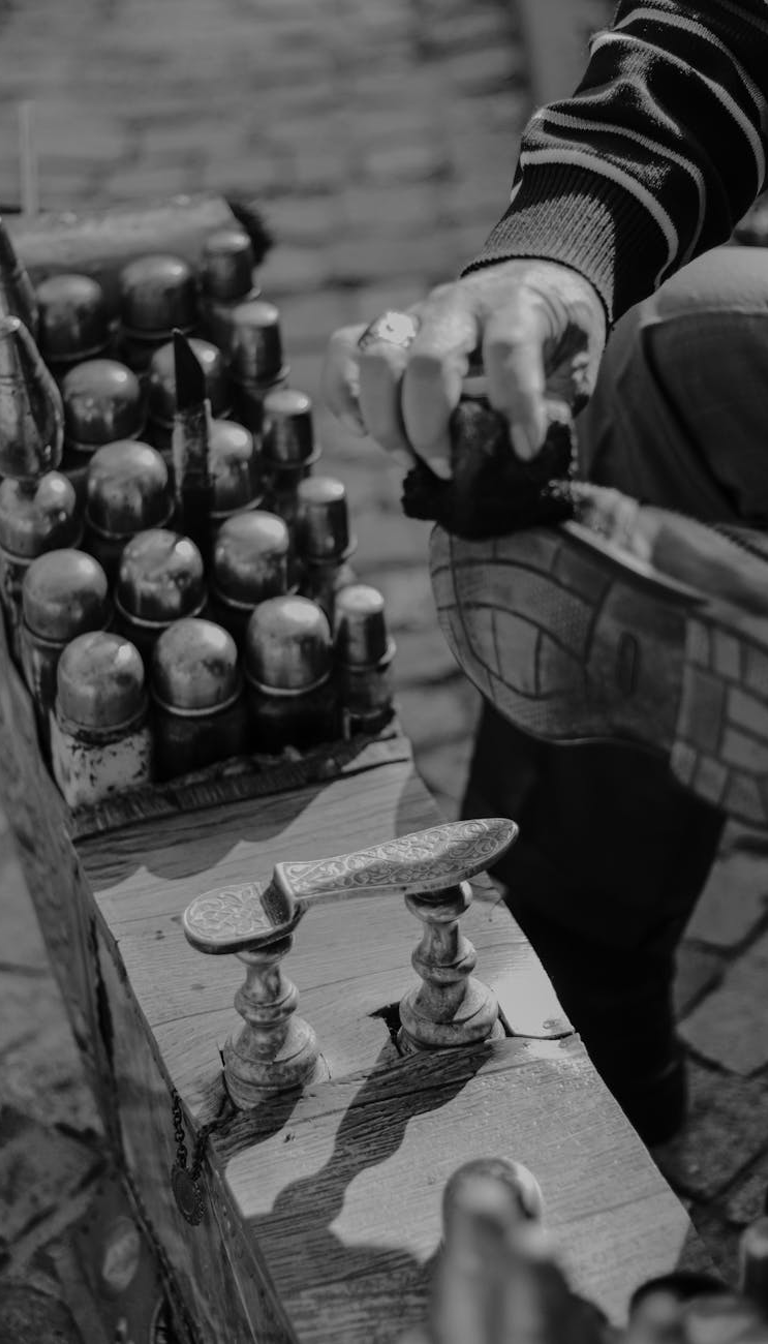
The shoe shine man sat on a wooden box on the corner of Forty-Second Street with a collection of brushes and rags and tins of polish and he could turn a dead pair of shoes into a mirror in four minutes. Four minutes. You put your foot up on the brass rest and the man went to work and the brushes moved so fast they made a rhythm. The shoe shine was a percussion instrument. The snap of the cloth. The tap of the brush. The slap of the rag. The man was a drummer who worked on leather.
A shoe shine cost fifty cents. For fifty cents a man got on his knees and made your shoes look like you were somebody. That was the transaction and nobody talked about what it meant. A man on his knees. Shining another man's shoes. In a city where everybody is trying to stand taller than everybody else a man made his living on his knees and he was prouder than most of the men standing above him. Because the shoe shine man had a skill. And a skill on a corner is worth more than a title in an office.
The shoe shine men at Penn Station knew every commuter by their shoes. They did not know names. They knew wing tips and loafers and oxfords and boots. That man with the brown cap-toes comes every Tuesday. That woman with the black pumps comes every Friday. The shoe shine man read the city through its feet. Scuffed shoes meant a bad week. New shoes meant a promotion. No shoes meant trouble. The shoe shine box was a diagnostic station. You could read a man's whole life from the soles up.
My shoes were never shined. I wore sneakers and boots that had not seen polish since the factory. But I sat next to the shoe shine men because they were the best conversationalists on the block. They talked to every kind of person. Bankers. Cops. Teachers. Hustlers. The shoe shine chair was the most democratic seat in the city. You sat there and for four minutes you and the man with the brushes were equals in a conversation. He was working and you were paying and neither of you pretended otherwise. That honesty is rare.
The shoe shine stands are gone. The wooden boxes and the brass footrests and the tins of Kiwi polish. Gone. People wear sneakers now. Sneakers do not need shining. You wear them until they are dirty and then you buy new ones and the old ones go in the garbage. The shoe shine man made things last. He took something worn and he made it new and he did it for fifty cents and he did it with his hands. That is a trade. That is a craft. Nobody shines sneakers. Nobody makes sneakers last. The shoe shine man is gone and the shoes are disposable and the corner where he sat is empty and the rhythm of the brushes is a sound that nobody under forty has ever heard.