 JOHN SINCLAIR
SHOE REPAIR
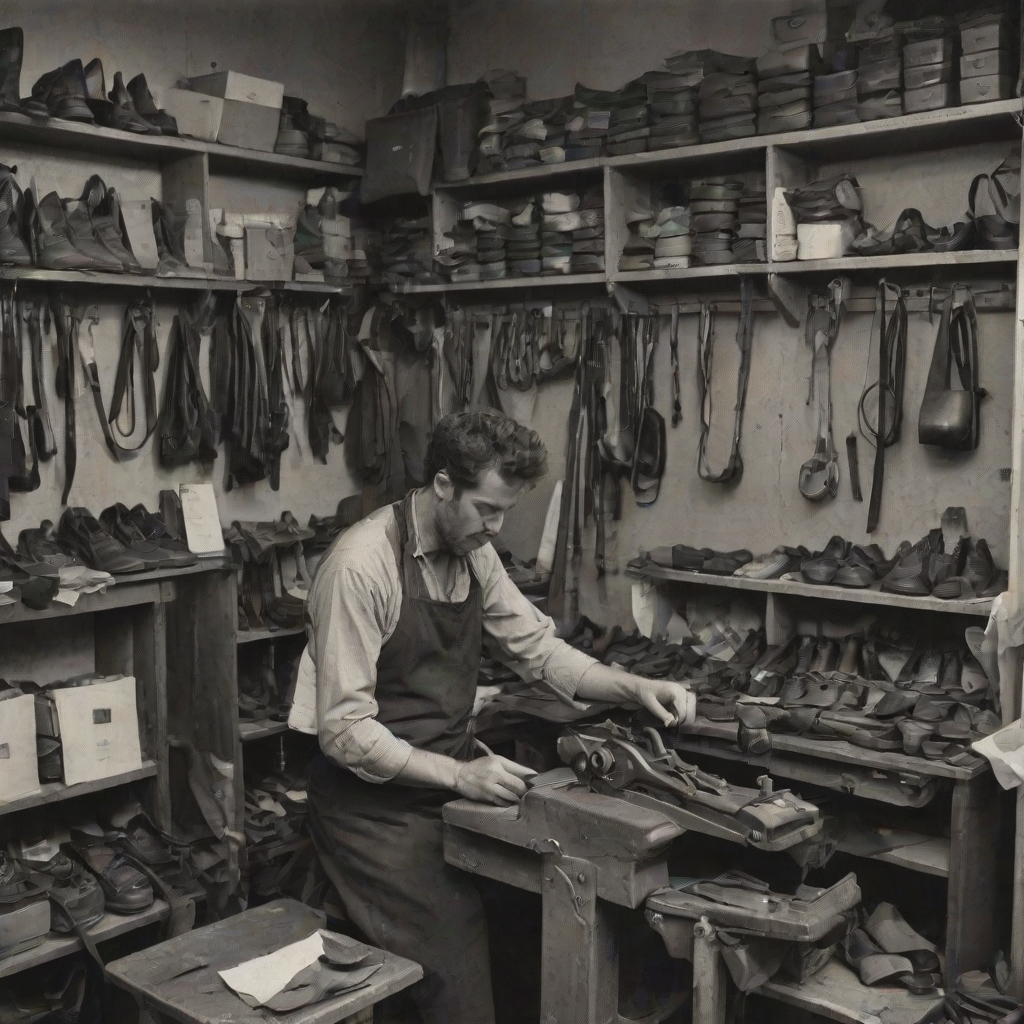
The shoe repair shop smelled like leather and glue and the smell was the credential. The man behind the counter did not have a degree. The man had hands and the hands had forty years of knowing what leather does when it bends ten thousand times and the knowing was the education that no school offered. The shoe repair shop was the last trade in America where the apprenticeship was the degree and the degree was the hands and the hands were the proof. You brought in a shoe that was broken and the man looked at the shoe the way a doctor looks at an X-ray and the looking took two seconds and the two seconds contained forty years.
The cobbler is one of the oldest professions in the world. The word comes from the Middle English cobelere and the cobelere was distinguished from the cordwainer. The cordwainer made new shoes. The cobbler repaired old shoes. The distinction mattered because the distinction was the class. The cordwainer was the artist. The cobbler was the mechanic. The cordwainer created. The cobbler restored. But the cobbler outlasted the cordwainer because the cobbler had the better business model. People buy new shoes rarely. People break shoes constantly. The breaking was the revenue. The cobbler's business model was friction and gravity and weather and the model never failed because people never stopped walking. Jan Ernst Matzeliger invented the lasting machine in eighteen eighty three in Lynn Massachusetts and the machine could attach the upper of a shoe to the sole at a rate of seven hundred pairs a day and the machine ended the handmade shoe and the ending made the cobbler more important not less because the machine-made shoe was cheaper and the cheaper shoe was replaced less and repaired more and the repairing was the cobbler's inheritance.
The shoe repair shop occupied the smallest retail space on the block. The shop was a counter and a wall of shoes on shelves and the shelves had tickets and the tickets had numbers and the numbers were the system. You dropped off your shoes on Monday. You received a ticket. You returned on Thursday. You gave the man the ticket. The man found your shoes. The transaction required no computer and no database and no loyalty program and no email confirmation. The transaction required a ticket and a man who remembered where he put your shoes and the remembering was the inventory management. The shoe repair shop proved that a business could operate with a system no more complex than a piece of paper with a number on it and the simplicity was not primitive. The simplicity was efficient. The shoe repair shop had zero overhead beyond rent and leather and glue and the zero overhead meant the shoe repair shop could survive in neighborhoods where other businesses could not.
The shoe repair shop was the confessional of the American wardrobe. The man behind the counter saw your shoes at their worst. The man saw the hole in the sole that you hid by walking on the outside of your foot. The man saw the heel worn down to the nail and the nail clicking on the sidewalk was the sound of not being able to afford new shoes and the man never mentioned the sound. The man fixed the shoe. The man charged twelve dollars. The twelve dollars bought you another year and the year was the reprieve and the reprieve was the relationship. The shoe repair man extended the life of objects and the extending was a philosophy. The philosophy said that a thing worth making is a thing worth repairing and the repairing honors the making. The shoe repair man was the last practitioner of a philosophy that America has abandoned. The philosophy of repair has been replaced by the philosophy of replacement and the replacement philosophy says that when a thing breaks you throw it away and buy a new one and the buying of a new one is the economy and the economy requires the throwing away.
The shoe repair shop is vanishing at a rate of three percent per year. There were sixty thousand shoe repair shops in America in nineteen thirty. There were seven thousand in two thousand and twenty. The vanishing is not because shoes stopped breaking. Shoes break more than they ever have because shoes are made worse than they have ever been made. The vanishing is because the shoes are not worth repairing. A pair of shoes that costs forty dollars is not worth a fifteen dollar repair. The math does not work. The math only works when the shoes cost enough to justify the repair and the shoes that cost enough are worn by people who can afford new shoes and the affording of new shoes means the repairing is a choice not a necessity and the choice is the luxury. The shoe repair shop started as the poor man's necessity and ended as the rich man's luxury and the journey from necessity to luxury is the journey of every craft that America has decided is too slow. The shoe repair man is still there. The shop is still small. The smell is still leather and glue. The ticket still has a number. The man still remembers where he put your shoes. The man is waiting for you to decide that a thing worth making is a thing worth saving.