 JOHN SINCLAIR
SHIPYARD
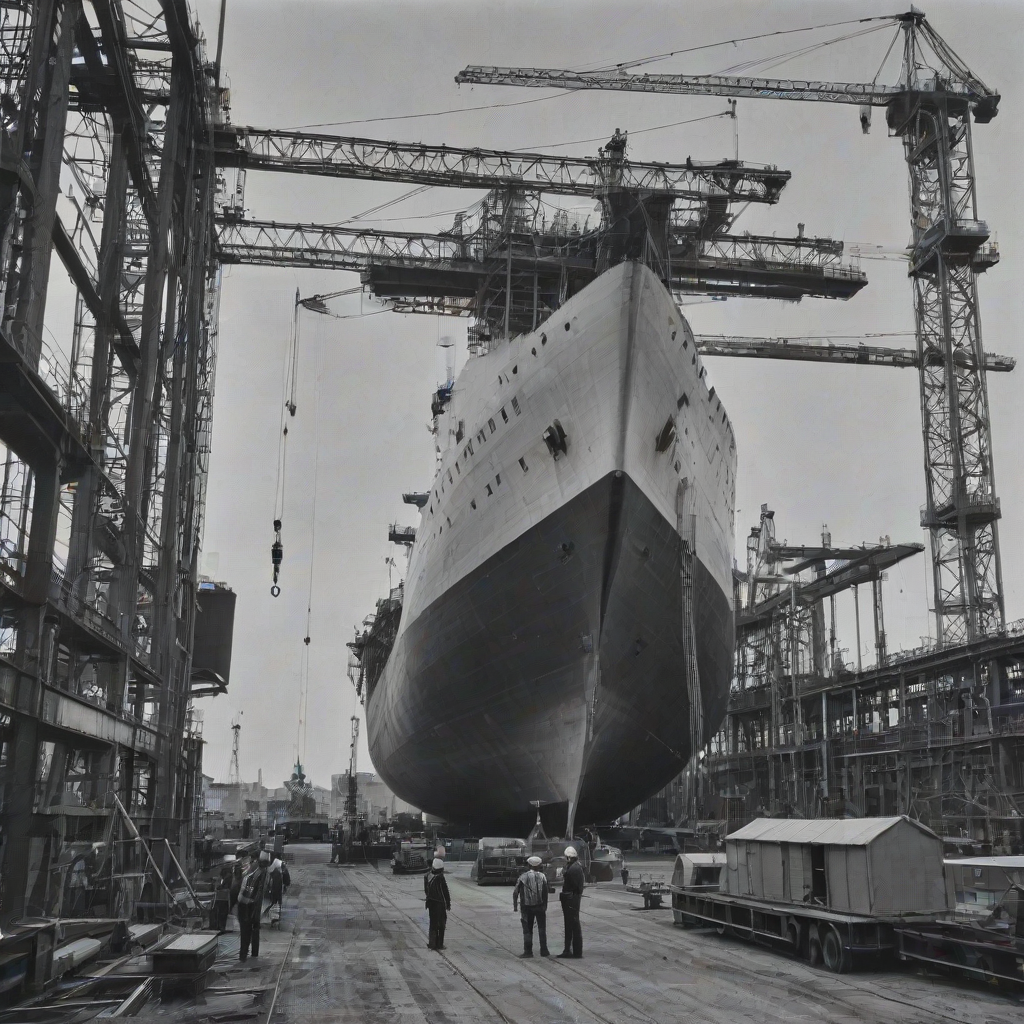
You walk through the shipyard and the shipyard is a factory with no roof. The shipyard is open to the sky because the product is too large for a building. The ship is built outside because the ship will not fit inside. The crane lifts the steel plate and the welder welds the plate and the plate becomes the hull and the hull becomes the ship and the ship is launched into the water and the launching into the water is the birth and the birth happens sideways. The ship slides down the ways and hits the water and the hitting the water is the splash and the splash is the shipyard's applause.
The Gdansk Shipyard in Poland built ships for decades but the shipyard built Solidarity in nineteen eighty and the building Solidarity changed the world more than any ship the yard ever launched. Lech Walesa was an electrician at the Gdansk Shipyard and the electrician at the Gdansk Shipyard organized the workers and the organizing the workers became the first independent labor union in the Soviet bloc and the first independent labor union in the Soviet bloc was the crack in the wall and the crack in the wall became the fall of the wall. The shipyard built tankers and container ships and the shipyard built a revolution. The Gate Number Two where Walesa climbed the fence is a monument now and the monument to climbing a fence is the monument to what workers can do when the workers decide the workers have had enough. The shipyard is mostly closed now. The cranes stand idle. But the gate stands.
The Kaiser shipyards in Richmond California built seven hundred and forty seven Liberty ships in four years during the Second World War and the building seven hundred and forty seven ships in four years was the industrial miracle that kept the supply lines open across the Atlantic. Henry Kaiser had never built a ship before the war. Kaiser was a dam builder. Kaiser built the Hoover Dam and then the government asked him to build ships and he built ships the way he built dams which was fast and in enormous quantities. The average Liberty ship took forty two days. The Robert E. Peary was built in four days fifteen hours and twenty nine minutes as a publicity stunt but the four days proved the point. The workers at the Kaiser shipyards were women and Black men and Mexican Americans because the white men were at war and the women and Black men and Mexican Americans who built the ships were Rosie the Riveter and Rosie the Riveter was not a metaphor. Rosie was a welder at a shipyard in Richmond California.
In Glasgow the shipyards on the Clyde built half the world's ships in the nineteenth century and the building half the world's ships made Glasgow the second city of the British Empire. The Clyde built the Lusitania and the Queen Mary and the Queen Elizabeth and the building the Lusitania and the Queens was the Clyde at its peak and the peak employed a hundred thousand men and the hundred thousand men built the ships that crossed the Atlantic. The shipyards on the Clyde are mostly gone now. The cranes came down. The ways were filled in. The housing estates sit where the keels were laid. Glasgow was a shipyard city and then the ships stopped coming to Glasgow and the ships stopping coming to Glasgow was the deindustrialization and the deindustrialization is the same story as Detroit and Pittsburgh and every other city that made one thing and then stopped making that thing.
You stand at the edge of the slipway and the slipway goes down to the water and the going down to the water is the ramp and the ramp is where the ship meets the river for the first time. The champagne bottle breaks on the bow. The blocks are knocked away. The ship moves. The ship is too heavy to move but the ship moves because gravity pulls it down the ramp and the gravity pulling it down the ramp is physics and the physics is unstoppable. The ship hits the water. The water rises around the hull. The ship floats. The ship that weighed forty thousand tons on the ramp weighs nothing in the water because the water holds it and the water holding it is displacement and displacement is the shipyard's final gift to the ship. Go. Float. The shipyard. The factory with no roof. The place where steel becomes a vessel. The ramp to the water. The launch. The splash. The floating.