 JOHN SINCLAIR
SEWER
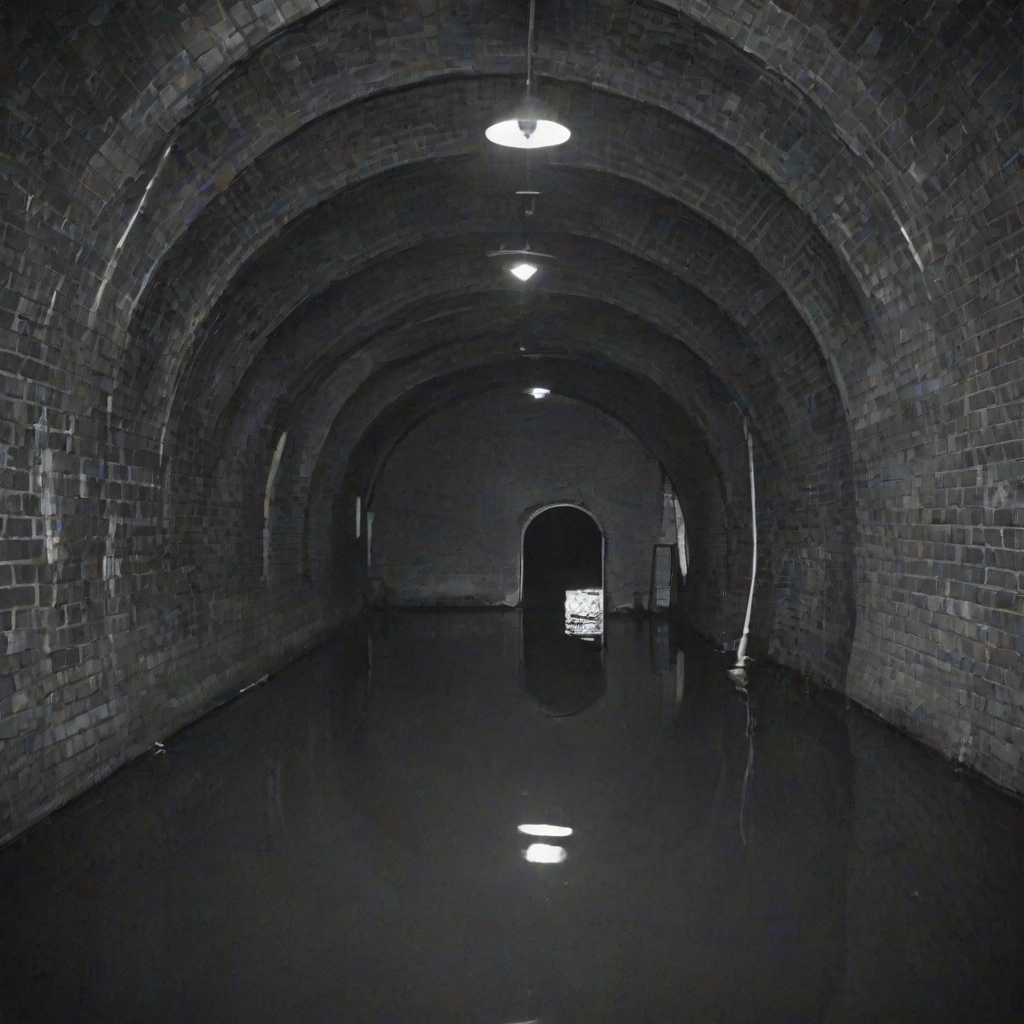
You do not think about the sewer and the not thinking is the sewer working. The sewer works when you forget it exists. The sewer is the infrastructure of forgetting. You flush the toilet and you forget. You run the sink and you forget. You stand in the rain and the rain hits the street and the street drains and you forget where the water goes and the where the water goes is the sewer and the sewer is below you right now. Below the street. Below the sidewalk. Below everything you see. The sewer is the city under the city and the city under the city is the one that keeps the city above it alive.
Joseph Bazalgette built London's sewer system after the Great Stink of eighteen fifty eight. The Great Stink was the Thames and the Thames was an open sewer and the open sewer in summer produced a smell so powerful that Parliament hung sheets soaked in chloride of lime over the windows and the sheets soaked in chloride of lime could not stop the smell and Parliament could not meet because the smell of its own city's waste was too strong. The smell made the government act. Bazalgette designed eighty two miles of intercepting sewers and a thousand miles of street sewers and the thousand miles of street sewers channeled the waste downstream away from the city and the channeling the waste downstream was the engineering that saved London from cholera. Bazalgette did not know about cholera. Bazalgette thought it was the smell that killed people. The smell did not kill people. The water killed people. Bazalgette solved the right problem for the wrong reason and the solving the right problem for the wrong reason is the history of public health.
The Cloaca Maxima in Rome has been draining the city since the sixth century BC and the sixth century BC means the sewer is older than the Republic. The Cloaca Maxima was built by the Etruscan kings to drain the marshes where the Forum would be and the draining the marshes where the Forum would be means the sewer came before democracy. The sewer made the Forum possible and the Forum made the Republic possible and the Republic made Rome possible and Rome was possible because someone built a drain. The Cloaca Maxima still flows. Twenty six centuries of continuous operation. The longest-running infrastructure project in human history is a sewer in Rome and the longest-running infrastructure project in human history being a sewer tells you everything about what civilization actually requires.
In Paris the sewers became a tourist attraction in eighteen sixty seven during the Universal Exposition and the becoming a tourist attraction is the most Parisian thing a sewer can do. Victor Hugo wrote about the Paris sewers in Les Miserables and Jean Valjean carried Marius through the sewer and the carrying through the sewer was the salvation and the salvation was underground because Hugo understood that the city's redemption was in its lowest place. The Paris sewers have street signs. The Paris sewers have the same names as the streets above them. The naming the sewer after the street is the acknowledgment that every street has a shadow and the shadow is underground and the shadow carries everything the street wants to forget.
You step over the manhole cover and the manhole cover is the door to the sewer and the door to the sewer is the most ignored door in any city. The manhole cover is cast iron and the cast iron is heavy and the heavy is the seal between the world you know and the world you do not want to know. Below the manhole cover is the water and the water is everything the city has used and discarded and the used and discarded flows through pipes that run under every street in every city and the running under every street is the circulatory system and the circulatory system of the city is not the roads. The roads are the skeleton. The sewer is the blood. The sewer carries what the city cannot hold. The sewer takes what the city does not want. The sewer is the city's most essential building and it is not a building and it is underground and it is invisible and the invisible essential thing is the sewer. Working right now. Below your feet. Carrying everything away.