 JOHN SINCLAIR
SEAWALL
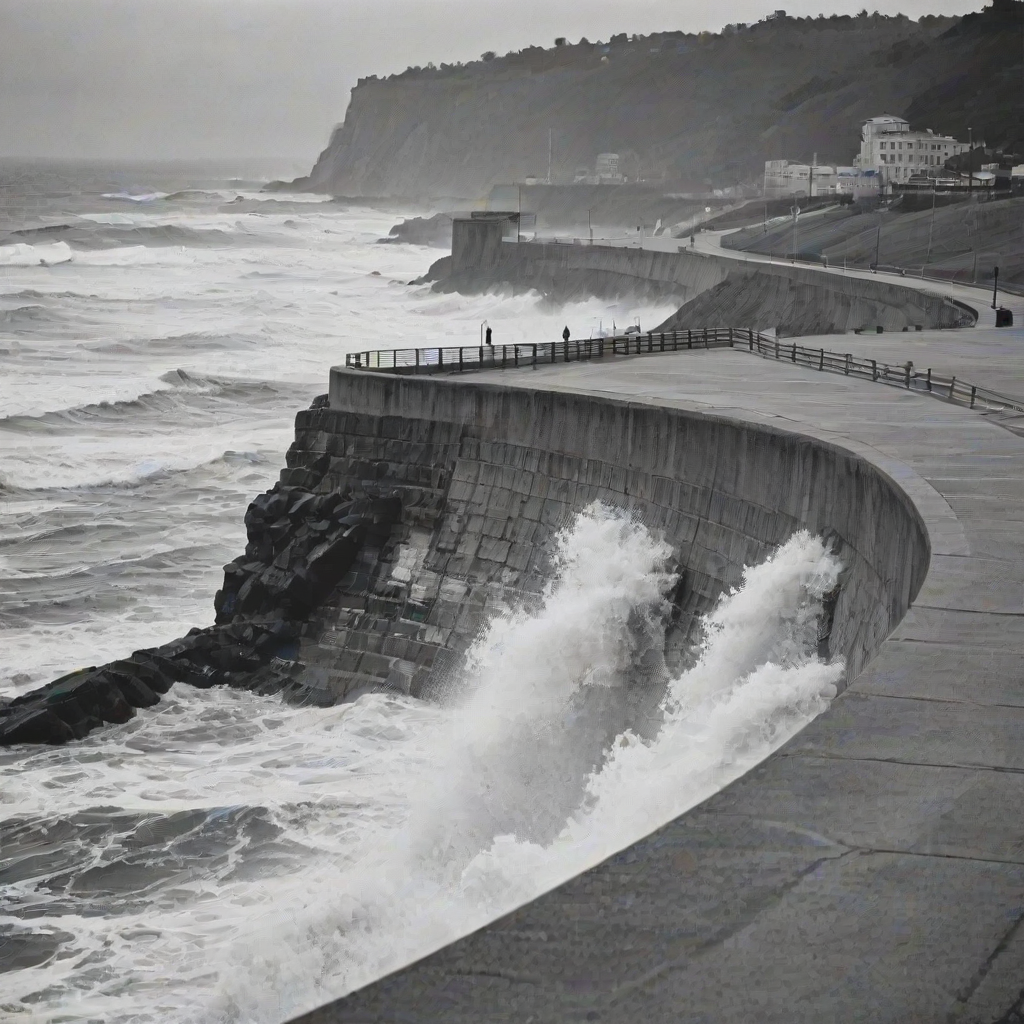
You stand on the seawall and the ocean is on one side and the city is on the other and the seawall is the line between the two. The seawall is the most honest piece of infrastructure in any coastal city because the seawall admits that the city should not be here. The city is too close to the water. The city was built too close to the water because the water was the commerce and the commerce required proximity and the proximity required a wall. The seawall is the price of proximity. The seawall is the tax the ocean charges for building too close.
The seawall at Galveston Texas was built after the hurricane of nineteen hundred killed eight thousand people and the building after was the lesson. Before the hurricane Galveston was the richest city in Texas. Before the hurricane Galveston had no seawall because Galveston did not believe the ocean could reach it. The hurricane reached it. The hurricane pushed a storm surge over the island and the storm surge was fifteen feet and the fifteen feet killed eight thousand people in one night and the one night was the deadliest natural disaster in American history. After the hurricane Galveston raised the entire city by seventeen feet and built a seawall ten miles long and the ten miles long and seventeen feet tall was the engineering response to grief. The seawall at Galveston is concrete and granite and the concrete and granite have held since nineteen oh four. The seawall has been tested. The seawall holds. The seawall holds because eight thousand dead people taught a city that the ocean is not decoration.
The Mose barrier in Venice rises from the floor of the lagoon to hold back the Adriatic Sea. Mose stands for Modulo Sperimentale Elettromeccanico and the experimental in the name tells you that no one had ever built anything like it. Seventy eight hollow steel gates lie flat on the lagoon floor and when the tide rises above a certain level compressed air fills the gates and the gates rise and the rising gates block the Adriatic from flooding Venice. The Mose took sixteen years to build and cost six billion euros and the six billion euros is the price Venice pays to remain above water. Venice has been flooding for a thousand years. Venice has been sinking for a thousand years. The Mose is the machine that bets Venice can survive another century and the bet is against the ocean and the ocean is patient.
In the Netherlands the Deltaworks is the most ambitious seawall system ever built and the most ambitious seawall system ever built was built because the North Sea flood of nineteen fifty three killed one thousand eight hundred and thirty six people. The Dutch decided after nineteen fifty three that the sea would never breach the coast again and the deciding that the sea would never breach the coast again is the most ambitious promise any nation has ever made to its citizens. The Maeslantkering is a storm surge barrier in the port of Rotterdam and each arm is the size of the Eiffel Tower and the Eiffel Tower sized arms swing closed when the North Sea rises. The Dutch have been fighting the sea for eight centuries. The Dutch word for it is watersnood. The Dutch built a nation on land reclaimed from the ocean and the nation built on land reclaimed from the ocean is the seawall made national.
You walk along the seawall at sunset and the seawall is the promenade and the promenade is the city's edge and the city's edge is where people go to think. The seawall is the only piece of infrastructure that doubles as a meditation. You sit on the seawall and you look at the ocean and the looking at the ocean from the seawall is the looking at the thing the seawall protects you from. The ocean is right there. The ocean is three feet below your feet. The ocean is beautiful and the beautiful ocean is the same ocean that killed eight thousand people in Galveston and the same ocean that floods Venice and the same ocean that the Dutch have been fighting for eight centuries. The seawall. The edge. The line drawn in concrete between the city and the water. The line that says this far. No farther. The ocean does not read the line. The ocean rises. The seawall holds. For now.