 DAVID PEEL
Scribe
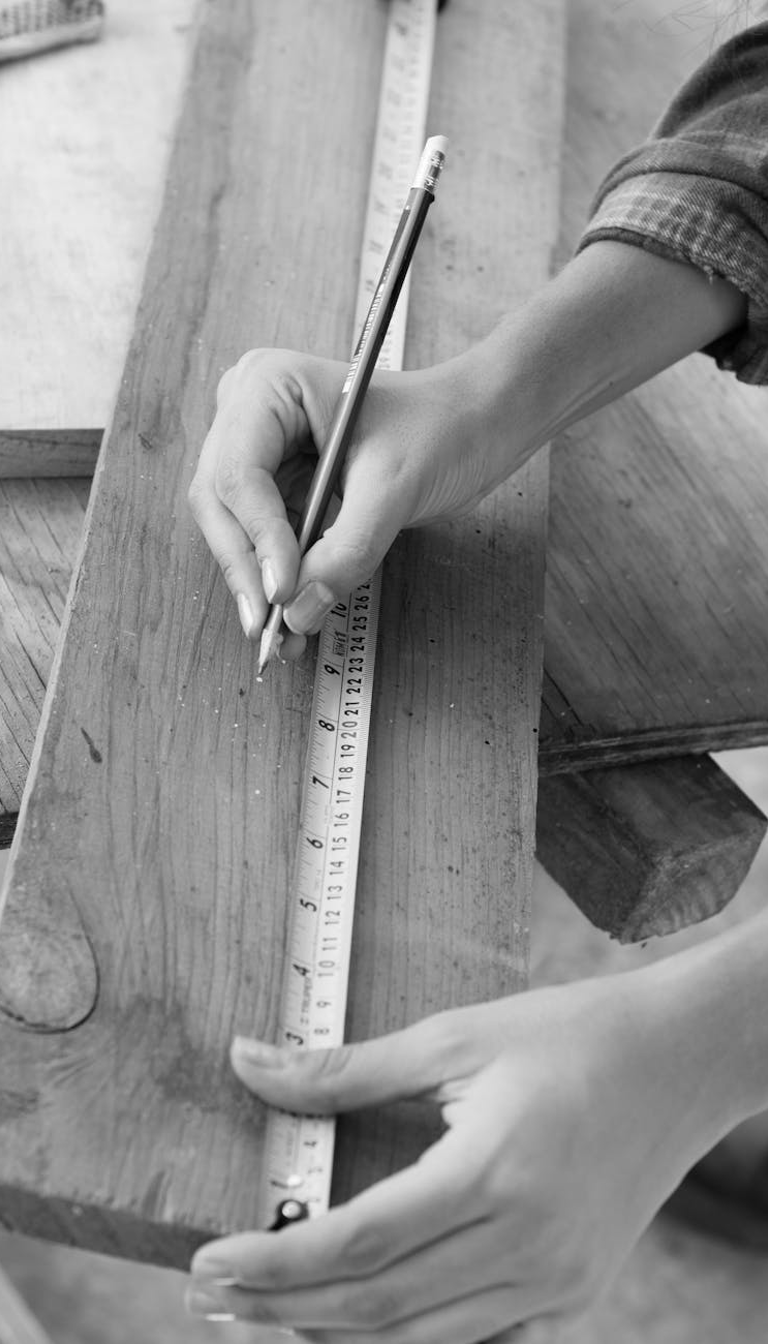
The scribe was a line scratched into a surface to mark where the cut would go. The carpenter held a compass against the wall and dragged the point along the board and the point scratched a line that followed the shape of the wall. The wall was not straight. The wall had bumps and dips and the board had to fit against the bumps and dips exactly. The scribe line was the translation between the wall shape and the board shape. The scribe said cut here and the board will fit.
The scribe was the oldest marking tool. A pointed stick dragged across wet clay. A nail dragged across stone. A pencil dragged across wood. The scribe predated the ruler. The ruler measured distance. The scribe measured shape. Distance is abstract. Shape is specific. The ruler says three inches. The scribe says this exact curve right here. The scribe was specific in a way the ruler could not be. The ruler dealt in numbers. The scribe dealt in reality.
The finish carpenter scribed every piece of trim that met an irregular surface. The baseboard against the plaster wall. The countertop against the stone backsplash. The cabinet against the ceiling. Every joint was a negotiation between the square thing the carpenter built and the not-square thing the building provided. The scribe was the negotiator. The scribe said the cabinet is square and the ceiling is not and here is the line where they agree to meet.
Scribing took patience. You held the compass at the widest gap between the board and the wall and you dragged the compass along the length and the pencil followed the contour of the wall onto the face of the board. Then you cut the line with a jigsaw or a plane or a rasp. Then you held the board against the wall and checked. If the board touched the wall everywhere the scribe was true. If the board gapped the scribe was wrong. Start over. Rescribe. Recut. The scribe did not forgive. The scribe demanded accuracy on the first pass or the second pass or however many passes it took.
Nobody scribes anymore. They use caulk. The gap between the cabinet and the ceiling is a quarter inch and the caulk fills it and the paint covers the caulk and the joint looks tight. The joint is not tight. The joint is filled. Filled is not the same as fitted. Fitted means the carpenter understood the wall. Filled means the carpenter gave up on the wall. The scribe was the carpenter respecting the wall. The caulk is the carpenter ignoring the wall. Both produce a finished surface. One of them is honest.