 DAVID PEEL
Scaffolding Plank
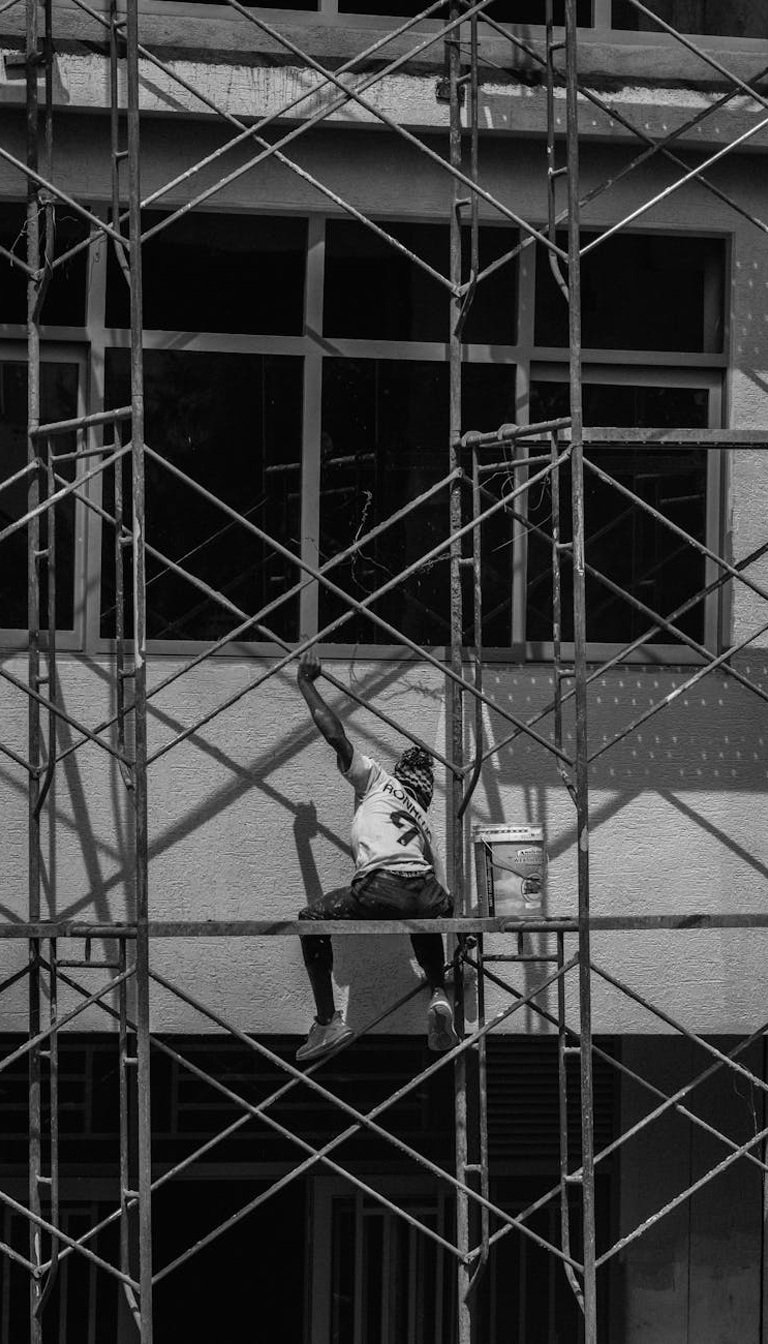
The scaffolding plank was a two-by-ten laid across two brackets on the side of a building. The plank was the floor you stood on while you worked on the wall. The plank was ten feet above the sidewalk or twenty feet or a hundred feet and the plank was the same width at every height. Ten inches. Ten inches of wood between the mason and the fall. The plank did not get wider when the building got taller. The plank was always ten inches. The confidence had to grow even though the surface did not.
The plank bounced. You walked to the middle of the plank and the plank flexed under your weight. The bounce was not a defect. The bounce was the wood absorbing your step and returning the energy. A stiff plank would have broken. A bouncy plank was a strong plank. The mason learned to trust the bounce. The bounce meant the wood was alive. Dead wood did not bounce. Dead wood cracked. The mason who was afraid of the bounce was a mason who did not understand the plank.
The plank had to overhang the bracket by at least twelve inches on each end. The overhang prevented the plank from sliding off the bracket if the mason stepped too close to the edge. The twelve inches was the safety margin. The safety margin was a rule and the rule was written in the blood of the masons who fell because the overhang was six inches instead of twelve. Every safety rule on a job site was written by somebody falling. The rules are the scars of the trade.
You carried the plank on your shoulder. One man. One plank. Sixteen feet long. Forty pounds. You balanced the plank on your shoulder and climbed the ladder and set the plank on the brackets and the scaffold was one plank wider. The next man carried the next plank. The scaffold grew plank by plank the way a wall grows brick by brick. The scaffold was a temporary building built to build a permanent building. The scaffold was the building tool.
Aluminum planks replaced the wood planks. The aluminum plank does not bounce. The aluminum plank does not rot. The aluminum plank does not split at the ends. The aluminum plank is lighter. The aluminum plank is better in every way except the way the mason felt about it. The wood plank was warm in the summer and cold in the winter and the mason feet knew the season through the plank. The aluminum plank is the same temperature as the air. The aluminum plank does not tell you what season it is. The wood plank told you everything. The aluminum plank tells you nothing.