 DAVID PEEL
Scaffold Jack
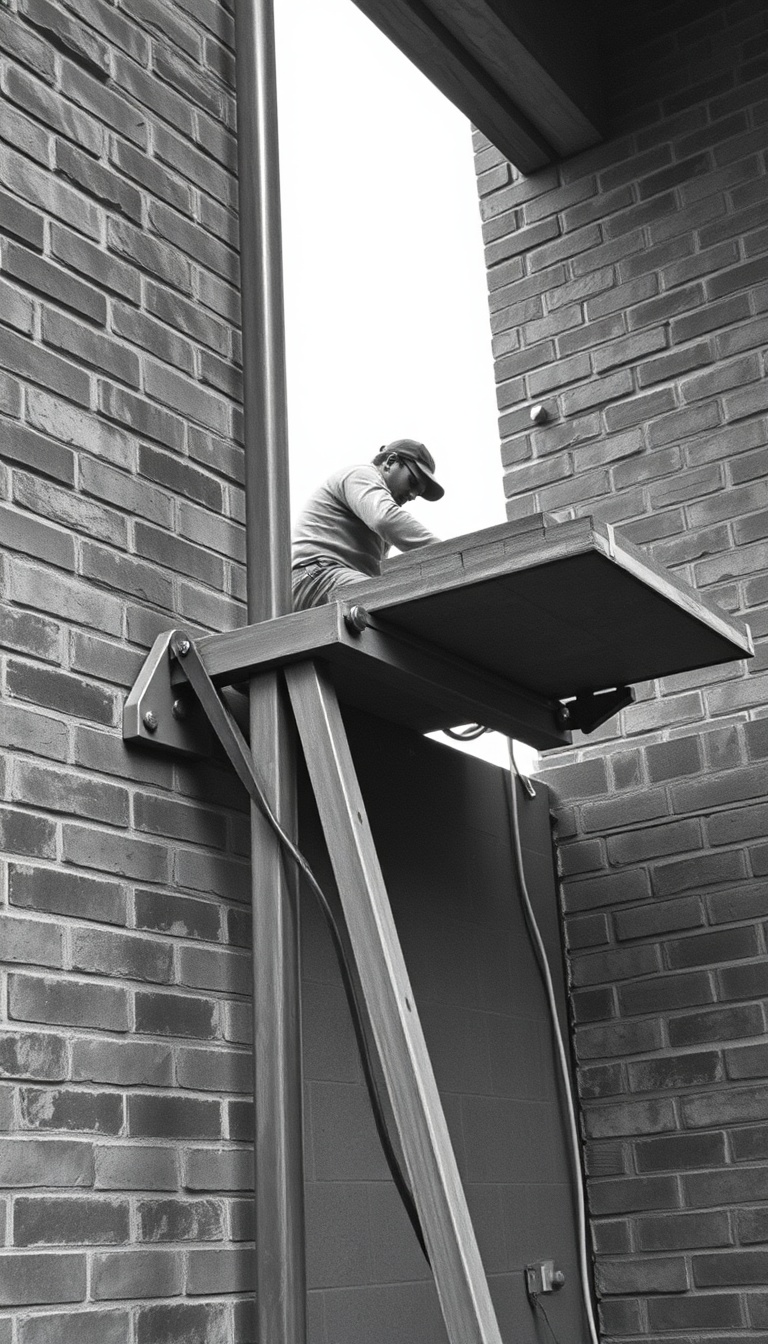
The scaffold jack was a steel bracket that bolted to the side of a building and held a plank. Two jacks and a plank and the mason had a platform. The jack was triangular. A flat plate bolted to the wall and an arm that stuck out at a right angle and a brace between them. The arm held the plank. The brace held the arm. The wall held the brace. The mason stood on the plank and laid brick at chest height and when the wall rose above his reach he moved the jacks up and started the next course from the new height. The wall built itself up and the mason climbed with it.
The mason set the jacks by drilling into the mortar joint. Not the brick. The mortar. The mortar was softer and the hole was easier to drill and the mortar could be patched when the jack came down. A lead anchor in the hole and a lag bolt through the jack plate into the anchor. Two bolts per jack. Four bolts for a platform. Four bolts between the mason and the ground. The mason checked the bolts before he stepped on the plank. He pulled the jack by hand. If the jack moved the bolts were loose and the mason tightened them or drilled new holes. The check took ten seconds. The fall took less.
The plank was a two-by-ten. Scaffold grade. The lumber yard stamped it. Scaffold grade meant the plank had been tested for load. A regular two-by-ten from the framing pile might have a knot in the wrong place and the knot would break under a man's weight. The scaffold grade plank had no knots in the middle third. The middle third was where the weight went. The mason stood in the middle and the bricks sat in the middle and the mortar bucket sat in the middle. The middle was everything. The ends were cantilever. The middle was gravity. The stamp on the plank said a man could trust his weight to this board.
Nobody uses scaffold jacks on big jobs anymore. The tube-and-clamp scaffold goes up from the ground and surrounds the building like a cage. The cage is safer. The cage has guardrails and toe boards and cross braces. The scaffold jack had a plank and the plank had nothing. The mason who worked off jacks worked without a net. The wind blew and the plank flexed and the mason leaned into the wall and kept laying brick because the wall was not going to lay itself and the plank was not going to get any wider.
See also: Scaffolding, Scaffolding Plank