 JOHN SINCLAIR
SAWMILL
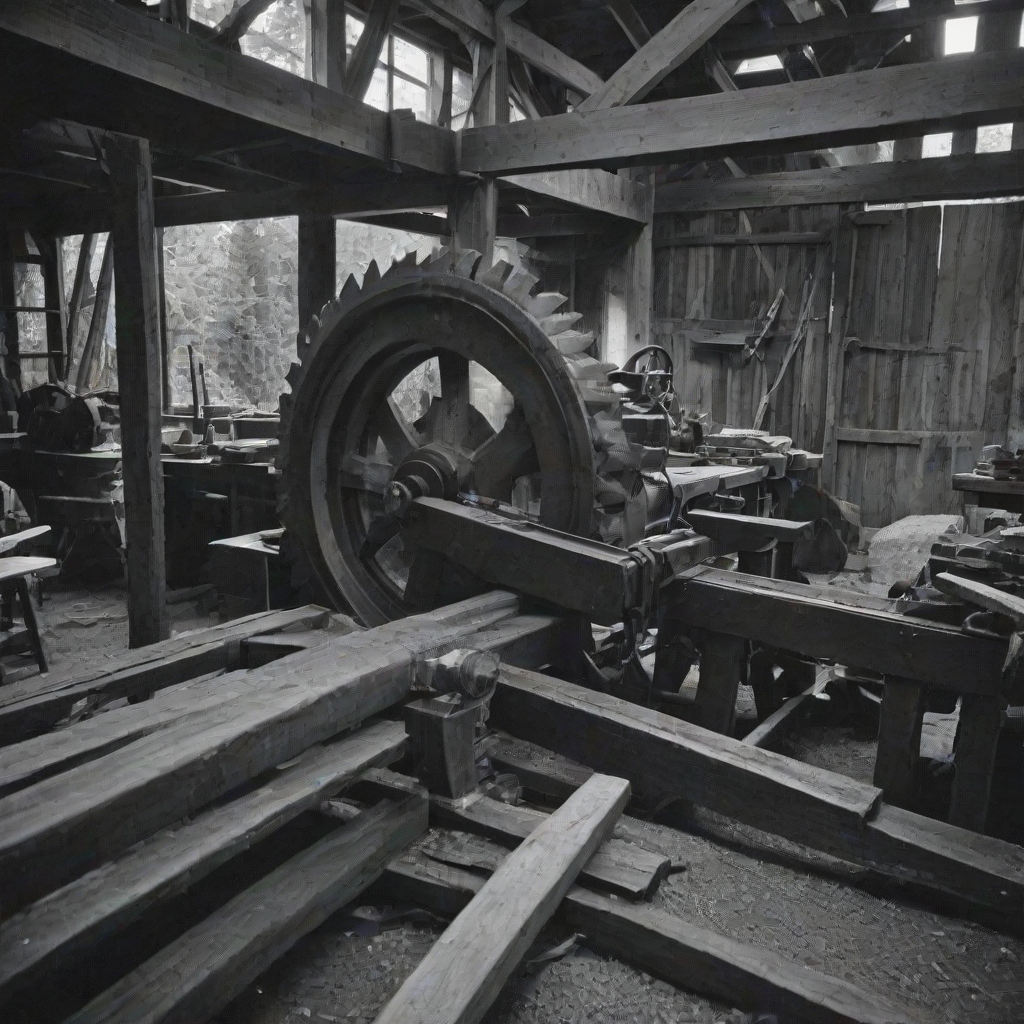
You hear the sawmill before you see it and the hearing before seeing is the blade. The blade screams. The blade is a circular saw or a band saw and the blade meets the log and the meeting is the cut and the cut is the sound and the sound carries for a mile. The log goes in round and comes out square and the round becoming square is the sawmill's work which is to take what the forest grew and make it what the builder needs. The sawmill is the translation. The sawmill turns trees into lumber and lumber into dimension and dimension into the two-by-four and the two-by-six and the two-by-ten that frame every house you have ever lived in.
The Weyerhaeuser mills in the Pacific Northwest cut four billion board feet a year in their peak decades and the four billion board feet built the houses of the American West. The Douglas fir came down from the Cascades on logging trucks and the logging trucks delivered the logs to the mills on the Columbia River and the mills on the Columbia River sawed the logs into lumber and the lumber went by rail to the cities that were growing. Seattle and Portland and Los Angeles and Denver and every subdivision in between. The Weyerhaeuser company owned four million acres of timberland and the four million acres is an area larger than Connecticut and the area larger than Connecticut was a forest managed for cutting and the managed for cutting is the tree farm and the tree farm is the forest as factory. Frederick Weyerhaeuser bought nine hundred thousand acres from James J. Hill in nineteen hundred for six dollars an acre and the six dollars an acre was the deal that built a timber empire.
The water-powered sawmills of colonial New England cut the timber that built the ships that built the empire. The first sawmill in America was built at the falls of the Piscataqua River in sixteen thirty four and the built at the falls means the river powered the blade because the falling water turned the wheel and the wheel drove the saw. Before the sawmill every board was cut by hand with a pit saw and the pit saw meant two men standing one above and one below pulling a long blade through the log and the pulling through the log took a full day to cut a single log into boards. The sawmill cut a log in minutes. The sawmill multiplied the output of human labor by a hundred and the multiplying by a hundred meant New England could build ships and houses and barns and fences and wharves and the ships and houses and barns meant the colony could grow because the colony had lumber.
In Michigan the sawmills ate the forest. The white pine forests of Michigan were the largest stand of white pine on earth and the largest stand of white pine on earth was cut down in fifty years. The mills at Saginaw and Bay City and Muskegon ran day and night. The logs came down the rivers in spring drives and the spring drives were millions of logs floating downstream to the mills and the millions of logs floating downstream was the river becoming a conveyor belt. The lumberjacks cut the trees in winter when the ground was frozen and the frozen ground meant the logs could be sledded to the river and the sledded to the river meant the spring melt carried the logs to the mill. By nineteen hundred the white pine was gone. The mills closed. The lumberjacks moved to Wisconsin and then to Minnesota and then to the Pacific Northwest and the moving west was the sawmill following the forest and the sawmill following the forest is the story of American lumber which is the story of cutting until the trees are gone and then moving on.
You watch the blade and the blade spins and the spinning is four thousand revolutions per minute and the four thousand revolutions per minute is the speed that turns a log into boards in seconds. The sawyer reads the log. The sawyer sees the knots and the grain and the curve and the sawyer decides where to make the first cut and the deciding where to make the first cut is the skill because the first cut determines the yield and the yield is the lumber and the lumber is the money. The sawmill. The screaming blade. The log going in whole and coming out as planks. The water-powered wheel. The four billion board feet. The forest becoming the city. One cut at a time. The blade meets the wood and the wood becomes the wall and the wall becomes the room and the room becomes the house. The sawmill. Where the forest ends and the building begins.