 JOHN SINCLAIR
ROUNDHOUSE
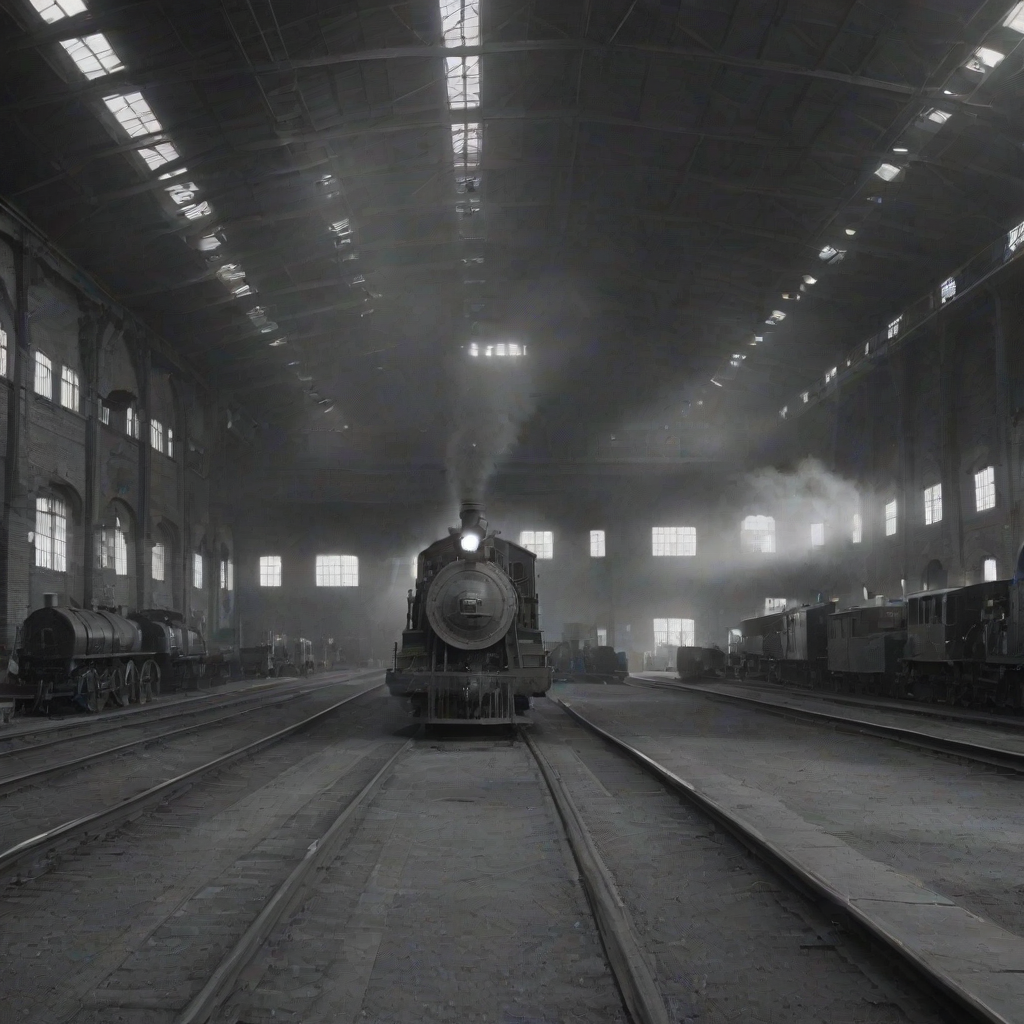
You walk into the roundhouse and the roundhouse is a building shaped like a wheel. The building is curved. The walls follow the arc of a circle and the arc of a circle has a center and the center is the turntable. The turntable is a rotating bridge that holds a locomotive and the rotating bridge spins the locomotive to face any stall in the building and the facing any stall is the point. The locomotive comes in from the mainline and rolls onto the turntable and the turntable spins and the locomotive faces stall number seven or stall number twenty three and the locomotive rolls into the stall and the rolling into the stall is the parking and the parking is the roundhouse's job. The roundhouse is a parking garage for locomotives built before anyone thought to build a parking garage for cars.
The Chicago and North Western roundhouse held forty locomotives in stalls radiating from the turntable like spokes from a hub and the forty locomotives in stalls was the fleet and the fleet powered the railroad that connected Chicago to the West. Every railroad had a roundhouse. Every major junction had a roundhouse because every major junction needed to store and service and turn locomotives and the storing and servicing and turning required the building that only the railroad builds. The roundhouse had a pit under each stall and the pit was where the mechanic worked under the locomotive and the working under the locomotive was the maintenance and the maintenance was the oil and the grease and the inspection of the driving rods and the driving wheels and the boiler. The roundhouse smelled like coal smoke and steam and hot metal and the smelling like coal smoke and steam and hot metal was the smell of the railroad at rest.
The turntable is the heart of the roundhouse and the heart of the roundhouse is a machine. The turntable at the Steamtown National Historic Site in Scranton Pennsylvania is ninety feet across and the ninety feet across holds the largest steam locomotives ever built. The turntable was powered by a small motor that could spin two hundred tons of locomotive on a single bearing and the spinning two hundred tons on a single bearing is the elegance and the elegance is mechanical. Before motors the turntable was pushed by hand. Men leaned against the end of the turntable bridge and pushed and the pushing rotated the locomotive and the rotating the locomotive by hand was the labor and the labor was cheap and the locomotive was not. The turntable solved the problem that a steam locomotive cannot reverse efficiently. The locomotive is designed to go forward. The roundhouse exists because the locomotive was designed to go forward.
In Sinclair's Detroit the roundhouses served the Michigan Central Railroad and the serving the Michigan Central meant the locomotives that pulled the trains into Michigan Central Station were turned and stored in the roundhouse nearby. The roundhouse was the railroad's bedroom. The locomotive slept in the roundhouse. The locomotive was cleaned in the roundhouse. The locomotive was repaired in the roundhouse. The firebox was cleaned and the boiler was inspected and the wheels were checked and the checking and cleaning and inspecting happened in the stall between runs. The roundhouse worker knew every locomotive by number. The roundhouse worker knew which locomotive leaked and which ran hot and the knowing which leaked and which ran hot was the institutional knowledge and the institutional knowledge lived in the roundhouse.
You stand on the turntable and the turntable is still and the stillness is the turntable between trains and the between trains is the waiting. The stalls are empty. The roundhouse is a ruin or a museum or a brewery now because the diesel locomotive replaced the steam locomotive and the diesel can reverse and the reversing means the diesel does not need a turntable and the not needing a turntable means the diesel does not need a roundhouse. The roundhouse became obsolete when the locomotive learned to go backward. The building exists because of a limitation that no longer exists. The roundhouse. The wheel-shaped building. The turntable in the center. The stalls radiating outward. The building that turned the machine that could not turn. Empty now. The turntable frozen. The stalls converted. The smoke gone. The locomotives gone. The building remains. The circle remains.