 DAVID PEEL
Ridgecap
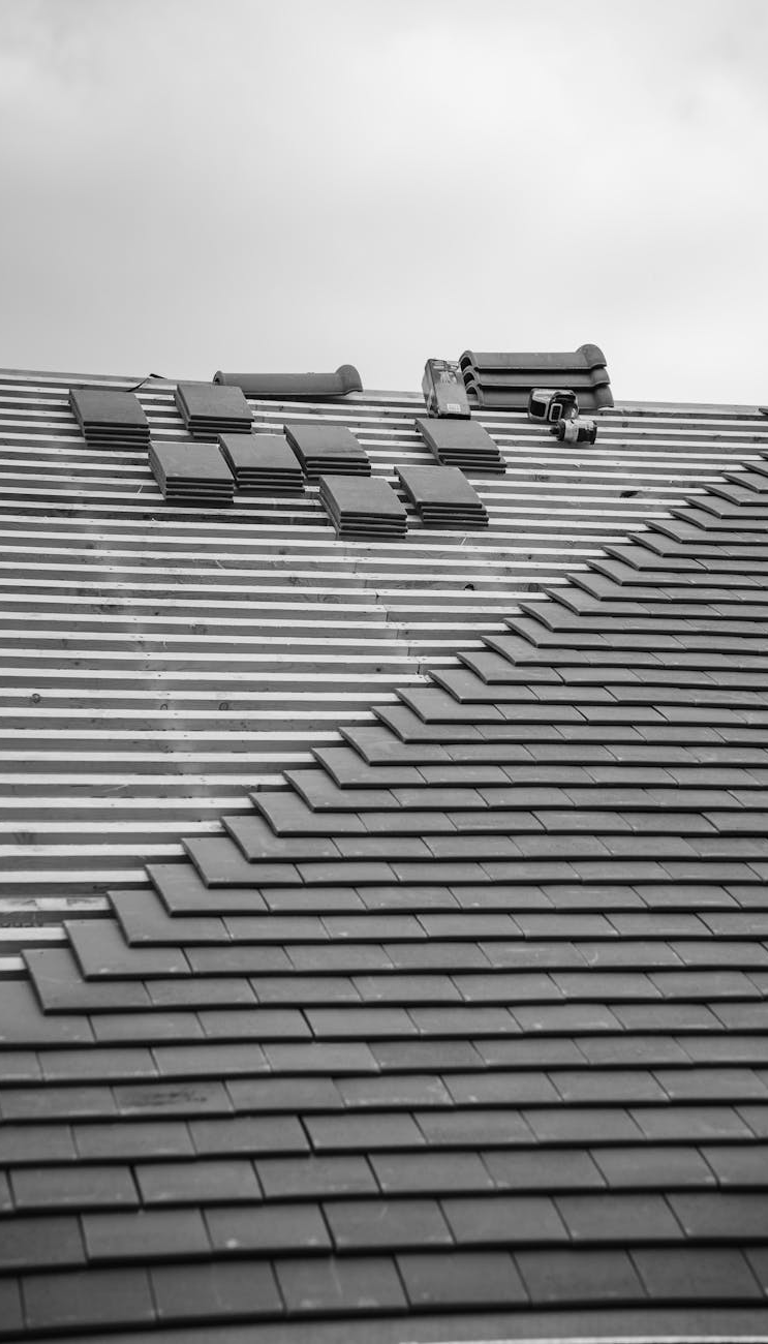
The ridgecap was the last piece on the roof. A row of shingles or tiles or metal bent over the peak where the two slopes of the roof met. The ridgecap was the roof handshake. Two planes rising from opposite walls met at the top and the ridgecap sealed the seam where they joined. Without the ridgecap the rain came straight through the peak and the peak was the highest point and water at the highest point runs everywhere. The ridgecap was small. The consequence of forgetting the ridgecap was total.
The roofer installed the ridgecap last because the ridgecap went on top of everything else. The shingles went on from the bottom up. Each row overlapped the row below it. The water hit the top shingle and ran down to the next shingle and the next and the next until it reached the gutter. The ridgecap was the starting line. Every drop of water that hit the roof began its journey at the ridgecap. The ridgecap decided which way the water went. Left slope or right slope. The ridgecap was the continental divide of the building.
The ridgecap shingle was bent. You took a flat shingle and you bent it over the peak and nailed it on both sides. The bend was the skill. Bend it too fast on a cold day and the shingle cracked. Bend it too slow on a hot day and the shingle sagged. The roofer knew the temperature by the way the shingle flexed in his hands. The shingle was a thermometer. The roofer read the weather through the material the way a sailor reads the wind through the canvas.
The old ridgecaps were clay. A curved tile made specifically for the peak. The tile maker shaped the clay on a form and the form was a half-cylinder and the half-cylinder fit over the peak the way a saddle fits over a horse. The clay ridgecap lasted a hundred years because clay does not care about weather. The clay survived the rain and the frost and the sun and the only thing that broke the clay was gravity. A branch fell. A man walked where a man should not walk. The clay broke from impact not from age. The clay outlived the patience of everything around it.
The modern ridge vent replaced the ridgecap with a function. The vent lets hot air escape from the attic and the escaping air pulls cool air in through the soffit vents and the roof breathes. The old ridgecap sealed the peak. The new ridge vent opens the peak. Sealing was the old answer. Breathing is the new answer. Both are right. The building needed to keep the water out and the building needed to let the heat out and the ridgecap chose water and the ridge vent chose heat. Every choice at the peak is a choice about which problem matters more.