 DAVID PEEL
Rebar
Rebar was steel inside concrete. The concrete could not do the job alone. Concrete was strong in compression. You could stack weight on concrete and the concrete held. But concrete was weak in tension. You pulled on concrete and the concrete cracked. The crack started small and grew fast and the wall failed. Rebar was the tension. The steel inside the concrete held the tension the concrete could not hold. The concrete handled the squeeze. The steel handled the stretch. Together they were stronger than either one alone.
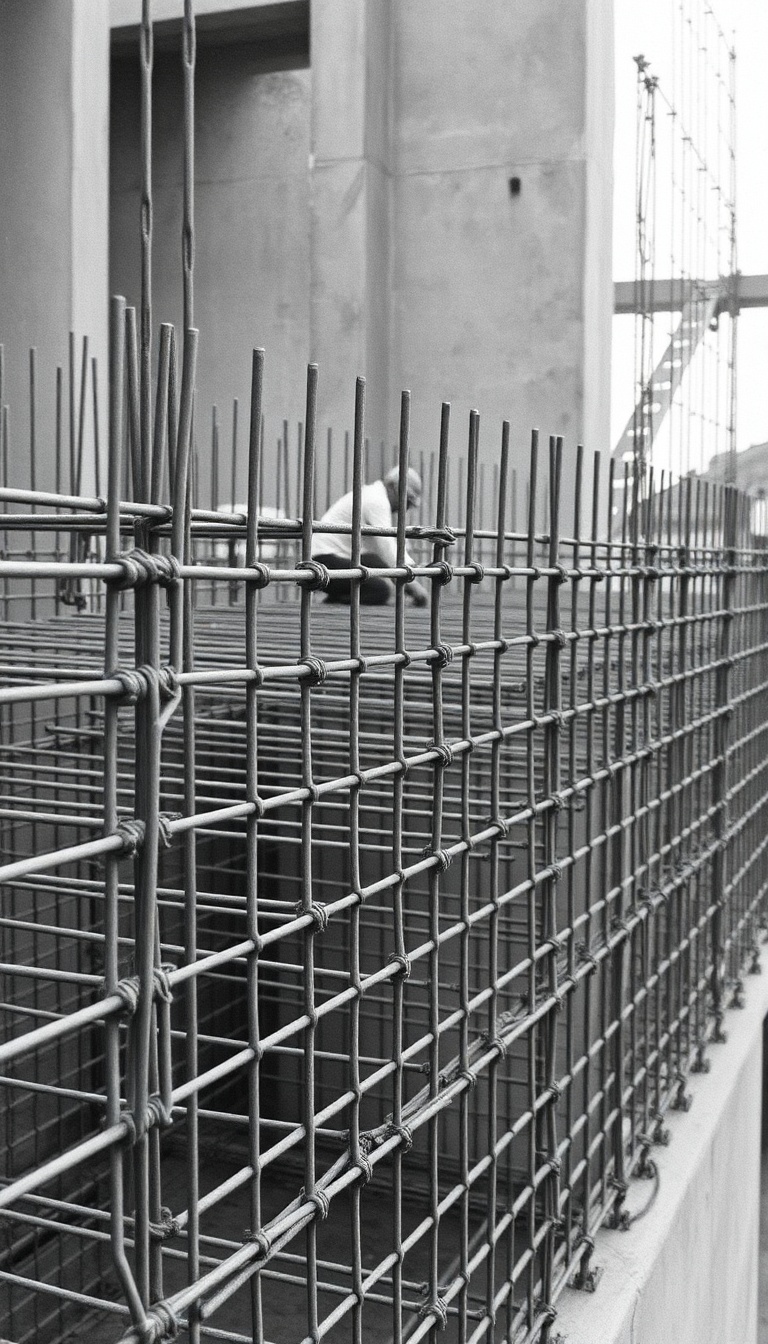
The ironworker placed the rebar before the pour. The rebar sat inside the formwork on chairs. The chairs were small plastic or wire stands that held the rebar off the bottom of the form. The rebar needed two inches of concrete cover on all sides. The cover protected the steel from water. Water rusted steel and rusted steel expanded and expanded steel cracked the concrete from inside. The two inches of cover was the moat. The moat kept the water away from the steel and the steel away from the air and the air away from the rust. The building depended on two inches of concrete nobody could see.
You tied the rebar together at every intersection. Tie wire. A loop of wire twisted with a hook. The tie did not add strength. The tie held the rebar in position while the concrete poured. Without the tie the rebar shifted when the concrete hit it and the shifted rebar was in the wrong place and the wrong place meant the wall was weaker than the engineer designed. The tie wire was temporary like the formwork. The tie wire held the steel in place until the concrete held the steel in place. The temporary held the permanent until the permanent could hold itself.
The rebar came in sizes numbered by eighths of an inch. Number three was three-eighths. Number four was half an inch. Number eight was one inch. The engineer specified the size and the spacing. Number four at twelve inches on center meant a half-inch bar every foot. The spacing was the grid. The grid was the skeleton. The skeleton held the body of the building together the way bones hold a person together. You could not see the skeleton after the pour. The skeleton was inside the concrete and the concrete was inside the wall and the wall was inside the building and nobody walking through the building knew there was a grid of steel every twelve inches holding the ceiling above their head.
They use fiber reinforcement now in some applications. Plastic fibers mixed into the concrete at the batch plant. No ironworker. No tie wire. No chairs. No rebar. The fibers are distributed through the concrete like threads in cloth. The fibers work for slabs and sidewalks. The fibers do not work for beams and columns. The beams and columns still need rebar. The beams and columns still need an ironworker who knows where the steel goes and why. The fibers replaced the rebar in the easy places. The hard places still belong to the ironworker and the steel.