 DAVID PEEL
Quoin
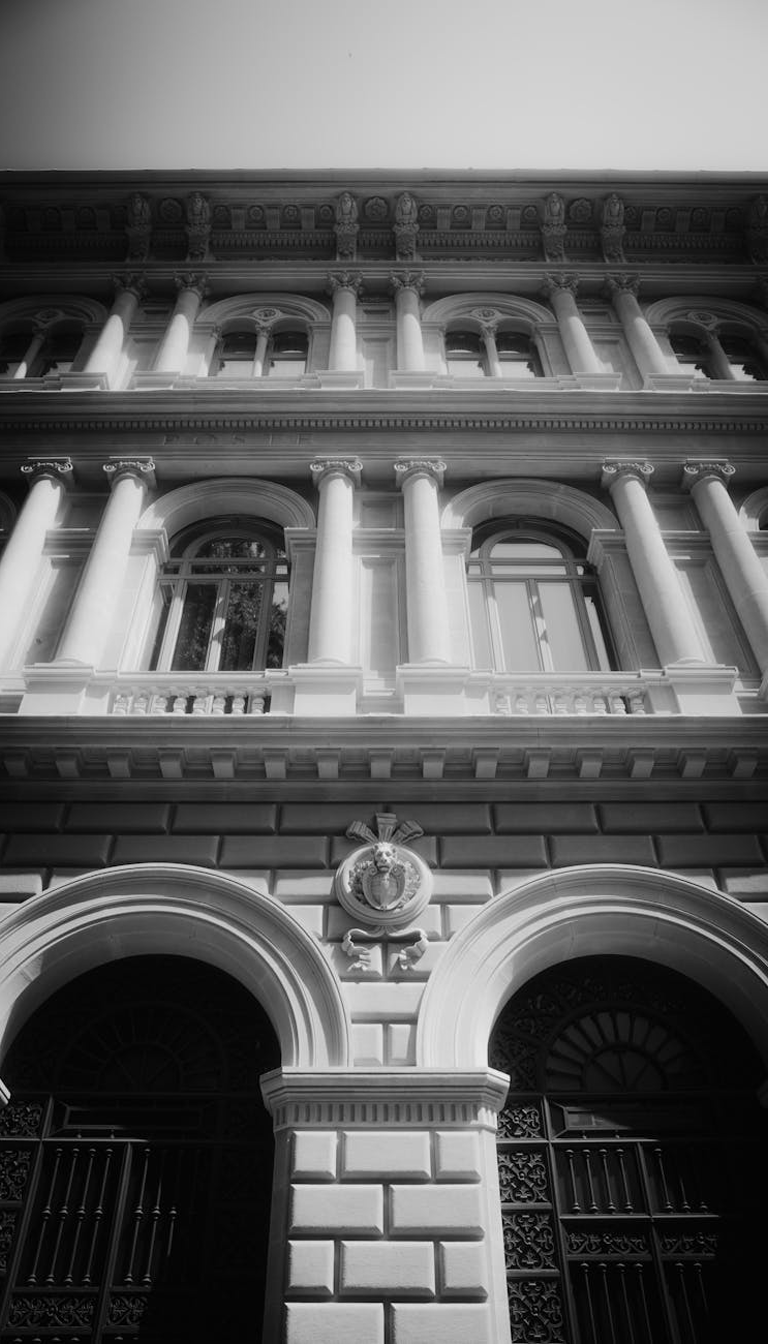
The quoin was the corner stone of the building. Large blocks of stone or brick stacked at the corner in an alternating pattern that locked the two walls together. The quoin was the building's handshake. Two walls meeting at a corner and the quoin holding them together the way a handshake holds two people in agreement. The quoin said these walls are one building.
The quoin was oversized on purpose. The stones at the corner were bigger than the stones in the wall because the corner carries more stress than the middle. The quoin was the building's strongest part and the building showed it. The quoin stuck out from the wall face a half inch or an inch and the shadow it cast was a line running up the building that said this is where the building turns. The shadow was the building's outline drawn by the sun.
They carved the quoin different from the wall. Rusticated quoins had rough-cut faces while the wall was smooth. Or the quoin was smooth while the wall was rough. The contrast was the point. The building wanted you to see where it changed direction. The quoin was the building's way of saying I know where my corners are. A building that knows where its corners are is a building that knows what it is.
The quoin locked the wall. That was the engineering. Bricks at the corner interlocked like fingers laced together. Pull one wall and the quoin held the other wall in place. The quoin was the building's skeleton at the joint. Every building has joints and every joint needs a quoin whether you can see it or not. The visible quoin was the building admitting it has joints. The modern building hides its joints behind a continuous skin and pretends it has no corners at all.
They stopped building quoins. The modern building wraps its corners in glass or panel and the corner disappears. A building without visible corners is a building without edges. A building without edges is a building that does not know where it ends. The quoin said I end here and the next wall begins. The glass corner says there is no here. The quoin was a statement. The glass is a blur.
See also: Corbel, Wainscoting