 DAVID PEEL
Pushcart Market
The pushcart market was the supermarket before the supermarket. Hester Street. Orchard Street. Essex Street. A hundred pushcarts lined up on both sides and every cart had something different. Pickles. Fabric. Fish. Shoes. Buttons. Bread. Pots. The pushcart market was a department store that lived outdoors and had no walls and no roof and no air conditioning and no returns. You bought it and you walked away with it and if it was broken you came back the next day and yelled at the man and the man yelled back and that was the return policy.
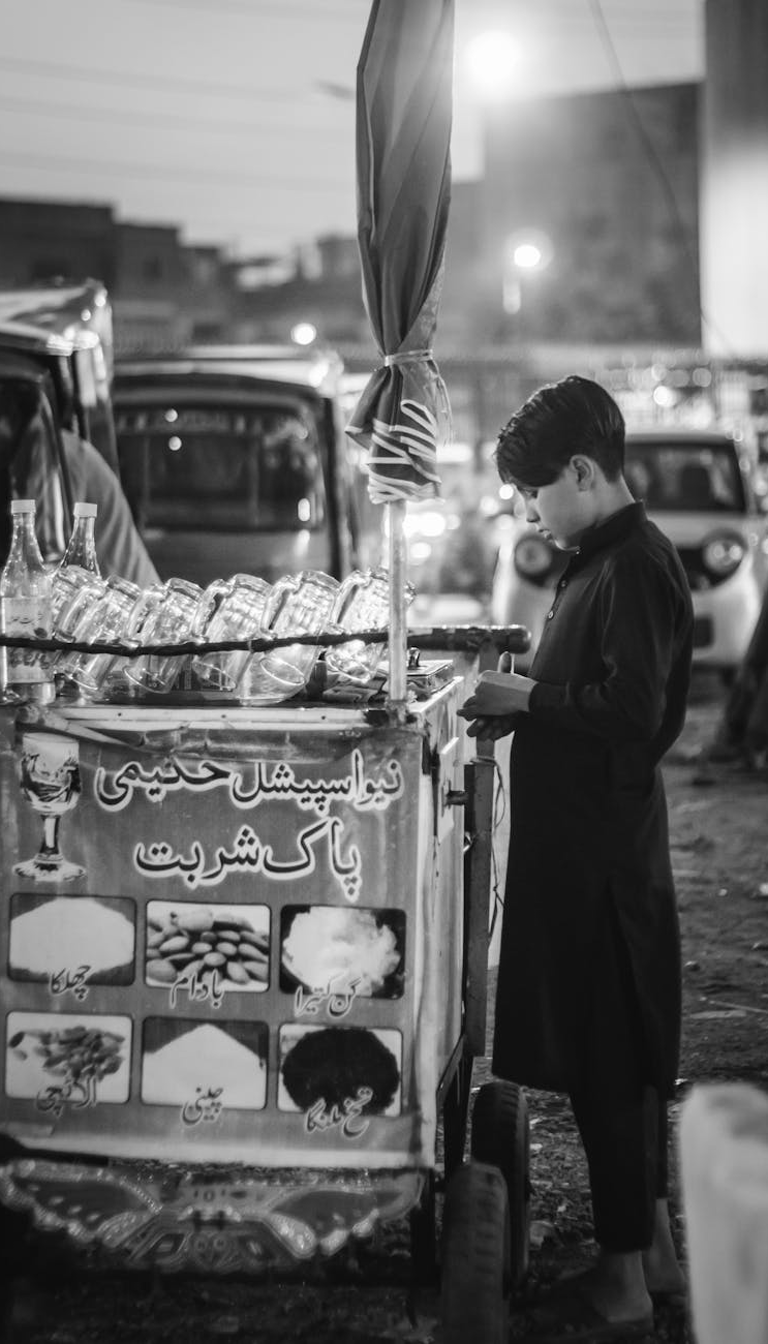
The pushcart was a wooden cart on two wheels. The man pushed it from his tenement to the street corner at four in the morning and loaded it with whatever he was selling and stood behind it until dark. No bathroom. No break. No chair. The pushcart man stood for fourteen hours and sold pickles or shoelaces or suspenders and at the end of the day he pushed the cart back and counted the money and if the money was enough he did it again tomorrow. If it was not enough he did it again tomorrow anyway. The pushcart did not have a business plan. The pushcart was the business plan.
My mother bought fabric from a pushcart on Orchard Street. The man had bolts of cloth stacked six feet high and he could pull the one you wanted from the middle of the stack without the rest falling. That is a skill they do not teach at business school. The fabric man knew his inventory by feel. Cotton. Wool. Linen. Silk. He rubbed it between his fingers and told you where it came from and how long it would last and whether it would shrink. The pushcart man was an expert. He had a PhD in the thing he sold. He just did not have a store.
The city tried to kill the pushcart market for fifty years. Sanitation. Traffic. Zoning. The mayor said the pushcarts were a health hazard. The pushcart men said the mayor was a politician and a politician is a different kind of health hazard. The fight went on from 1890 to 1940 and the pushcarts lost. They built the Essex Street Market in 1940 and moved the pushcarts indoors and put walls around them and called it progress. The pickles tasted the same. The yelling was quieter. The sunlight was gone.
The Essex Street Market is a food hall now. Artisanal cheese. Craft cocktails. Small-batch chocolate. The same building where a man sold pickles from a barrel for a nickel now sells artisanal pickles for twelve dollars. The pushcart is a farmer's market now and the farmer's market is on Saturday only and the prices are triple and the customers drive there in cars. The pushcart man walked to work and his customers walked to the cart and everything happened on the same block where everybody lived. The market was the neighborhood. Now the neighborhood is a brand. The pickles are the same. The salt is the same. The barrel is different. The price is unrecognizable.
See also: Pushcart, Corner Store